
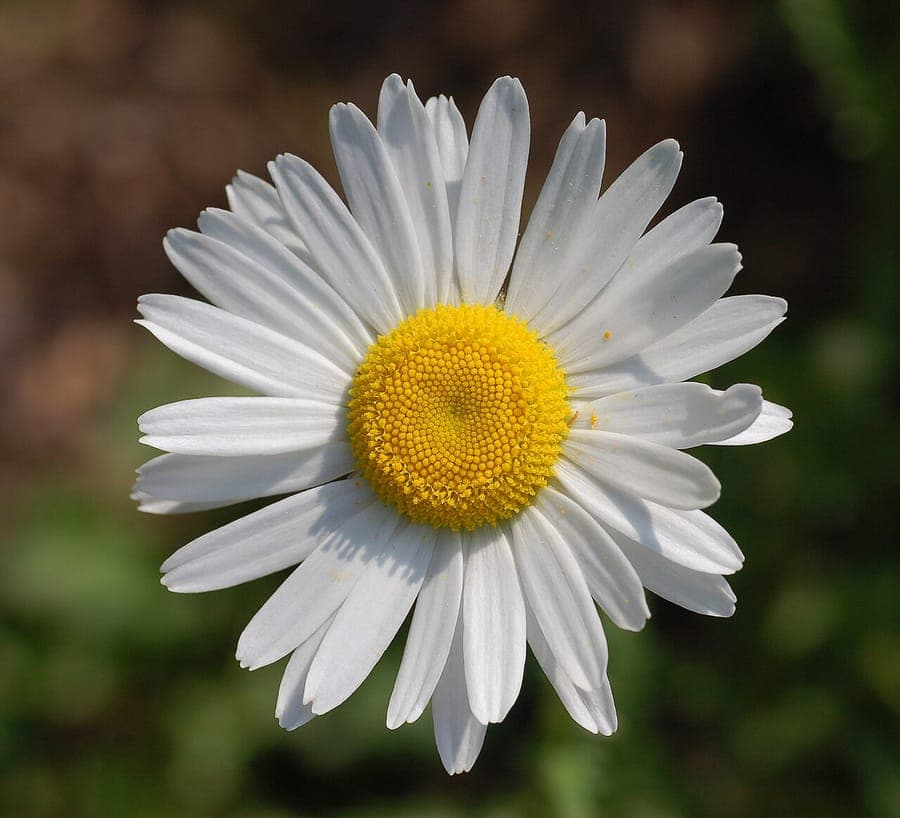
Photo by and (c)2008 Derek Ramsey (Ram-Man). Co-attribution must be given to the Chanticleer Garden. / CC BY-SA 3.0, via Wikimedia Commons
Oxeye daisy: complete guide
Leucanthemum vulgare
¿Quieres ver Oxeye daisy: complete guide en tu jardín?
1 minuto, sin tarjeta de crédito
Overview
Oxeye daisy (Leucanthemum vulgare), also known as dog daisy or marguerite, is a robust perennial plant from the Asteraceae family, native to Europe and Russia to the Far East. This elegant flower reaches 30-90 cm in height and is known for its classic, large flower heads with white petals and yellow center.
Oxeye daisy grows wild in meadows, along roadsides, and in weedy places. It is highly bird-friendly and honeybee-friendly, making it ideal for ecological and wildflower gardens.
Appearance & Bloom
Oxeye daisy forms a compact rosette with linear to lanceolate, coarsely toothed leaves of dark green. The stems are upright-growing, green, leafed.
From May to August, large, single flower heads of 40-50 mm diameter appear with 15-25 white petals around a gold-yellow center. These are highly attractive to bees, butterflies, and honeybees and produce abundant nectar.
Ideal Location
Oxeye daisy grows in full sun to half shade. Suitable for borders, meadows, and wild corners.
- Light requirement: Full sun to half shade (minimum 4 hours sunlight)
- Drainage: Good to excellent draining
- Temperature: Hardy to -20°C (USDA zone 4)
- Height: 30-90 cm
Soil Requirements
Oxeye daisy grows on nearly all soils, including poor ground. Poor soil leads to more flowers; rich soil to more foliage.
- pH: 5.0-8.0 (highly tolerant)
- Moisture: Dry to moderately moist
- Nutrition: No fertilization needed; too-rich soil suppresses flowering
Diseño gratis
¿Quieres ver Oxeye daisy: complete guide en tu jardín? Crea un diseño gratis ahora.
Watering
Water requirement minimal after establishment. During dry periods (>21 days without rain), spray weekly.
- Frequency: Weekly during growth; as needed after establishment
- Method: Bottom watering
- Total need: 300-400 mm per season
Pruning & Maintenance
Remove faded flower heads for longer bloom. Leave some seed for natural self-sowing. In fall, cut back to 10 cm.
Maintenance Calendar
- March-April: Shoots appear; divide plant parts
- May-August: Bloom
- August-September: Seed production
- October-November: Plant senescence
Winter Hardiness
Hardy to -20°C (USDA zone 4). Snow cover helps; plant parts overwinter underground.
Companion Planting
Combine in natural plantings with:
- Cornflower (Centaurea cyanus)
- Viper's bugloss (Echium vulgare)
- Larkspur (Delphinium)
- Lavender (Lavandula spp.)
Final Thoughts
Oxeye daisy is a beautiful, low-maintenance choice for ecological gardens and honeybee years. At gardenworld.app, discover more on wildflower gardens and native flower mixes. Perfect for summer meadows!
Want more ideas for bee gardens and wildflower mixes? Visit gardenworld.app and download our wildflower guide.
¿Quieres ver Oxeye daisy: complete guide en tu jardín? Crea un diseño gratis ahora.
Sube una foto, elige un estilo y obtén un diseño fotorrealista con lista de plantas en menos de un minuto.
Más de 10.000 jardines diseñados
Sin tarjeta de crédito


Plantas similares
Calendula stellata: complete guide
Calendula stellata
Complete guide to Calendula stellata, the star-flowered marigold from Sicily: location, soil, watering and companion planting tips.
Korean chrysanthemum: complete guide
Chrysanthemum x rubellum
Chrysanthemum x rubellum is a hardy autumn perennial with single pink to copper flowers from August to November. Care and combinations.
Helianthus divaricatus: complete guide
Helianthus divaricatus
Helianthus divaricatus is a North American woodland sunflower with yellow summer blooms, ideal for naturalistic borders and shady edges.