
JackyM59 / CC BY-SA 4.0, via Wikimedia Commons
Leucanthemum maximum: complete guide
Leucanthemum maximum
¿Quieres ver Leucanthemum maximum: complete guide en tu jardín?
1 minuto, sin tarjeta de crédito
Overview
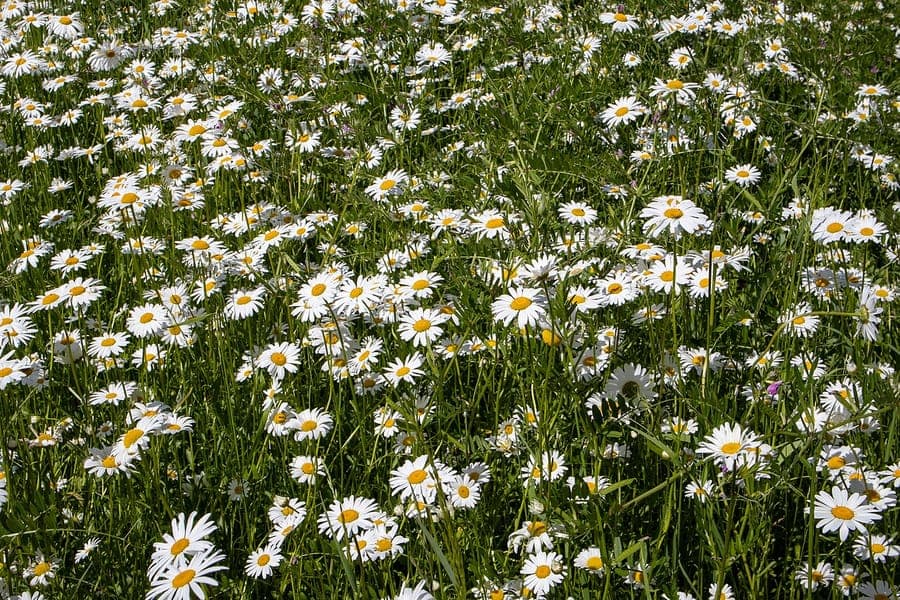
Leucantemum maximum, commonly called max chrysanthemum or shasta daisy in some regions, is an outstanding perennial native to the Pyrenees of southern France and northern Spain. This robust plant produces magnificent white daisy flowers often reaching 7-8 cm in diameter, with golden-yellow centers and pristine white petals. The blooms appear in profusion from June through September, making this one of the most reliable and prolific white flowers for temperate gardens.
Gardenworld.app recommends Leucanthemum maximum for gardeners seeking years of reliable blooms with minimal fuss. The plant is sturdy, easy to grow, and invaluable for cutting gardens and mixed borders.
Appearance and Bloom Cycle
Leucantemum maximum produces strong, upright clumps reaching 60-80 cm tall, occasionally to 100 cm in optimal conditions. The foliage is dark green, lanceolate, and clothed along the stems to the flowers. The blooms are large, simple daisies with 20-30 pure white ray florets surrounding a prominent golden disk.
Flowering begins in June and continues without pause through September, often extending into October in mild autumns. The flowers hold well in water (7-10 days) and are prized by florists and home gardeners alike for their longevity as cut flowers.
Ideal Location
Leucantemum maximum thrives in full sun with at least 6 hours of direct sunlight daily. Although the plant flowers reasonably in part shade, full sun produces maximum blooms and sturdy stems. Ensure good air circulation to minimize fungal issues.
Use this perennial in borders, rock gardens, cutting gardens, and mixed plantings. It provides height and luminosity to summer schemes. Gardenworld.app designers frequently specify it for mid-border height and airyness.
Soil Requirements
Leucantemum maximum grows on well-draining, moderately fertile soils. The plant prefers neutral to slightly alkaline pH (6.5-7.5). Heavy, waterlogged soils must be amended with sand and compost prior to planting.
When potting, use premium potting compost. Incorporate plenty of organic matter at planting time. Although established plants tolerate drier soils, they produce superior blooms with regular moisture during the growing season.
Diseño gratis
¿Quieres ver Leucanthemum maximum: complete guide en tu jardín? Crea un diseño gratis ahora.
Watering
Water newly planted Leucanthemum maximum regularly (1-2 times weekly) until deep roots establish (4-6 weeks). Established plants are reasonably drought-tolerant but reward regular irrigation with increased flowering during dry spells.
The plant despises waterlogged conditions. Ensure excellent drainage through sloped beds or raised mounds. In wet seasons, supplementary watering is rarely needed.
Pruning and Maintenance
Deadhead spent flowers regularly to encourage continuous blooming. Remove flowers as soon as outer petals begin to fade. This drives more bud formation and extends flowering until October. Never allow plants to set seed if continuous bloom is the goal.
In spring (March), thin congested clumps by removing weak or damaged shoots. This improves air circulation. In late autumn (October-November), cut plants back hard to 5 cm height.
Maintenance Calendar
March: Thin and tidy. April-May: Growth accelerates; stake taller stems if necessary. June-August: Peak blooming period; deadhead regularly. September-October: Maintain deadheading schedule; watch irrigation in cool, wet weather. November: Hardprune to base and add compost. December-February: Winter dormancy with minimal intervention.
Winter Hardiness
Leucantemum maximum is extremely hardy throughout temperate Europe, surviving to -15 degrees Celsius or colder. In the UK and northern France, it persists outdoors year-round without protection. The plant is semi-evergreen in mild winters and vigorously re-emerges in spring.
Companion Plants
Leucantemum maximum pairs beautifully with other summer bloomers. Combine with Delphinium for height and deep blue contrast. Add Liatris (blazing star) for vertical red accents. For warm tones: Coreopsis (tickseed) in gold and orange. Low foreground: Alchemilla mollis (lady's mantle) and Nepeta (catmint) in purple-pink. These combinations create months of continuous color in borders and are featured throughout gardenworld.app.
¿Quieres ver Leucanthemum maximum: complete guide en tu jardín? Crea un diseño gratis ahora.
Sube una foto, elige un estilo y obtén un diseño fotorrealista con lista de plantas en menos de un minuto.
Más de 10.000 jardines diseñados
Sin tarjeta de crédito


Plantas similares
Calendula stellata: complete guide
Calendula stellata
Complete guide to Calendula stellata, the star-flowered marigold from Sicily: location, soil, watering and companion planting tips.
Korean chrysanthemum: complete guide
Chrysanthemum x rubellum
Chrysanthemum x rubellum is a hardy autumn perennial with single pink to copper flowers from August to November. Care and combinations.
Helianthus divaricatus: complete guide
Helianthus divaricatus
Helianthus divaricatus is a North American woodland sunflower with yellow summer blooms, ideal for naturalistic borders and shady edges.