
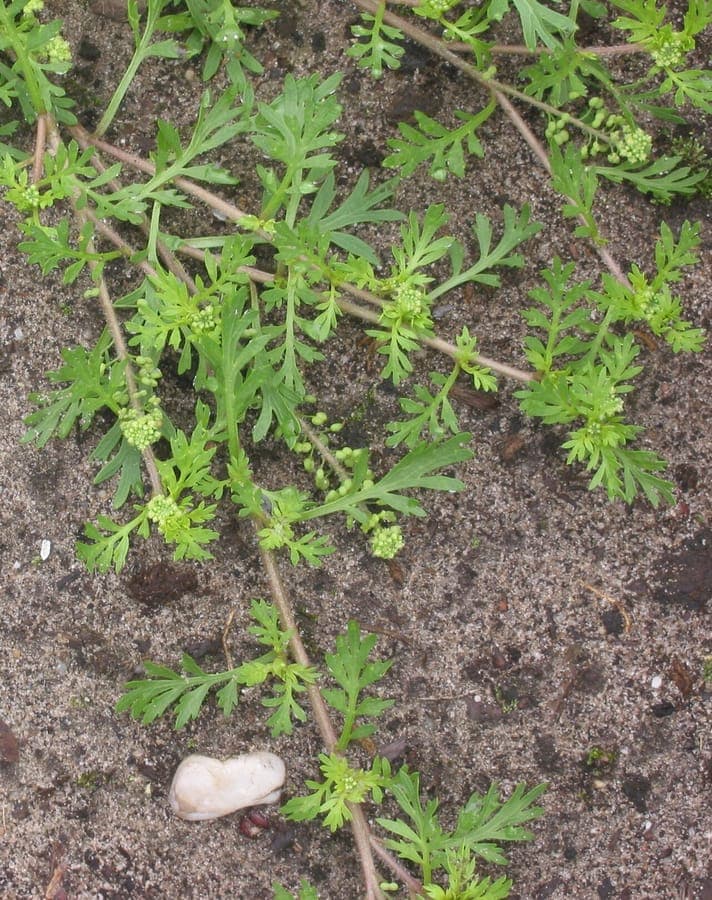
Rasbak / CC BY-SA 3.0, via Wikimedia Commons
Lepidium didymum: complete guide
Lepidium didymum
¿Quieres ver Lepidium didymum: complete guide en tu jardín?
1 minuto, sin tarjeta de crédito
Overview
Lepidium didymum, commonly known as Lesser Swine-cress or Twin-pod Pepperwort, is an annual to biennial herb of the Brassicaceae family. Originally from Peru through Brazil and South America, this plant has been introduced to many regions and naturalized in temperate climates. Reaching 10 to 40 cm tall, Lesser Swine-cress forms a compact plant with characteristic dual-chambered fruits (siliculae) that give the plant its distinctive name.
This plant is interesting as a medicinal herb and wildflower, though it can become weedy in certain conditions. In temperate gardens, it grows well without problematic spread.
Appearance and Bloom
Lesser Swine-cress displays characteristic features:
Foliage: Leaves are finely incised to toothed, hairy, and form basal rosettes. Upper leaves are much smaller, linear to lanceolate.
Flowers: Tiny white flowers grow in terminal racemes. Blooming begins in May and continues through summer.
Growth habit: Compact and upright, often heavily branched. Without pruning, the plant reaches 20-40 cm tall.
Characteristic fruits: The siliculae are most distinctive: very small, heart-shaped capsules with two separate chambers (hence "didymum" = twin). These give the plant its unique appearance.
Ideal Location
Lesser Swine-cress grows best in:
Light: Full sun to partial shade (minimum 4-5 hours direct sunlight). Tolerates more shade than many other pepperwort species.
Temperature: This herb thrives in temperate climates (USDA zones 5-9). In Northern Europe, it grows well, especially in warm locations.
Wind tolerance: Good wind tolerance due to compact growth.
For gardenworld.app: position in open locations with good visibility of the interesting fruits.
Soil
Lepidium didymum is flexible:
Texture: Grows in sand to clay. Prefers well-drained, dry to moderately moist soil.
pH: Neutral to slightly alkaline (pH 6.5-7.5).
Fertility: Moderately fertile to poor soil. Excessive nutrition promotes unwanted growth.
Preparation: Standard soil preparation with sand-compost mixture promotes establishment.
Watering
Planting: Water regularly until plant is established (2-3 weeks).
Maintenance: Once established, moderately drought-tolerant. Water during exceptional drought or hot periods.
Preference: Prefers lightly dry to moderately moist conditions.
In Northern Europe: water supplementally only during exceptionally hot, dry summers.
Diseño gratis
¿Quieres ver Lepidium didymum: complete guide en tu jardín? Crea un diseño gratis ahora.
Pruning
Maintenance pruning: Not essential, but removal of dead or damaged parts helps.
Deadheading: Can stimulate extended bloom if desired.
Seed control: If self-seeding is unwanted (invasive prevention), remove seed capsules in October.
Maintenance Calendar
April-May: Direct sow or transplant. Regular water until establishment.
June-July: Peak blooming. Plant expands. No special care needed.
August-September: Blooming continues. Seed production. Plant begins to decline as seed ripens.
October-November: Seed maturation. Remove seed if invasive spread prevention desired. Otherwise seed drops naturally.
December-February: Plant in rest or finished. Minimal water needs.
March-April: Preparation for new growing season.
Winter Hardiness
Lesser Swine-cress winter hardiness:
USDA Zones: 5-9 (-20 to -5°C).
Northern European winters: Plant survives mild winters. In severe winters, plant dies back, but seed can overwinter.
Protection: Not needed in normal winters.
Frost damage: Plant dies in freezing weather; seed survives.
Companion Plants
Lesser Swine-cress combines well with:
Wildflower partners: Plant in wildflower mixes with other small herbaceous flowers. Tolerates competition well.
Texture contrast: Grow beside larger-leaved plants for contrast.
Medicinal herb gardens: Grow in herb gardens for medicinal value.
Minimal restraint: Plant where you can control self-seeding (collect seed in October).
Not recommended: Avoid in very rich, wet soils where plant could become overly aggressive.
Conclusion
Lesser Swine-cress offers gardeners an interesting, compact plant with unique fruits and medicinal applications. Whether designing wildflower gardens or medicinal herb gardens, this plant deserves consideration.
Via gardenworld.app, you can precisely visualize how Lesser Swine-cress integrates into your garden composition. The AI-driven design system helps emphasize interesting, compact plant details.
Visit gardenworld.app to create your garden design with Lepidium didymum and discover how this unique plant strengthens your garden vision.
¿Quieres ver Lepidium didymum: complete guide en tu jardín? Crea un diseño gratis ahora.
Sube una foto, elige un estilo y obtén un diseño fotorrealista con lista de plantas en menos de un minuto.
Más de 10.000 jardines diseñados
Sin tarjeta de crédito


Plantas similares
Brassica cretica: complete guide
Brassica cretica
Brassica cretica, the Cretan cabbage, grows wild on Aegean cliffs. Discover how to grow this drought-tolerant, yellow-flowered Mediterranean perennial.
Corsican cabbage: complete guide
Brassica insularis
Corsican cabbage is a rare Mediterranean rock cabbage with white flowers and blue-green leaves. Location, soil and winter protection.
Prostrate cabbage: complete guide
Brassica procumbens
Prostrate cabbage is a creeping North African cliff plant with yellow flowers. Discover location, soil type and winter protection.