
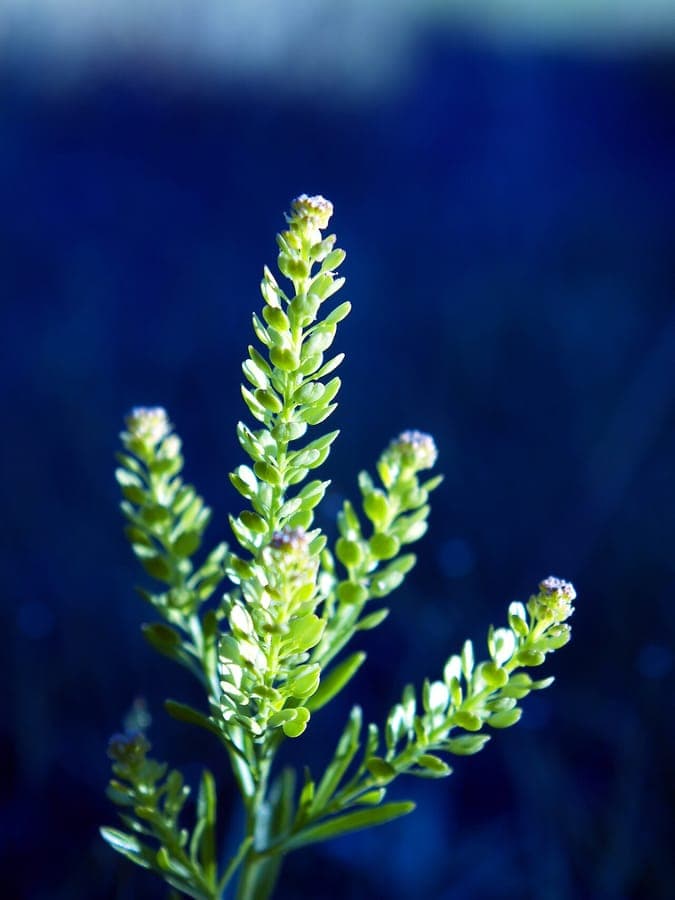
Jim Pisarowicz / Public domain, via Wikimedia Commons
Lepidium densiflorum: complete guide
Lepidium densiflorum
¿Quieres ver Lepidium densiflorum: complete guide en tu jardín?
1 minuto, sin tarjeta de crédito
Overview
Lepidium densiflorum, commonly known as Prairie Peppergrass, is an annual herb of the Brassicaceae family. Native to subarctic North America through Central America to northern Mexico, this plant is well-adapted to dry, open conditions. Reaching 10 to 50 cm tall, Prairie Peppergrass forms a compact, upright plant with dense flower spikes that attract pollinators.
This plant is interesting as a wildflower, establishing quickly, requiring minimal care, and providing abundant pollen for garden pollinator plants.
Appearance and Bloom
Prairie Peppergrass displays characteristic features:
Foliage: Basal leaves are finely incised, hairy, and form a rosette. Upper leaves are much smaller and linear.
Flowers: Tiny white flowers grow in dense, cylindrical spikes. Blooming begins at the base and progresses upward, creating an extended flowering period.
Growth habit: Compact and upright with considerable side branching. Without pruning, the plant reaches 30-50 cm tall.
Seed capsules: After flowering, very small, heart-like seed capsules develop that are light and winged.
Ideal Location
Prairie Peppergrass grows best in:
Light: Full sun (minimum 6 hours direct sunlight). Plant underperforms in shade.
Temperature: This herb thrives in open, windy places (USDA zones 4-8). Suited to North American climates; in Europe it performs well during dry summers.
Wind tolerance: Excellent wind tolerance, needs minimal shelter.
For gardenworld.app: position in open, sunny locations with little competition from other plants.
Soil
Lepidium densiflorum is very flexible:
Texture: Grows in sand to clay. Prefers dry, sometimes poor soils.
pH: Tolerant of acidic to neutral (pH 5.5-7.0).
Fertility: Poor soil preferred. Rich soil leads to excessive growth and reduced flowering.
Preparation: No special preparation needed. Simply plant and it will establish.
Watering
Planting: Water regularly until plant is 2-3 weeks old.
Maintenance: Once established, very drought-tolerant. No water needed except during exceptional drought.
Winter conditions: In colder climates, plant may overwinter; give minimal water.
In Northern Europe: rarely needs water except during very dry summers.
Diseño gratis
¿Quieres ver Lepidium densiflorum: complete guide en tu jardín? Crea un diseño gratis ahora.
Pruning
Maintenance pruning: Not needed. Plant maintains form without pruning.
Deadheading: Remove spent spikes for neater appearance and slightly extended bloom.
Seed control: If self-seeding is unwanted, remove seed capsules in October.
Maintenance Calendar
April-May: Sow directly in ground or transplant seedlings. Water until establishment.
June-July: Plant begins blooming. Peak flowering. No care needed.
August-September: Flowering continues. Seed production starts at base. Plant declines as seed ripens.
October-November: Plant finished. Seed drops. Dead stems can remain for insects.
December-March: Plant complete. Prepares for new seeding next year.
Winter Hardiness
Prairie Peppergrass winter hardiness:
USDA Zones: 4-8 (-30 to -10°C).
Northern European winters: In mild winters, plant may sometimes overwinter. In severe winters, this annual dies back, but seed can overwinter.
Protection: Not needed.
Frost damage: Plant dies in freezing weather; seed survives.
Companion Plants
Prairie Peppergrass combines well with:
Wildflower partners: Other American wildflowers and annual herbs. Grow together in dry zones.
Pollen producer: Attracts bees and other pollinator insects. Plant in clusters for maximum effect.
Texture: Grow beside larger-leaved plants for interesting texture contrast.
Naturalization: Plant in mass groups for naturalization effect in semi-wild gardens.
Minimal competition: Plant where other strong growers don't dominate.
Conclusion
Prairie Peppergrass offers gardeners a simple way to create insect-friendly, low-maintenance wildflower zones. Whether designing an American wildflower garden or simply seeking a plant that provides pollen, Prairie Peppergrass deserves consideration.
Via gardenworld.app, you can precisely visualize how Prairie Peppergrass integrates into your wildflower composition. The AI-driven design system helps optimize pollinator and pollen plants placement.
Visit gardenworld.app to create your wildflower garden with Lepidium densiflorum and discover how this robust plant strengthens your garden ecosystem.
¿Quieres ver Lepidium densiflorum: complete guide en tu jardín? Crea un diseño gratis ahora.
Sube una foto, elige un estilo y obtén un diseño fotorrealista con lista de plantas en menos de un minuto.
Más de 10.000 jardines diseñados
Sin tarjeta de crédito


Plantas similares
Brassica cretica: complete guide
Brassica cretica
Brassica cretica, the Cretan cabbage, grows wild on Aegean cliffs. Discover how to grow this drought-tolerant, yellow-flowered Mediterranean perennial.
Corsican cabbage: complete guide
Brassica insularis
Corsican cabbage is a rare Mediterranean rock cabbage with white flowers and blue-green leaves. Location, soil and winter protection.
Prostrate cabbage: complete guide
Brassica procumbens
Prostrate cabbage is a creeping North African cliff plant with yellow flowers. Discover location, soil type and winter protection.