
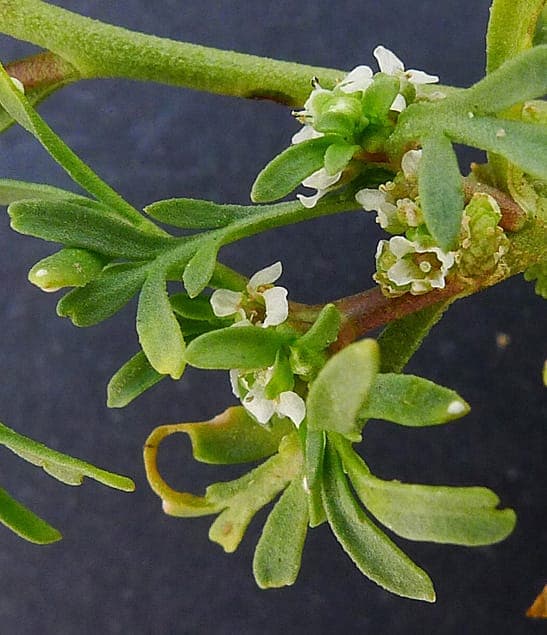
bertrant bui / CC BY-SA 2.0 fr, via Wikimedia Commons
Lepidium coronopus: complete guide
Lepidium coronopus
¿Quieres ver Lepidium coronopus: complete guide en tu jardín?
1 minuto, sin tarjeta de crédito
Overview
Lepidium coronopus, commonly known as Creeping Wart Cress or Swine Cress, is a low-growing, creeping plant of the Brassicaceae family. Found from the Macaronesia region through Europe to Central Asia, this plant thrives in sandy, dry locations. Reaching maximum heights of only 5 to 30 cm while spreading 30 to 60 cm, Creeping Wart Cress makes an excellent groundcover for specific garden applications.
The plant is characterized by its fine, fern-like foliage and prostrate growth habit, making it ideal in garden designs where delicate, low-lying coverage is desired.
Appearance and Bloom
Creeping Wart Cress displays subtle beauty:
Foliage: Leaves are finely cut and incised, almost fern-like in appearance. They form dense rosettes, particularly at the plant base. Color ranges from green to grey-green.
Growth habit: Highly creeping, forming mats or carpets along the ground. Stems root at contact points with soil.
Flowers: Tiny white flowers emerge in spring and early summer. Blooms are minute (approximately 3-4 mm) but numerous, creating a delicate effect.
Fruits: Small, nearly spherical seed capsules follow flowering, adding additional interest.
Ideal Location
Creeping Wart Cress thrives best in:
Light: Full sun to partial shade (minimum 4-5 hours direct sunlight). The plant tolerates more shade than many groundcovers.
Temperature: This is a cold-hardy plant (USDA zones 5-9) suited to temperate climates. In Northern Europe, it grows without protection.
Wind tolerance: Good wind tolerance due to low profile.
For gardenworld.app recommendations: ideal for open edges, between stone pathways, and in niches where low-lying coverage is needed.
Soil
Lepidium coronopus is flexible but prefers:
Texture: Sand or sandy loam, well-drained. Tolerates dry clay soils.
pH: Neutral to slightly alkaline (pH 6.5-7.5).
Fertility: Poor to moderately fertile soil. Excessive nutrition promotes excessive growth.
Preparation: Break up soil and incorporate sand for drainage. No fertilization needed.
Watering
Planting: Water regularly until plant is established (2-3 weeks).
Maintenance: Once established, very drought-tolerant. Water only during severe drought.
Winter: Minimal water. The plant prefers dry winter conditions.
Preference: This plant is very drought-loving.
In Northern Europe: rarely needs supplementary water except during extremely dry summers.
Diseño gratis
¿Quieres ver Lepidium coronopus: complete guide en tu jardín? Crea un diseño gratis ahora.
Pruning
Maintenance pruning: No pruning needed. The plant keeps itself compact.
Cleanup: Remove dead material in spring after winter.
Control: Plant may spread beyond boundaries; cut back to desired size.
Maintenance Calendar
March-April: Planting or start of growing season. Regular water until establishment.
May-June: Flowering. No care needed. Delicate blooms attractive to insects.
July-August: Seed production. Plant expands further. Minimal water needs.
September-October: Plant continues expansion, covering more ground. No additional care.
November-January: Plant may decline in severe winters. Overwinters in mild years.
February-March: Check for winter damage. New growth begins.
Winter Hardiness
Creeping Wart Cress winter hardiness:
USDA Zones: 5-9 (-20 to 0°C).
Northern European winters: Plant usually survives, though severe winters can cause damage. Often perennial in mild years.
Protection: Mulch can help, though usually not necessary.
Frost sensitivity: Plant may decline in very severe winters but thrives in temperate winters.
Companion Plants
Creeping Wart Cress combines well with:
Low growers: Other groundcovers like Thymus (Thyme) and Sedum (Stonecrop). Similar height and moisture needs.
Texture contrast: Plant beside larger-leaved plants for contrast.
Edge planting: Use along garden borders and pathways for elegant edging.
Rock gardens: Ideal in alpine and rock gardens where low coverage is desired.
Between stepping stones: Grow between stone paths and steppers where low-lying material is wanted.
Conclusion
Creeping Wart Cress offers gardeners an elegant groundcover solution with minimal care requirements. Whether designing alpine gardens or simply seeking low-growing plants requiring little maintenance, Creeping Wart Cress deserves consideration.
Via gardenworld.app, you can precisely see how this creeping plant integrates into your garden design. The AI-driven design system helps optimize groundcover and low-growing plant placement.
Visit gardenworld.app to create your perfectly designed garden with Lepidium coronopus and discover how this delicate plant enhances your garden landscape.
¿Quieres ver Lepidium coronopus: complete guide en tu jardín? Crea un diseño gratis ahora.
Sube una foto, elige un estilo y obtén un diseño fotorrealista con lista de plantas en menos de un minuto.
Más de 10.000 jardines diseñados
Sin tarjeta de crédito


Plantas similares
Brassica cretica: complete guide
Brassica cretica
Brassica cretica, the Cretan cabbage, grows wild on Aegean cliffs. Discover how to grow this drought-tolerant, yellow-flowered Mediterranean perennial.
Corsican cabbage: complete guide
Brassica insularis
Corsican cabbage is a rare Mediterranean rock cabbage with white flowers and blue-green leaves. Location, soil and winter protection.
Prostrate cabbage: complete guide
Brassica procumbens
Prostrate cabbage is a creeping North African cliff plant with yellow flowers. Discover location, soil type and winter protection.