
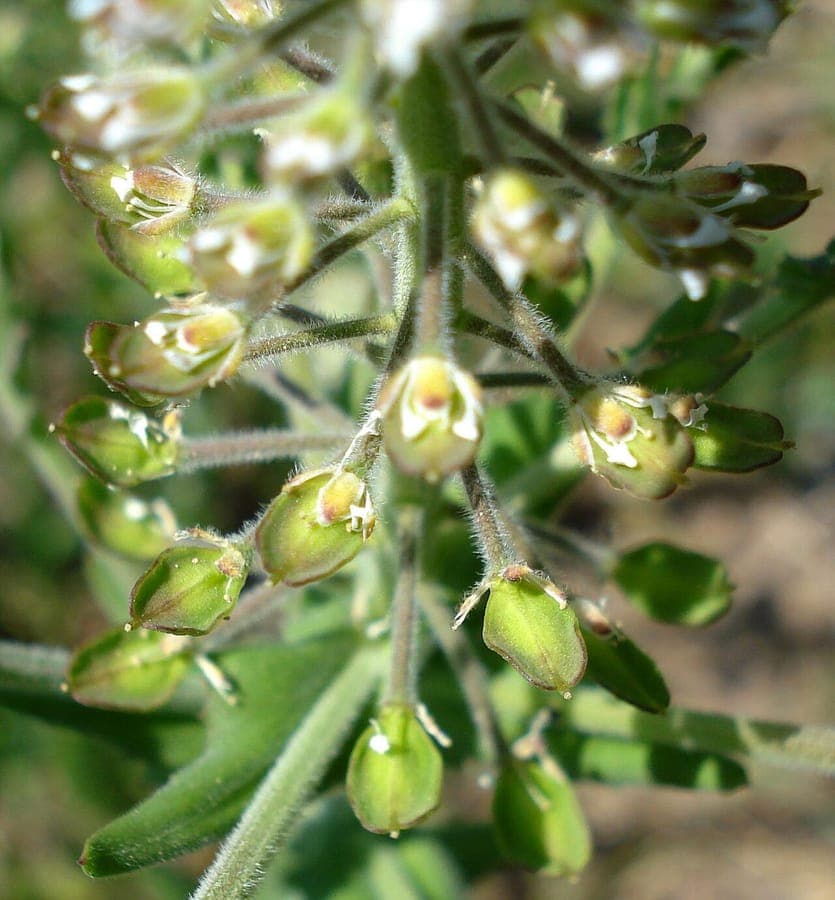
Fornax / CC BY-SA 3.0, via Wikimedia Commons
Lepidium campestre: complete guide
Lepidium campestre
¿Quieres ver Lepidium campestre: complete guide en tu jardín?
1 minuto, sin tarjeta de crédito
Overview
Lepidium campestre, commonly known as Field Pepperwort, is an annual to biennial herb belonging to the Brassicaceae family (cabbage family). Native to Europe extending through the Caucasus, this compact plant grows primarily in dry, sandy locations. Reaching 15 to 50 cm tall, Field Pepperwort offers subtle, fine texture valued in wildflower gardens and natural planting schemes.
The plant is characterized by its diminutive, heart-shaped seed pods (siliculae) that remain visible after flowering fades. This extends the plant's ornamental appeal throughout late summer and autumn.
Appearance and Bloom
Field Pepperwort displays fine, elegant features:
Foliage: Basal leaves are leathery, lightly hairy, and form a rosette in the first year. Stem leaves are very small and linear, creating an elegant, slender appearance.
Flowers: Tiny white flowers grow in terminal racemes. Each bloom is merely 3-4 mm, but collectively they form attractive flower spikes. Flowering: May through July.
Fruits: Characteristic heart-shaped seed pods (siliculae) measure approximately 5-6 mm long and remain ornamental on the plant, providing interesting structure into late summer and autumn.
Growth habit: Compact and upright with considerable branching, requiring no structural pruning.
Ideal Location
Field Pepperwort thrives best in:
Light: Full sun (minimum 6 hours direct sunlight). The plant tolerates partial shade but blooms better in full sun.
Temperature: This herb grows well in temperate to cool climates (USDA zones 5-8). In Northern Europe, it grows without protection.
Wind tolerance: Excellent wind tolerance due to compact growth.
For gardenworld.app recommendations: ideal for open, sunny locations where fine texture is appreciated.
Soil
Lepidium campestre is undemanding but prefers:
Texture: Dry sand or sandy loam preferred. Tolerates clay if well-drained.
pH: Neutral to slightly alkaline (pH 6.5-7.5).
Fertility: Poor to moderately fertile soil. Excess nutrients cause excessive growth.
Preparation: Sand and compost mixture promotes establishment. No additional fertilization needed.
Watering
Planting: Water regularly for 2 weeks following transplanting.
Maintenance: Once established, very drought-tolerant. Water only during extended dry periods.
Winter: Minimal water in winter months, especially if soil is wet.
Preference: This herb prefers dry soil to wet conditions.
In Northern Europe: rarely needs supplementary water except during exceptionally dry summers.
Diseño gratis
¿Quieres ver Lepidium campestre: complete guide en tu jardín? Crea un diseño gratis ahora.
Pruning
Pruning: No pruning needed, but you may remove spent flower spikes for neatness.
Seed control: Remove seed pods in October if self-seeding is not desired.
Natural decline: The plant dies naturally after seed set. Leave dried stems for winter insect habitat.
Maintenance Calendar
April-May: Sow seeds or transplant young plants. Regular water until establishment.
June-July: Peak flowering. Minimal care. Deadhead if desired.
August-September: Seed pods ripen. Interesting structure remains visible. No additional care.
October-November: Harvest seed pods if self-seeding desired. Otherwise remove.
December-February: Plant past, but leave dead stems for insect shelter.
March-April: Clean ground for new season.
Winter Hardiness
Lepidium campestre winter hardiness:
USDA Zones: 5-8 (-25 to -10°C).
Northern European winters: Plant survives typical winters. Biennial types sometimes overwinter as second-year plants.
Protection: Not needed in normal winters.
Frost damage: Plant is killed by severe frost, though seed may overwinter.
Companion Plants
Field Pepperwort combines well with:
Wildflower partners: Other annual herbs like Sherardia arvensis (Field Madder). Share preference for dry soil.
Texture contrast: Plant beside larger shrubs for scale contrast.
Pollinator support: Grow in clusters for insects. The miniature flowers attract beneficial insects.
Low competition: Position among other fine-textured plants without dominant roots.
Wildflower mixes: Combine with other Brassicaceae species for herb-rich gardens.
Conclusion
Field Pepperwort is ideal for gardeners appreciating subtle, fine texture and natural forms. Whether designing wildflower gardens or seeking interesting structural elements, this herb offers elegance without complex care requirements.
Via gardenworld.app, you can precisely visualize how Field Pepperwort integrates into your garden composition. The AI-driven design system helps emphasize fine plant details and create natural, harmonious combinations.
Visit gardenworld.app to create your wildflower garden or minimalist design featuring Lepidium campestre and discover how this delicate plant contributes to your overall garden vision.
¿Quieres ver Lepidium campestre: complete guide en tu jardín? Crea un diseño gratis ahora.
Sube una foto, elige un estilo y obtén un diseño fotorrealista con lista de plantas en menos de un minuto.
Más de 10.000 jardines diseñados
Sin tarjeta de crédito


Plantas similares
Brassica cretica: complete guide
Brassica cretica
Brassica cretica, the Cretan cabbage, grows wild on Aegean cliffs. Discover how to grow this drought-tolerant, yellow-flowered Mediterranean perennial.
Corsican cabbage: complete guide
Brassica insularis
Corsican cabbage is a rare Mediterranean rock cabbage with white flowers and blue-green leaves. Location, soil and winter protection.
Prostrate cabbage: complete guide
Brassica procumbens
Prostrate cabbage is a creeping North African cliff plant with yellow flowers. Discover location, soil type and winter protection.