
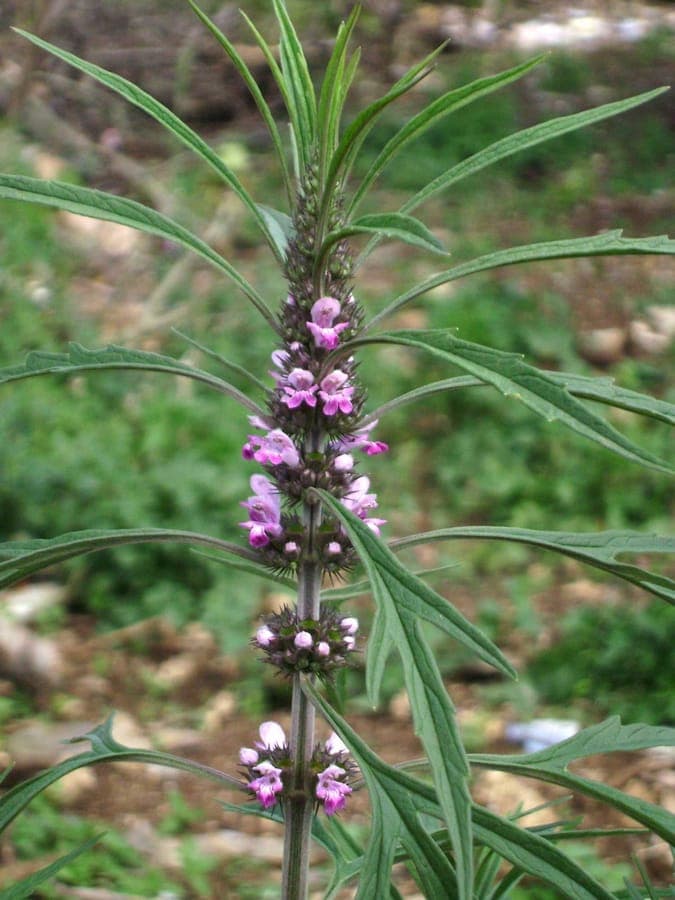
Tauʻolunga / CC BY-SA 3.0, via Wikimedia Commons
Leonurus sibiricus: complete guide
Leonurus sibiricus
¿Quieres ver Leonurus sibiricus: complete guide en tu jardín?
1 minuto, sin tarjeta de crédito
Overview
Leonurus sibiricus, commonly known as Siberian motherwort or Chinese motherwort, is an annual or biennial plant from the Lamiaceae family (mint family). This species naturally occurs from Siberia through Mongolia to northern China and is internationally valued for its medicinal properties and traditional uses. The plant has a long history in Asian herbalism and traditional medicine.
Appearance & bloom
Leonurus sibiricus grows vigorously into an upright, branching plant with rough, hairy stems. Plants typically reach 50-150 centimeters in height depending on growing conditions. The leaves are deeply lobed and coarsely toothed, with a distinctive texture. Small pink to purple labiate flowers are arranged in dense vertical spires along the stems. Flowering occurs from July through September, with distinctive calyces persisting on seed-bearing stems.
Ideal location
Leonurus sibiricus performs best in full sun to partial shade conditions. A warm location receiving at least 6 hours of direct sunlight daily promotes optimal growth and flowering. The plant is highly adaptable and thrives in diverse locations. In warmer climates, afternoon shade provides beneficial relief from excessive heat.
Soil
This plant is exceptionally flexible regarding soil type. Leonurus sibiricus grows on various substrates from sandy to clay soils, provided drainage is adequate. The plant tolerates moderately fertile to poor soils without complaint. No special soil preparation is required, though compost may benefit marginally deficient soils.
Watering
Leonurus sibiricus is quite drought-tolerant once established. Young plants require regular watering until a strong root system develops. Mature plants need minimal supplemental water. Avoid waterlogging, though the plant tolerates temporarily moist conditions and may self-seed in damp areas.
Diseño gratis
¿Quieres ver Leonurus sibiricus: complete guide en tu jardín? Crea un diseño gratis ahora.
Pruning
Pruning encourages a more compact form. Pinch growing tips on young plants to promote branching. Deadhead spent flowers to stimulate continued flowering. At season's end, cut stems back close to ground level or leave them for winter interest and self-seeding opportunities.
Maintenance calendar
Spring: Direct-sow seeds in prepared beds. Summer: Thin seedlings, deadhead spent flowers to extend blooming. Autumn: Allow seeds to mature for natural dispersal or harvest for next season. Winter: Minimal maintenance; prepare beds for spring sowing.
Winter hardiness
While technically not winter hardy, Leonurus sibiricus may overwinter or self-seed in some temperate climates. In severe winters, plants typically die back. This makes it effectively annual or biennial in temperate zones, though self-seeding offers continuous presence.
Companion plants
Pair Leonurus sibiricus with other herb and pollinator-friendly plants such as Thymus, Origanum, and Salvia species. The plant integrates beautifully in medicinal herb borders and wildflower mixtures. Persistent flowers attract honeybees and beneficial insects throughout the season.
Closing thoughts
Leonurus sibiricus is a versatile herb bringing both function and visual interest to your garden. Whether cultivating it for medicinal use, pollinator support, or simply for its distinctive flowers, this represents a valuable addition. Seeds are readily available and direct-sowing is straightforward. Introduce this interesting herb to your garden today.
On gardenworld.app, design gardens featuring medicinal and useful herbs. Visit gardenworld.app for comprehensive inspiration and plant guidance.
¿Quieres ver Leonurus sibiricus: complete guide en tu jardín? Crea un diseño gratis ahora.
Sube una foto, elige un estilo y obtén un diseño fotorrealista con lista de plantas en menos de un minuto.
Más de 10.000 jardines diseñados
Sin tarjeta de crédito


Plantas similares
Apple mint (Mentha x villosa): complete guide
Mentha x villosa
Meet apple mint (Mentha x villosa): a fruity-scented kitchen herb with woolly leaves, perfect for tea and mojitos.
Salvia peyronii: complete guide
Salvia peyronii
Discover Salvia peyronii, a rare Lebanese mountain sage. Growing tips, hardiness, and companion planting for a Mediterranean gravel garden.
Bigleaf mint (Mentha x rotundifolia): complete guide
Mentha x rotundifolia
Discover bigleaf mint: cultivation, care tips, and garden uses. Learn how to grow this aromatic herb with soft, hairy leaves.