
Christian Fischer / CC BY-SA 3.0, via Wikimedia Commons
Ivy-Leaf Duckweed: Complete Growing Guide for Lemna trisulca
Lemna trisulca
¿Quieres ver Ivy-Leaf Duckweed: Complete Growing Guide for Lemna trisulca en tu jardín?
1 minuto, sin tarjeta de crédito
Overview
Lemna trisulca, commonly known as ivy-leaf duckweed or narrow-leaf duckweed, is a unique aquatic plant from the Araceae family. This fascinating species distinguishes itself from other Lemna species through its ability to grow both floating and completely submerged. The plant is cosmopolitan, found in temperate and subtropical freshwater habitats worldwide.
Appearance and Growth
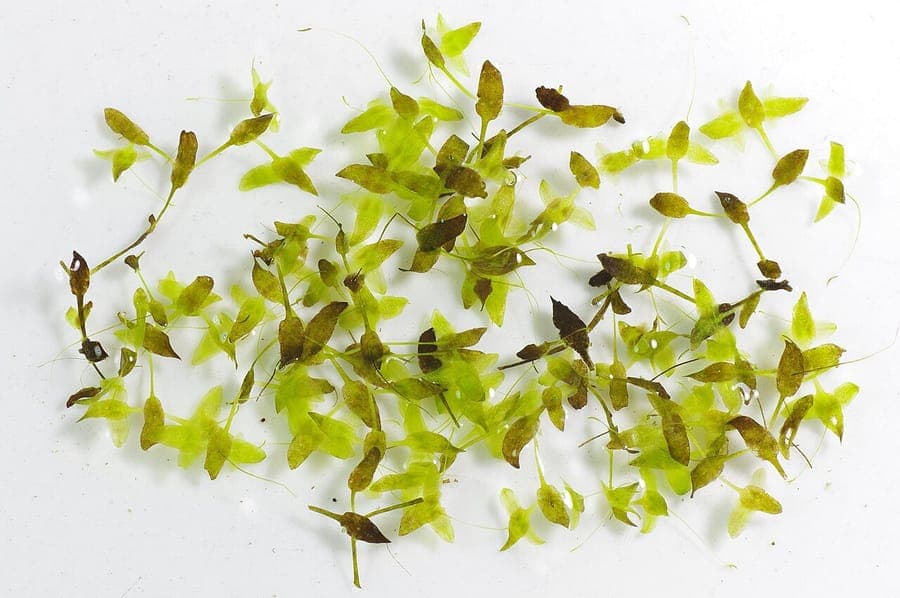
Ivy-leaf duckweed distinguishes itself through characteristic narrow, elongated fronds (leaf-like structures) measuring 5-10 mm long and 1-3 mm wide, with distinctive three-lobed tips. Unlike other Lemna species, this plant can grow both floating and submerged, depending on environmental factors.
Floating forms create small, flat clusters at the water surface, while submerged forms develop branched, feathery colonies beneath the water. This unique dual-growth behavior makes it exceptionally suitable for diverse aquarium configurations.
Ideal Location
Ivy-leaf duckweed thrives in full sunlight to reduced light levels. The plant is exceptionally shade-tolerant and grows excellently under low light where other duckweeds fail. A minimum of 2-4 hours indirect daylight suffices, though 6-8 hours is ideal. In aquariums, artificial lighting works well, even at moderate intensity.
Water and Nutrient Requirements
The plant grows in both soft and hard water, tolerating pH 5.5-8.5. Optimal temperature ranges from 15-25°C, with tolerance to approximately 5-30°C, making it highly versatile. Nutrient requirements are low to moderate. In aquariums, liquid fertilization is optional. The plant thrives even in nutrient-poor environments, though nutrition enhances growth.
Water Quality and Maintenance
Regular water changes (20-25% weekly) are recommended, though the plant tolerates lower water quality than many other aquatic plants. The plant also helps purify water by absorbing nutrients. CO2 injection is unnecessary.
Pruning and Management
Pruning is optional, depending on desired aesthetics. For floating forms, remove fronds when covering more than 50% of the surface. For submerged forms, pruning can promote compactness. The plant is highly flexible in form and can be left to grow wild or trimmed to preference.
Diseño gratis
¿Quieres ver Ivy-Leaf Duckweed: Complete Growing Guide for Lemna trisulca en tu jardín? Crea un diseño gratis ahora.
Maintenance Calendar
Year-round: Prepare aquarium and water quality systems.
Spring (March-May): Regular monitoring. Plant may grow faster as temperatures rise. Moderate pruning.
Summer (June-August): Peak growth. Regular water changes. Pruning to preference. Fertilization optional.
Fall (September-November): Normal growth. Weekly water changes. Minimal pruning.
Winter (December-February): Slow growth in cooler water. Water quality critical. Artificial lighting essential for aquariums.
Winter Hardiness
Ivy-leaf duckweed is not frost-hardy in freezing climates. The plant tolerates temperatures to approximately 2-5°C, but frost damage occurs below those levels. In cold climates, cultivation must occur indoors in heated aquariums year-round. In subtropical and tropical climates, growth continues year-round outdoors.
Benefits and Applications
Ivy-leaf duckweed offers unique advantages:
- Flexible Growth: Floating or submerged according to needs
- Shade Tolerance: Grows better in low light than most aquatic plants
- Water Quality: Helps absorb nutrients, supports oxygen production
- Aesthetics: Creates feathery submerged fronds or floating mats
- Stability: Extremely stable plant without special requirements
Distinguishing Features
Ivy-leaf duckweed distinguishes itself through:
- Dual Growth Mode: Can both float and grow submerged
- Three-Lobed Fronds: Narrow, elongated leaf-like shapes
- Shade Tolerance: Grows under weaker light than other Lemna species
- Feathery Submerged Growth: Creates unique textural effects underwater
Closing Remarks
Lemna trisulca is the most versatile of all duckweed species, suitable for numerous aquarium configurations and preference styles. The ability to both float and grow submerged makes it exceptionally adaptable. For complete aquarium and garden design inspiration, visit gardenworld.app. Discover how to create balanced and beautiful aquatic environments with professional design guidance at gardenworld.app.
¿Quieres ver Ivy-Leaf Duckweed: Complete Growing Guide for Lemna trisulca en tu jardín? Crea un diseño gratis ahora.
Sube una foto, elige un estilo y obtén un diseño fotorrealista con lista de plantas en menos de un minuto.
Más de 10.000 jardines diseñados
Sin tarjeta de crédito


Plantas similares
Arrowhead vine: complete guide
Syngonium auritum
Everything about Syngonium auritum, the tropical five-fingers houseplant. Care, location, watering, and pruning explained clearly for beginners and enthusiasts.
Minute duckweed: complete guide to Lemna perpusilla
Lemna perpusilla
Everything about Lemna perpusilla, the minute duckweed: ecology, pond management, water quality and care in garden water features.
Dead horse arum lily: complete guide
Helicodiceros muscivorus
Everything about the dead horse arum lily (Helicodiceros muscivorus): growing conditions, spectacular bloom, thermogenesis, and care for this Mediterranean aroid.