
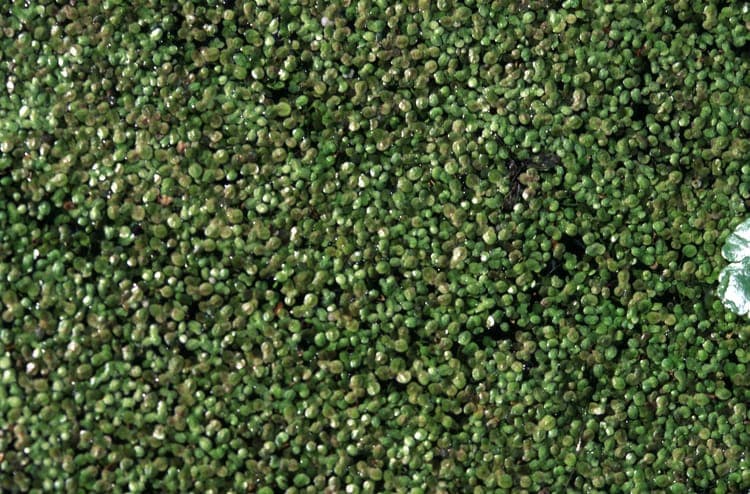
Gordon Leppig & Andrea J. Pickart / Public domain, via Wikimedia Commons
Least Duckweed: Nano Tank Guide for Lemna minuta
Lemna minuta
¿Quieres ver Least Duckweed: Nano Tank Guide for Lemna minuta en tu jardín?
1 minuto, sin tarjeta de crédito
Overview
Lemna minuta, commonly known as least duckweed or minute duckweed, is an extremely small floating water plant from the Araceae family. This microscopic plant originates from the Americas and distinguishes itself through extraordinarily compact size compared to other Lemna species. The plant appeals to aquarists designing small, precisely engineered ecosystems.
Appearance and Growth
Least duckweed comprises the smallest fronds among all Lemna species, typically 1-3 mm wide. The fronds are extremely thin, flat and oval to slightly rounded, dark green. Each frond bears a single short, slender root. The plant floats freely and reproduces rapidly through frond division, though slightly more slowly than Lemna minor.
The compact size makes it ideal for nano tanks and small-scale aquariums where larger duckweeds would occupy excessive space. Under ideal conditions, a small initial population can quickly expand into a full colony.
Ideal Location
Least duckweed thrives in full sunlight to partial shade. A minimum of 4-6 hours direct daily sunlight is ideal, though it also grows in light shade. In aquariums, 10-12 hours artificial light daily is recommended. The plant grows more slowly in reduced light but survives.
Water and Nutrient Requirements
The plant grows in both soft and hard water and tolerates a broad pH range (5.5-8.0). Optimal temperature ranges from 15-25°C, with tolerance to approximately 10-30°C. Some nutrients enhance growth. In aquariums with fish, this usually comes from fish waste. In fish-free nano tanks, liquid nutrient solutions are beneficial.
Water Quality and Maintenance
Regular water changes (25-30% weekly) are important, particularly in small nano tanks where water quality degrades rapidly. Ammonia and nitrate must remain low. CO2 injection is unnecessary but may promote growth.
Pruning and Management
Regular pruning prevents overcrowding. Remove fronds when they cover more than 50% of the aquarium surface. This occurs less frequently than with larger duckweed species due to slower growth. Handle carefully to avoid damaging tiny fronds.
Diseño gratis
¿Quieres ver Least Duckweed: Nano Tank Guide for Lemna minuta en tu jardín? Crea un diseño gratis ahora.
Maintenance Calendar
Year-round: Tank preparation and water quality monitoring.
Spring (March-May): Regular monitoring. Nutrient adjustment as needed. Lighting adjustment.
Summer (June-August): Peak growth. Weekly water changes. Pruning as needed. Nutrient supplementation beneficial.
Fall (September-November): Normal growth. Weekly water changes. Minimal pruning.
Winter (December-February): Slowed growth. Artificial light essential. Water quality critical. Nutrient supplementation may decrease.
Winter Hardiness
The plant is not frost-hardy at freezing points. Temperatures below approximately 5°C slow or halt growth, and frost kills the plant. In cold climates, cultivation must occur indoors in heated aquariums year-round. In warm, tropical climates, outdoor growth continues throughout the year.
Benefits and Applications
Least duckweed offers unique advantages for small-scale aquascaping:
- Nano Tank Friendly: Provides decorative coverage without overwhelming limited space
- Water Quality: Helps absorb nutrients and supports oxygen production
- Educational: Ideal for studying plant physiology at microscale levels
- Food: Occasional food source for very small fish and invertebrates
- Aesthetics: Creates natural appearance in nano tanks and small display aquariums
Distinguishing Features
Least duckweed distinguishes itself from related species through:
- Size: Significantly smaller than Lemna minor and Lemna gibba
- Geographic Origin: American, not Eurasian
- Growth Rate: Slightly slower than Lemna minor, suitable for precise control
- Root Morphology: Very short, delicate roots
Closing Remarks
Lemna minuta is the perfect choice for aquarists designing small, precisely engineered aquatic habitats. The microscopic size and controlled growth make it ideal for nano tanks and experimental aquascapes. For complete garden design inspiration and aquatic plant selection, visit gardenworld.app. Discover how to create harmonious aquatic environments with professional guidance at gardenworld.app.
¿Quieres ver Least Duckweed: Nano Tank Guide for Lemna minuta en tu jardín? Crea un diseño gratis ahora.
Sube una foto, elige un estilo y obtén un diseño fotorrealista con lista de plantas en menos de un minuto.
Más de 10.000 jardines diseñados
Sin tarjeta de crédito


Plantas similares
Arrowhead vine: complete guide
Syngonium auritum
Everything about Syngonium auritum, the tropical five-fingers houseplant. Care, location, watering, and pruning explained clearly for beginners and enthusiasts.
Minute duckweed: complete guide to Lemna perpusilla
Lemna perpusilla
Everything about Lemna perpusilla, the minute duckweed: ecology, pond management, water quality and care in garden water features.
Dead horse arum lily: complete guide
Helicodiceros muscivorus
Everything about the dead horse arum lily (Helicodiceros muscivorus): growing conditions, spectacular bloom, thermogenesis, and care for this Mediterranean aroid.