
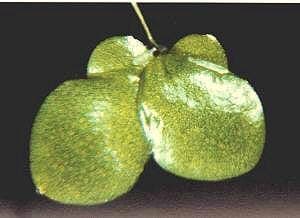
Zeamays at English Wikipedia / CC BY 2.5, via Wikimedia Commons
Fat Duckweed: Complete Guide to Lemna gibba Care
Lemna gibba
¿Quieres ver Fat Duckweed: Complete Guide to Lemna gibba Care en tu jardín?
1 minuto, sin tarjeta de crédito
Overview
Lemna gibba, commonly known as fat duckweed or gibbous duckweed, is a small floating aquatic plant from the Araceae family. This fast-growing water plant inhabits warm and temperate waters worldwide, from Europe to Asia and America. The plant is popular in aquariums, ponds, and laboratory research due to its simple cultivation requirements and nutritional value.
Appearance and Growth
Fat duckweed consists of tiny, round to oval leafless bodies (fronds) measuring approximately 2-5 mm across. The fronds are thick, dome-shaped and greenish, sometimes with purplish tints on the underside. This thick, gibbous appearance distinguishes it from the flatter Lemna minor. The plant floats freely at the water surface and forms rapid, dense colonies of dozens to hundreds of plants.
Flowering is rare in cultivation, but the plant reproduces rapidly through vegetative frond division. Under ideal conditions, populations can double within just a few weeks.
Ideal Location
Fat duckweed thrives in full sunlight, requiring at least 4-6 hours of direct daily sunlight. In aquariums, at least 10-12 hours of artificial light daily is recommended. The plant tolerates partial shade but grows more slowly. Excessive shade results in thinner, less vigorous plants.
Water and Soil Requirements
The plant grows in both soft and hard water and tolerates a broad pH range (6.0-8.0). Temperature should remain between 10 and 25°C, with optimal growth between 15-22°C. For enhanced growth, add moderate organic material or use nutrient-rich pond substrates. In aquariums, liquid plant fertilizers are beneficial.
Water Quality and Maintenance
Although the plant lives in water, regular water changes (30% weekly in aquariums, more in dense ponds) are crucial for maintaining water quality. Water contamination and stagnation must be avoided, as they promote algae growth and pathogens. In ponds, aeration and filtration are valuable.
Diseño gratis
¿Quieres ver Fat Duckweed: Complete Guide to Lemna gibba Care en tu jardín? Crea un diseño gratis ahora.
Pruning and Management
Regular pruning prevents overcrowding and maintains water quality. Remove excess fronds when plants cover more than 30-40% of the water surface, especially in aquariums. This promotes healthy, balanced growth. Clean, sharp tools prevent leaf damage.
Maintenance Calendar
Year-round: Prepare water and nutrient systems. Check for unwanted bacteria or parasites.
Spring-Summer: Intensive growth period. Regular nutrition and water maintenance. Prune as needed. Monitor water quality weekly.
Fall-Winter: Growth slows in cooler water. Less pruning needed. Water quality remains critical. Artificial lighting may be necessary for aquariums.
Winter Hardiness
The plant is not frost-hardy in freezing climates. In regions with frost, plants must be protected indoors in tanks or aquariums. Minimum temperature tolerance is approximately 5°C, but optimal growth occurs between 15-22°C. In subtropical and tropical climates, the plant grows year-round outdoors.
Benefits and Applications
Fat duckweed provides numerous advantages:
- Oxygen Production: As an aquatic plant, it produces oxygen for aquariums and ponds
- Nutrient Removal: Helps eliminate excess nutrients (nitrate, phosphate) from water
- Animal Feed: Suitable food for fish and waterfowl
- Research: Used in biological and nutritional studies
- Aesthetics: Creates natural appearance in aquariums and ponds
The plant can also be used for small-scale water purification and wetland simulation.
Closing Remarks
Lemna gibba is a useful and easy-to-cultivate plant for both beginners and advanced aquarists. It requires minimal maintenance, grows rapidly, and delivers numerous benefits. Whether you maintain an aquarium, pond, or laboratory, this plant is an excellent choice. Discover more aquatic plants and complete garden designs at gardenworld.app for personalized garden solutions. Visit gardenworld.app for more inspiration and professional guidance.
¿Quieres ver Fat Duckweed: Complete Guide to Lemna gibba Care en tu jardín? Crea un diseño gratis ahora.
Sube una foto, elige un estilo y obtén un diseño fotorrealista con lista de plantas en menos de un minuto.
Más de 10.000 jardines diseñados
Sin tarjeta de crédito


Plantas similares
Arrowhead vine: complete guide
Syngonium auritum
Everything about Syngonium auritum, the tropical five-fingers houseplant. Care, location, watering, and pruning explained clearly for beginners and enthusiasts.
Minute duckweed: complete guide to Lemna perpusilla
Lemna perpusilla
Everything about Lemna perpusilla, the minute duckweed: ecology, pond management, water quality and care in garden water features.
Dead horse arum lily: complete guide
Helicodiceros muscivorus
Everything about the dead horse arum lily (Helicodiceros muscivorus): growing conditions, spectacular bloom, thermogenesis, and care for this Mediterranean aroid.