
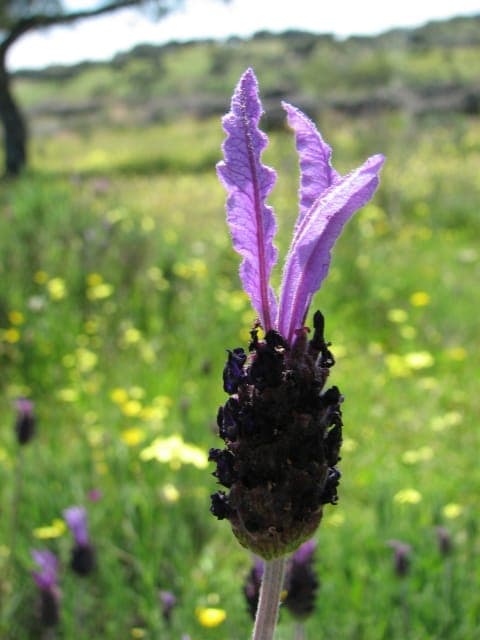
User:Mmparedes / CC BY-SA 3.0, via Wikimedia Commons
Lavandula pedunculata: complete guide
Lavandula pedunculata
¿Quieres ver Lavandula pedunculata: complete guide en tu jardín?
1 minuto, sin tarjeta de crédito
Overview
Lavandula pedunculata, commonly called stoechas lavender or Spanish lavender, is a spectacular Mediterranean dwarf shrub native to Portugal, Spain, North Africa, and Turkey. This plant distinguishes itself from other lavender species through its unique flower structure: robust purple florets crowned with prominent colorful bracts that create a distinctive, almost topiary-like appearance. In good growing conditions, this lavender can reach 1.5 meters tall and forms a dense, fragrant shrub that remains visually interesting year-round. The plant is exceptionally durable and requires minimal maintenance once established.
Appearance and Bloom
Stoechas lavender grows as a compact, silvery-green dwarf shrub with slender, needle-like leaves that are finely hairy. This pubescence gives the foliage a silvery-green appearance that becomes even more striking in sunlight. The flowers appear in rich purple shades, sometimes with hints of pink, growing in dense spikes on longer stems. What truly makes this plant exceptional is the flower structure itself - above each flower spike sits a distinct crown of large, colored bracts that resemble an elegant tiara rising above the blooms. This structure makes the plant immediately recognizable and creates a truly special garden effect. The blooming period extends from April to October, much longer than regular lavenders. The fragrance is intense and typically lavender-like, attracting numerous insects.
Ideal Location
Choose a spot with full sunlight for stoechas lavender - at least six to eight hours of direct sun daily. This plant flourishes in warm, dry conditions and becomes drawn and more disease-prone in shade or humid environments. A location against a south-facing wall or where the plant receives afternoon warmth is ideal. Shelter from strong winds helps prevent excessive drying, but good air circulation is essential to prevent fungal diseases. If you live in a cooler climate, consider growing the plant in a container and bringing it indoors during winter.
Soil
The key to success with stoechas lavender is excellent drainage. Plant this in poor, dry soil with lots of sand, fine gravel, or perlite mixed in. An ideal mix consists of sand or coarse substrate with only 30% garden soil and 70% mineral additives. Stoechas lavender prefers slightly acidic to neutral soil pH (6.5-7.0) but tolerates alkaline soil well. If you have heavy clay soil, it's better to grow stoechas lavender in containers. Avoid potting mixes that retain moisture - this will certainly lead to root rot.
Watering
Constant watering is unnecessary for this Mediterranean plant. During the growing season (March to October), water moderately, especially in dry weather. Allow the soil to dry considerably between waterings. Once established, stoechas lavender tolerates long dry periods well and needs little water even during summer. In autumn and winter, drastically reduce watering - water only when the top layer of soil is completely dry. Ensure good drainage in the pot or garden, as standing water is lethal for this plant. If you notice your plant turning yellow or weakening, overwatering is likely the culprit.
Diseño gratis
¿Quieres ver Lavandula pedunculata: complete guide en tu jardín? Crea un diseño gratis ahora.
Pruning
Annual pruning promotes a full, compact shape and stimulates better flowering. In early March, before new growth begins, trim all branches back by about one-third. Don't cut into old wood - this doesn't heal and may die. Remove spent flowers regularly (deadheading) to encourage continuous blooming through late season. In warm climates, you can do light pruning in August to stimulate a fuller plant for winter. Avoid deep pruning during the growing season, as this weakens the plant.
Maintenance Calendar
March: Perform thorough pruning and remove dead wood. April-May: Regular watering, weed removal, deadheading. June-August: Minimal watering under normal conditions, weeding. September-October: Carefully increase watering, prepare for winter. November-February: Almost no water, only careful watering during very dry periods. Check for pests throughout the year.
Winter Hardiness
This lavender is hardy to approximately -5 degrees Celsius, depending on specific climate and shelter. In the UK and Northern Europe, you can keep stoechas lavender outdoors in mild winters, but in many areas, winter protection or container growing is recommended. For permanent outdoor cultivation in cold climates, plant stoechas lavender against a warm wall or in a very well-drained rock garden. Mulching around the base with gravel (not compost) helps keep roots warm. In very cold winters or if you live in northern Germany, it's safer to bring pots into a cool greenhouse or protected space.
Companion Plants
Stoechas lavender combines beautifully with other Mediterranean plants that enjoy the same dry, sunny conditions. Try combinations with:
- Rosemary (Rosmarinus officinalis)
- Sun rose (Helianthemum)
- Santolina
- Gaura
- Agapanthus
- Catananche
- Calendula
Plant them together in groups for a cohesive Mediterranean garden. The silvery foliage of stoechas lavender contrasts beautifully with dark green or gray-green plants. Combine with pink, red, and yellow flowers for a warm, sunny effect.
Conclusion
Stoechas lavender is a worthy addition to any sunny, dry garden. With its unique flower structure, captivating fragrance, and minimal maintenance requirements, it provides satisfaction year after year. Whether you're creating a Mediterranean garden style or simply seeking a reliable, beautiful plant, stoechas lavender will not disappoint. Once established in the right conditions, this plant grows vigorously and blooms abundantly for many years. Give it a try and enjoy a piece of Southern Europe in your own front garden. Quality nurseries and garden centers carry excellent specimens. For specialized varieties, contact local gardeners or gardenworld.app for more inspiration.
¿Quieres ver Lavandula pedunculata: complete guide en tu jardín? Crea un diseño gratis ahora.
Sube una foto, elige un estilo y obtén un diseño fotorrealista con lista de plantas en menos de un minuto.
Más de 10.000 jardines diseñados
Sin tarjeta de crédito


Plantas similares
Apple mint (Mentha x villosa): complete guide
Mentha x villosa
Meet apple mint (Mentha x villosa): a fruity-scented kitchen herb with woolly leaves, perfect for tea and mojitos.
Salvia peyronii: complete guide
Salvia peyronii
Discover Salvia peyronii, a rare Lebanese mountain sage. Growing tips, hardiness, and companion planting for a Mediterranean gravel garden.
Bigleaf mint (Mentha x rotundifolia): complete guide
Mentha x rotundifolia
Discover bigleaf mint: cultivation, care tips, and garden uses. Learn how to grow this aromatic herb with soft, hairy leaves.