
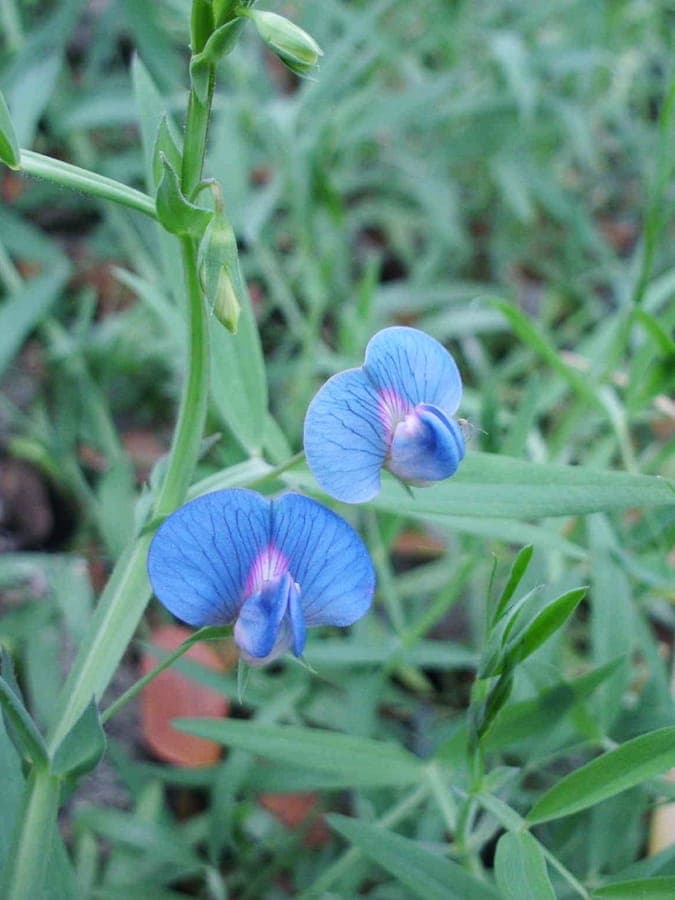
Arr4 (talk) / CC BY-SA 3.0, via Wikimedia Commons
Grass Pea: complete guide
Lathyrus sativus
¿Quieres ver Grass Pea: complete guide en tu jardín?
1 minuto, sin tarjeta de crédito
Overview
Grass pea (Lathyrus sativus), also known as Indian pea, is an annual climbing legume from the Fabaceae family. Traditionally grown across Asia and the Mediterranean region as a food crop, this plant is characterized by its slender growth, compound finely-divided leaflets, and delicate flowers resembling pea blooms. If you want to build a productive vegetable garden, grass pea is an excellent addition. The plant adapts well to various soil types and provides both nutrition and excellent green manure.
Looking for inspiration to design a productive garden? On gardenworld.app, you can have a detailed garden plan created that perfectly incorporates grass pea, helping you design a garden that is both beautiful and nutritious.
Appearance & Bloom Cycle
Grass pea grows 30-80 cm tall, forming an upright to lightly climbing plant. Leaves are pinnate with 3-5 pairs of leaflets and terminate in a tendril. Flowers appear in clusters and range from white to purple or pink depending on variety. Blooming occurs from May through September, followed by flat, elongated pods containing 4-6 seeds. Mature seeds are yellow to brown with a nutty flavor.
Ideal Location
Grass pea thrives in sunny to partly shaded locations. Provide at least 6 hours of direct sunlight daily for optimal growth and seed set. The plant tolerates average wind conditions but benefits from support using stakes or netting, especially for vigorous, climbing varieties.
Soil Requirements
The plant does well in carefully prepared, well-drained garden soil. A pH of 6.0 to 7.5 is ideal. It tolerates most soil types but dislikes waterlogged conditions. As a legume, grass pea fixes nitrogen from the air, so heavy nitrogen fertilization is unnecessary. Add organic matter if drainage is poor.
Watering
Water regularly during growth, especially during dry periods. The plant dislikes waterlogged soil; ensure good drainage. Once established, it can be quite drought-resistant. Water at the plant's base and avoid wetting foliage to prevent disease.
Diseño gratis
¿Quieres ver Grass Pea: complete guide en tu jardín? Crea un diseño gratis ahora.
Pruning & Support
Grass pea often needs support, especially in windy locations. Place stakes or netting at sowing time. Pinching off shoot tips during growth encourages bushier development, though this is not essential. The plant rapidly sets seed after flowering.
Maintenance Calendar
- April-May: Sow directly into ground after last frost
- May-June: Support plants and water regularly
- June-September: Monitor flowering and seed development
- September-October: Harvest seeds when pods turn brown and dry
- October: Clear plants, leave straw for green manure
Winter Hardiness
Grass pea is not winter-hardy and is treated as an annual in temperate climates. The plant dies at frost. In warmer regions, it may grow for multiple seasons, but in northern Europe, it is replanted annually.
Sowing & Growing
Sow directly into ground in April or May after the last severe frost. Sowing depth 2-3 cm, spacing 15-20 cm apart. For earlier harvests, pre-germinate indoors in March. Germination time: 1-2 weeks at 15-20°C. Advantage: grass pea is very cold-tolerant and can be sown much earlier than many other garden crops.
Companion Planting
Grass pea grows well alongside potatoes, carrots, and onions. Avoid close proximity to garlic, which may inhibit growth. The plant attracts few pests and is generally robust.
Harvest & Use
Pods can be harvested green for cooking around 60 days after sowing, or allowed to mature fully for seed harvest. For seed harvest, wait until pods turn completely brown and dry - usually in October. Seeds store dry and remain viable for years.
Grass pea is nutritious and can be cooked or roasted. It also provides excellent green manure, improving soil health for future seasons. Looking for more gardening and home inspiration? Gardenworld.app helps you design a unique garden that meets all your needs.
¿Quieres ver Grass Pea: complete guide en tu jardín? Crea un diseño gratis ahora.
Sube una foto, elige un estilo y obtén un diseño fotorrealista con lista de plantas en menos de un minuto.
Más de 10.000 jardines diseñados
Sin tarjeta de crédito

