
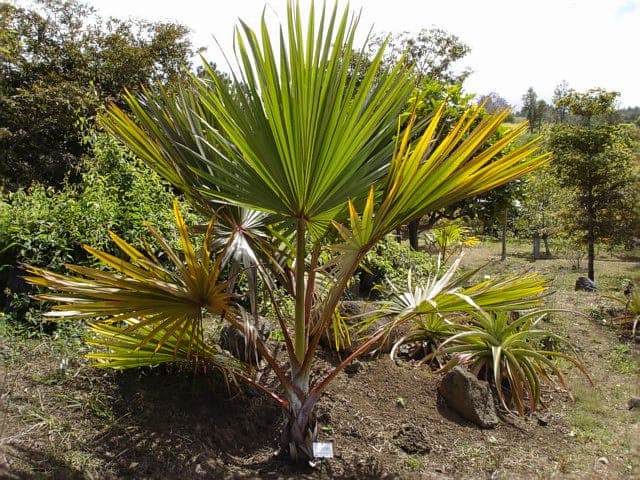
No machine-readable author provided. Thierry Caro assumed (based on copyright claims). / CC BY-SA 2.5, via Wikimedia Commons
Red latan palm: complete guide
Latania lontaroides
¿Quieres ver Red latan palm: complete guide en tu jardín?
1 minuto, sin tarjeta de crédito
Overview
The red latan palm, scientifically known as Latania lontaroides, is a spectacular palm tree native to the island of Reunion in the Indian Ocean. This palm distinguishes itself through its striking reddish leaf scales and majestic growth habit. In a matter of years it can develop into an impressive height and makes a statement in any garden or conservatory where it is grown.
The red latan is particularly popular as a decorative plant in gardens with tropical styling. Although native to an exotic climate, it thrives in mixed climates when you provide the right conditions.
Appearance & bloom
The red latan palm has large, feather-shaped leaves growing in the typical palm structure. The leaf scales display a distinct reddish color that marks its signature difference from similar palms. The trunk grows relatively straight and forms an impressive specimen after several years.
Blooming occurs in the mature life stage, with small yellow flowers appearing. These are followed by fruit formations that add landscape interest.
Ideal location
The red latan palm thrives in bright locations. Place it in full sunlight or very light shade. In gardens with mild Mediterranean winters, it can thrive outdoors, while in colder regions it performs better in a greenhouse or conservatory.
Ensure a sheltered spot where the plant is not directly exposed to strong winds that could damage its large leaves.
Soil
The red latan palm requires well-draining soil. Sand, loam and some organic material combined form an ideal mix. Ensure the soil does not hold standing water, as roots can be sensitive to rot.
Add organic compost during the growing season to supplement nutrient feeding. A pH between 6 and 7 is optimal.
Watering
During the growth period (spring and summer), water regularly but watch for waterlogging. The soil may be moister but not saturated. Check moisture by inserting your finger 5 cm deep into the soil.
In winter you can reduce watering. However, ensure the plant never completely dries out.
Diseño gratis
¿Quieres ver Red latan palm: complete guide en tu jardín? Crea un diseño gratis ahora.
Pruning
Regular pruning is not strictly necessary, but you can remove dead or damaged leaves. If the plant becomes too large, you can gently cut away some of the lower leaves. This helps keep the plant in shape without significantly slowing growth.
Remove only healthy green parts if absolutely necessary, as this can weaken the plant.
Maintenance calendar
Spring: Begin regular feeding. Check for pests and diseases. Add mulch layer.
Summer: Ensure sufficient water and shade on hottest days. Inspect regularly for pests.
Autumn: Gradually reduce feeding. Prepare plant for winter rest.
Winter: Minimize watering. Protect from severe cold in temperate climates.
Winter hardiness
The red latan palm is not cold hardy in many European climates. It tolerates temperatures down to about 10-12 degrees Celsius, depending on the individual plant. In countries like the Netherlands, Belgium and France it must be moved indoors or protected during winter.
In milder winter regions (southern Europe) it can overwinter outdoors but needs extra protection against frost.
Companion plants
The red latan makes a perfect statement plant in a lawn or near other tropical plants like hibiscus or orchids. Group plantings with other palms create a jungle-like effect. Combine with grasses and ground covers for textural contrast.
In containers it works well alongside bananas or other large-leaved plants.
Closing thoughts
The red latan palm is a beautiful plant for those who love exotic gardens or impressive houseplants. With proper care and placement, it grows into a mature gardener's delight that can last for generations. You will find this specimen in the selection at gardenworld.app for expert design advice.
¿Quieres ver Red latan palm: complete guide en tu jardín? Crea un diseño gratis ahora.
Sube una foto, elige un estilo y obtén un diseño fotorrealista con lista de plantas en menos de un minuto.
Más de 10.000 jardines diseñados
Sin tarjeta de crédito


Plantas similares
Needle palm: complete guide
Rhapidophyllum hystrix
Everything about the needle palm: the world's hardiest palm, suitable for gardens in temperate climates down to USDA zone 7b.
Saw palmetto: complete guide
Serenoa repens
A complete guide to saw palmetto (Serenoa repens), the iconic fan palm from Florida and the southeastern United States, prized for its toughness.
Puerto Rican hat palm: complete guide
Sabal causiarum
Grow Puerto Rican hat palm successfully. A majestic fan palm with tropical presence suited to sheltered Mediterranean-style gardens.