
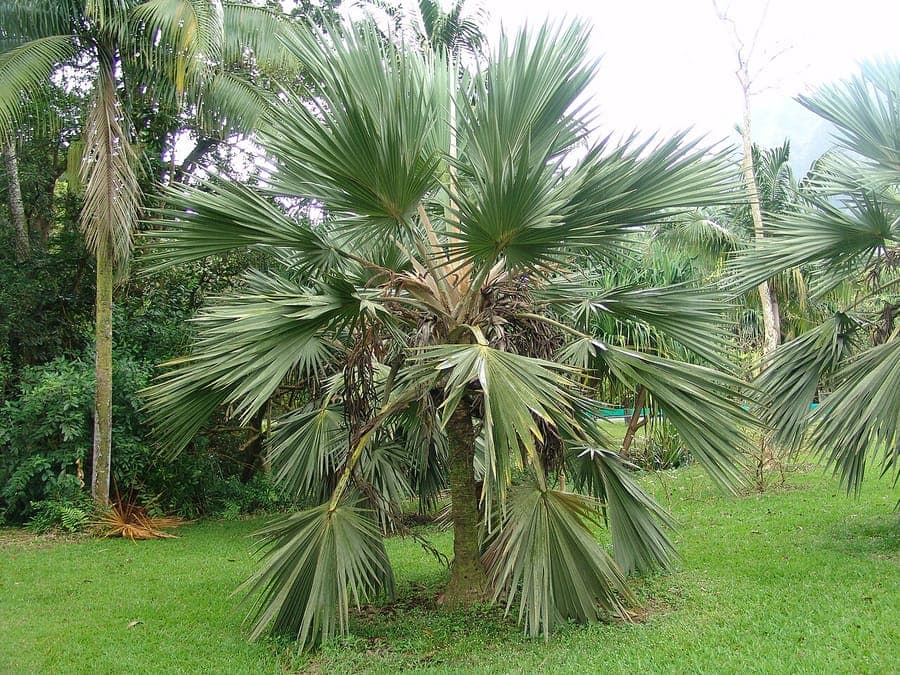
Drew Avery / CC BY 2.0, via Wikimedia Commons
Latania loddigesii: complete guide
Latania loddigesii
¿Quieres ver Latania loddigesii: complete guide en tu jardín?
1 minuto, sin tarjeta de crédito
Overview
Latania loddigesii, commonly known as Blue Latan or Blue Latan Palm, is a beautiful and elegant palm tree from Mauritius. This palm is renowned for its striking blue-green fan-shaped leaves that shimmer a brilliant blue in the light. It is a relatively compact palm making ideal additions to warm-climate gardens and protected indoor spaces.
Blue Latan grows slowly to moderately and eventually reaches heights of 10-15 meters in its native environment, though garden specimens often remain smaller. This makes it an ideal choice for space-limited gardens that still desire tropical impact.
Appearance and Bloom
Blue Latan has a characteristic solid trunk covered with leaf scars. The leaves are large fan shapes with striking blue-green to gray-green coloration with silvery reflection. This shimmering effect makes the palm particularly notable in the garden.
Flowers are small and yellow, grouped in large inflorescences that form beneath the leaves. After pollination, small yellow to orange fruits develop. These flowers and fruits typically appear in summer.
Overall growth is elegant and open, with natural, symmetrical development. This gives the plant a graceful, architectural quality.
Ideal Location
Blue Latan thrives in sunny locations with abundant direct sunlight. Ensure the palm receives at least 6 hours of full sun daily. A southwest or south-facing exposure is ideal.
Although the palm tolerates light shade, fully sunny specimens produce the most striking blue coloration in the leaves. Protect young palms from intense direct sun in their first year.
Position the palm in a sheltered location where strong winds cannot damage it, as large fan leaves can be affected.
Soil
Latania loddigesii prefers well-draining, sandy to sandy-loam soils. A pH between 6.0 and 7.5 is ideal. Poor drainage is the primary cause of problems with this palm.
Ensure organic matter in the soil by incorporating compost or palm substrate. For potted plants, use equal parts garden soil, coco-peat, and perlite.
The palm is fairly tolerant of various soil types as long as drainage is optimal.
Watering
Blue Latan has moderate water requirements. During the growing season (spring through fall), water regularly but allow the soil to dry slightly between waterings. Avoid waterlogging and stagnation.
In winter, reduce watering considerably. Always check soil moisture first before watering. A good rule of thumb: if the top 2-3 centimeters of soil feel dry, water again.
During very dry periods, mist the foliage in morning or late afternoon, as palms enjoy more humid environments.
Diseño gratis
¿Quieres ver Latania loddigesii: complete guide en tu jardín? Crea un diseño gratis ahora.
Pruning
Minimal pruning is required for Latania. Remove only dead or severely damaged leaves. Cut leaves where they join the stem. Avoid pruning healthy green leaves, as this can weaken the plant.
General cleanup can be done annually in spring to remove dead leaves and debris. This also helps prevent diseases and pests.
Warning: Never prune the growing point (central top) of the palm, as this can kill it.
Maintenance Calendar
Spring (March-May): Begin regular watering as temperatures rise. Start monthly fertilization with balanced slow-release fertilizer. Remove dead leaves.
Summer (June-August): Maintain consistently moist soil without waterlogging. Fertilize weekly or bi-weekly. Monitor for scale insects and spider mites that prefer dry environments.
Fall (September-November): Gradually reduce watering as temperatures decline. Fertilize bi-weekly. Begin preparation for dormancy.
Winter (December-February): Minimal watering - let soil dry well between waterings. No fertilization. No pruning except very dead material.
Winter Hardiness
Blue Latan is cold-sensitive and tolerates temperatures below 10-15 degrees Celsius poorly. In Mediterranean and subtropical zones, young palms can grow outdoors with protection. In cooler climates, they must be kept indoors in greenhouses or conservatories.
Prefer winter temperatures of 12-18 degrees Celsius. Avoid sudden temperature fluctuations. Do not position near heating ducts or air conditioning units.
If planted outdoors in mild zones, protect against heavy frost with mulch and protective cloths.
Companion Plants
Blue Latan works well with:
- Other palms such as Phoenix or Chamaerops for tropical composition
- Hibiscus and Bougainvillea for colorful flower contrast
- Ornamental grasses like Miscanthus at the base
- Rhododendrons (in semi-shade areas) for foliage contrast
- Evergreen shrubs for background structure
Ensure companions have similar warmth and light requirements. The blue tint of Latania works beautifully with complementary green tones.
Closing
Latania loddigesii is truly a garden jewel for exotic plant enthusiasts. With its unique blue-green fan-shaped leaves, this palm immediately brings tropical atmosphere to any garden. While not suitable for cold climates, for those with the right conditions it will provide years of beauty.
With regular care and attention to watering management and good drainage, you will have a healthy, beautiful palm. Find young Latania palms at specialized nurseries or via gardenworld.app for all your tropical garden needs.
¿Quieres ver Latania loddigesii: complete guide en tu jardín? Crea un diseño gratis ahora.
Sube una foto, elige un estilo y obtén un diseño fotorrealista con lista de plantas en menos de un minuto.
Más de 10.000 jardines diseñados
Sin tarjeta de crédito


Plantas similares
Needle palm: complete guide
Rhapidophyllum hystrix
Everything about the needle palm: the world's hardiest palm, suitable for gardens in temperate climates down to USDA zone 7b.
Saw palmetto: complete guide
Serenoa repens
A complete guide to saw palmetto (Serenoa repens), the iconic fan palm from Florida and the southeastern United States, prized for its toughness.
Puerto Rican hat palm: complete guide
Sabal causiarum
Grow Puerto Rican hat palm successfully. A majestic fan palm with tropical presence suited to sheltered Mediterranean-style gardens.