
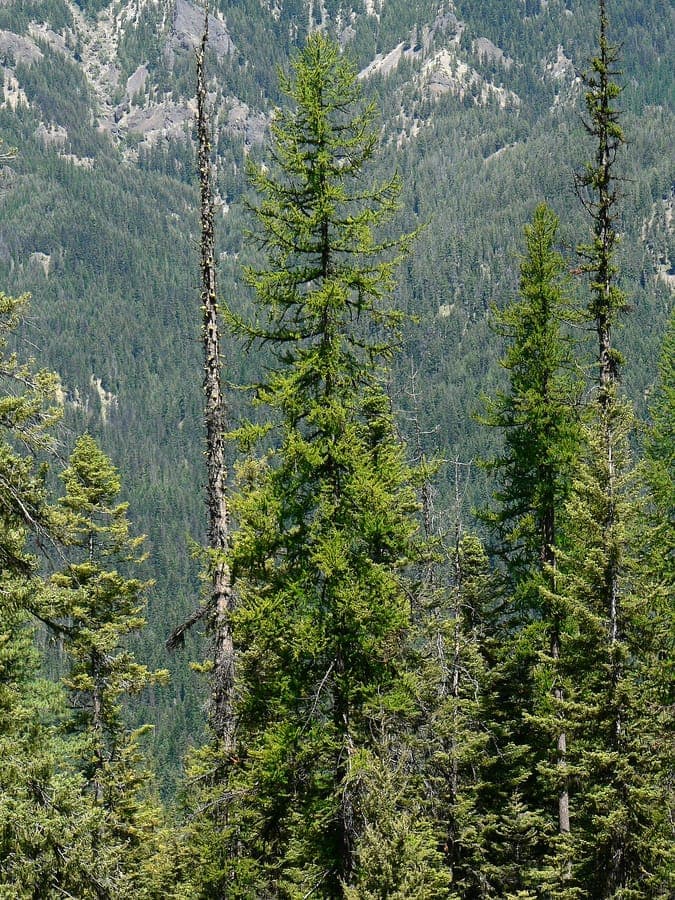
Walter Siegmund (talk) / CC BY 2.5, via Wikimedia Commons
Larix occidentalis: complete guide
Larix occidentalis
¿Quieres ver Larix occidentalis: complete guide en tu jardín?
1 minuto, sin tarjeta de crédito
Overview
The Larix occidentalis, commonly known as Western Larch or Montana Larch, is an impressive and valuable conifer native to the western regions of North America. Unlike most conifers, the Western Larch is deciduous, meaning it sheds its needles in fall and regrows them in spring. This unique characteristic makes it an outstanding choice for forest zones and larger gardens.
Appearance and growth
Larix occidentalis is a rapidly growing tree that can reach 50-60 meters in its natural habitat. In cultivation, it typically reaches 15-30 meters depending on growing conditions. The tree has a characteristic pointed form with horizontally spreading branches. The needles are fine and green, bundled in clusters on short shoots.
The most striking feature is the autumn color change of the needles. In October through November, the needles first turn golden yellow and then bronze before dropping, providing a spectacular fall transformation. In spring, bright gray female cones appear that later brown.
The bark is thin and smooth on young trees but becomes thicker and rougher with age, developing purple, gray, or brown tones.
Ideal location
Western Larch thrives in full sun to partial shade. Plant it in a location with at least 5-6 hours of direct sunlight daily. This tree grows best in cooler climates and feels at home on mountain slopes and in temperate zones. Ensure good air circulation to prevent disease.
Soil
Larix occidentalis is not particularly fussy about soil type but performs best in moist, well-drained soil. In nature, it often grows in mountain forests on moisture-retentive humus-rich soil. Add organic matter to improve water retention. The tree tolerates both acidic and neutral soils.
Diseño gratis
¿Quieres ver Larix occidentalis: complete guide en tu jardín? Crea un diseño gratis ahora.
Watering
Provide regular moisture, especially for young trees during their first 1-2 years. Once established, the tree needs less water, though it remains stress-tolerant with regular hydration. Watering during dry periods is important, especially in Mediterranean or dry climates.
Pruning
Western Larch requires minimal pruning if it grows in good form. Remove only dead, diseased, or damaged branches. You can remove light branches to improve air circulation. Avoid heavy pruning as it can damage the natural form.
Maintenance calendar
Spring: New growth begins, check for winter damage. Summer: Monitor moisture levels, especially during hot periods. Autumn: Watch for spectacular golden fall foliage change. Winter: The tree is dormant with shed needles.
Winter hardiness
Larix occidentalis is extremely hardy and thrives better in colder climates (USDA zones 3-6). This makes it an excellent choice for mountain areas and temperate north. In much warmer climates, it may suffer from heat and drought stress.
Companion planting
Western Larch combines well with other forest trees such as Subalpine Fir, Grand Fir, and native conifers. It can also be striking as a specimen tree in larger gardens, as the annual seasonal change is visually impressive.
Conclusion
Larix occidentalis is a valuable tree most at home in larger garden and forest settings in mountain areas or temperate northern zones. With its rapid growth, interesting seasonal transformation, and valuable timber production, it is an excellent choice for sustainable gardening. Visit gardenworld.app/en for more information on native trees and sustainable garden design.
¿Quieres ver Larix occidentalis: complete guide en tu jardín? Crea un diseño gratis ahora.
Sube una foto, elige un estilo y obtén un diseño fotorrealista con lista de plantas en menos de un minuto.
Más de 10.000 jardines diseñados
Sin tarjeta de crédito


Plantas similares
Abies delavayi: complete guide
Abies delavayi
Delavayi fir is an elegant, medium-sized coniferous tree from the Pinaceae family with dark green needles. This Asian evergreen is perfect for alpine gardens and large landscapes.
Taiwan fir: complete guide
Abies kawakamii
Discover the magnificent Taiwan fir, a rare evergreen conifer from Taiwan's mountain regions. Learn growth requirements, care tips, and why this beautiful tree is perfect for collectors of unique garden specimens.
Farges fir: complete guide
Abies fargesii
Discover the majestic Farges fir, an impressive conifer from China's mountains with elegant foliage and columnar form. Ideal for large gardens.