
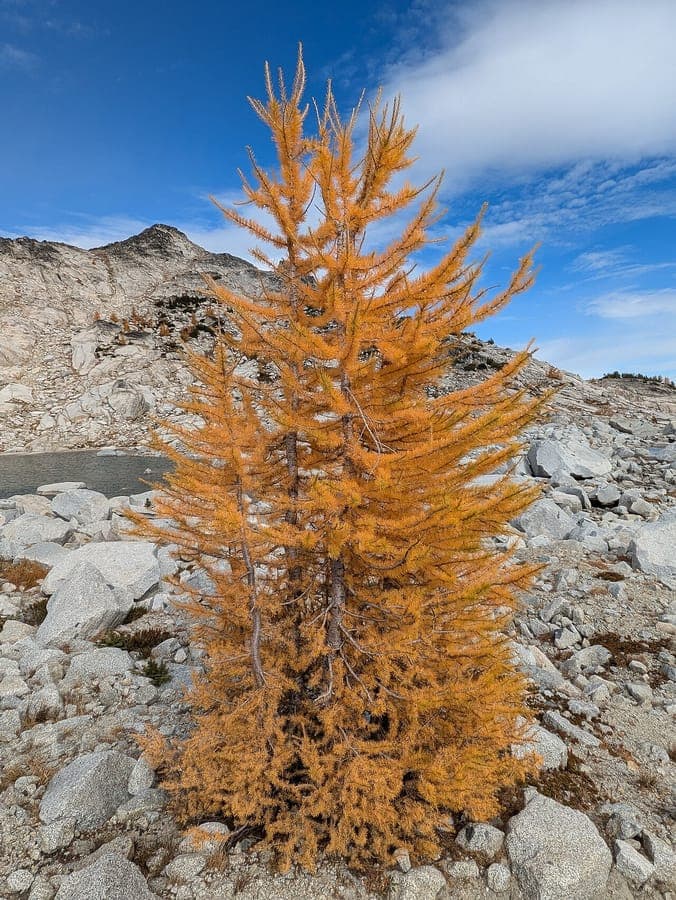
Buidhe / CC BY-SA 4.0, via Wikimedia Commons
Alpine larch: complete guide
Larix lyallii
¿Quieres ver Alpine larch: complete guide en tu jardín?
1 minuto, sin tarjeta de crédito
Overview
Alpine larch, botanically known as Larix lyallii, is a graceful deciduous conifer from the Rocky Mountains and alpine areas ranging from southeastern British Columbia to western Montana. This member of the Pinaceae family, which includes most conifers, is unique because it loses its needles seasonally.
Unlike most conifers, alpine larch sheds its needles in autumn, making it one of a rare select group of leaf-dropping conifers. This spectacular characteristic makes it a fascinating choice for gardeners seeking structure and seasonal variation.
Alpine larch grows in extremely harsh alpine environments, typically at elevations between 1,500 and 2,500 meters. This makes it exceptionally winter-hardy and adapted to extreme temperature fluctuations and short growing seasons.
Appearance and Needle Drop
Alpine larch is a medium-sized tree that typically reaches 10 to 15 meters in cultivation, though mountain specimens can be much smaller. The tree has a slender, pointed form with a clear central stem and regularly spaced lateral branches.
The needles are very fine and soft, more graceful than those of typical spruces. They appear in bundles along the branches with fresh green coloring in summer. With autumn's arrival, typically October to November, the needles turn a spectacular golden-yellow before dropping completely.
The bark is thin and dark gray, while young shoots are reddish-brown. This gives the tree interesting two-toned appearance, especially in winter when needles are gone.
Ideal Location
Alpine larch thrives in fully sunny locations. Ensure at least 6-8 hours of direct sunlight daily. This promotes dense growth and strong woody branches.
This tree prefers elevated or well-drained locations. Alpine and cold regions are ideal. In the Benelux, higher-altitude locations in Belgian and German Limburg offer suitable sites, provided adequate drainage exists.
Protection from strong winds may benefit young trees, though mature specimens are fairly wind-resistant. However, ensure sturdy ground anchoring, especially in windy locations.
Soil
Alpine larch makes important soil drainage demands. Very good-draining, slightly acidic soil (pH 3.9 to 5.6) is essential. Heavy clay soils require amendment with coarse sand and perlite to prevent waterlogging.
The tree tolerates relatively infertile soils, as alpine soils in their natural state are often lean. However, adding organic material at planting helps with root establishment.
Despite preferring well-draining soils, the tree also tolerates fairly dry conditions once established, thanks to its mountain heritage.
Diseño gratis
¿Quieres ver Alpine larch: complete guide en tu jardín? Crea un diseño gratis ahora.
Watering
Young larches need regular water during the first growing season to develop strong roots. Watering twice weekly during dry summers is appropriate for young trees.
Established trees are fairly drought-tolerant and require minimal supplemental watering. However, in extremely dry years, supplemental watering during the growing period may be helpful.
It is crucial to avoid waterlogging, especially during periods of heavy rainfall. Ensure excellent drainage around young plantings.
Pruning
Alpine larch requires minimal pruning. The tree naturally grows into an attractive, pointed form. Remove only damaged or dead branches.
In winter, when needles have fallen, it is easy to evaluate tree structure and perform necessary pruning if needed. Large pruning wounds are unnecessary and undesirable.
Maintenance Calendar
January-February: Prune dead or damaged branches. Check drainage around tree.
March-April: Beginning of season. Check water levels of newly planted specimens.
May-July: Growing period. No feeding needed for natural specimens.
August-September: Needle drop preparation. Ensure adequate water during dry periods.
October-November: Spectacular golden needle fall. This is a natural process.
December: Rest period. Ensure continued drainage during snowmelt.
Winter Hardiness and Seasonal Variation
Alpine larch is excellently winter-hardy and adapted to extreme alpine winters. In the Netherlands and Belgium, it will easily survive all normal winters. The tree can withstand temperatures between -20 to -30 degrees Celsius.
One of the most distinctive features is the spectacular autumn color change. Needles turn golden-yellow before dropping, providing beautiful seasonal variation. In average winters, all needles fall.
The leafless winter form provides structure and interesting architecture to gardens, particularly valuable in minimalist or Japanese garden designs.
Companion Plants
Alpine larch combines well with other alpine and mountain plants. Lower growers like alpine creeping pine (Pinus mugo) or mountain pines form attractive groupings.
Alpine-hardy flowering plants like Caryopteris (bluebeard), Ribes (currant), or Kolkwitzia (beauty bush) pair beautifully with the larch's airy growth and autumn color.
In larger gardens, alpine larch elegantly combines with other conifers such as Picea (spruce) or Abies (fir), with the golden autumn effect contrasting against permanent dark green.
Closing Thoughts
Alpine larch is a fascinating choice for gardeners seeking structure, seasonal variation, and winter hardiness. This unique specimen provides winter conifer character with the seasonal change of deciduous trees.
While not readily available at all garden centers, specialized tree nurseries in the Netherlands and Germany (OBI, Hornbach) sometimes stock this species. You may need to specifically request it.
Need a complete garden makeover? Visit gardenworld.app for specialized garden designs integrating trees and conifers.
For more plant profiles and inspiration, visit gardenworld.app.
¿Quieres ver Alpine larch: complete guide en tu jardín? Crea un diseño gratis ahora.
Sube una foto, elige un estilo y obtén un diseño fotorrealista con lista de plantas en menos de un minuto.
Más de 10.000 jardines diseñados
Sin tarjeta de crédito


Plantas similares
Abies delavayi: complete guide
Abies delavayi
Delavayi fir is an elegant, medium-sized coniferous tree from the Pinaceae family with dark green needles. This Asian evergreen is perfect for alpine gardens and large landscapes.
Taiwan fir: complete guide
Abies kawakamii
Discover the magnificent Taiwan fir, a rare evergreen conifer from Taiwan's mountain regions. Learn growth requirements, care tips, and why this beautiful tree is perfect for collectors of unique garden specimens.
Farges fir: complete guide
Abies fargesii
Discover the majestic Farges fir, an impressive conifer from China's mountains with elegant foliage and columnar form. Ideal for large gardens.