
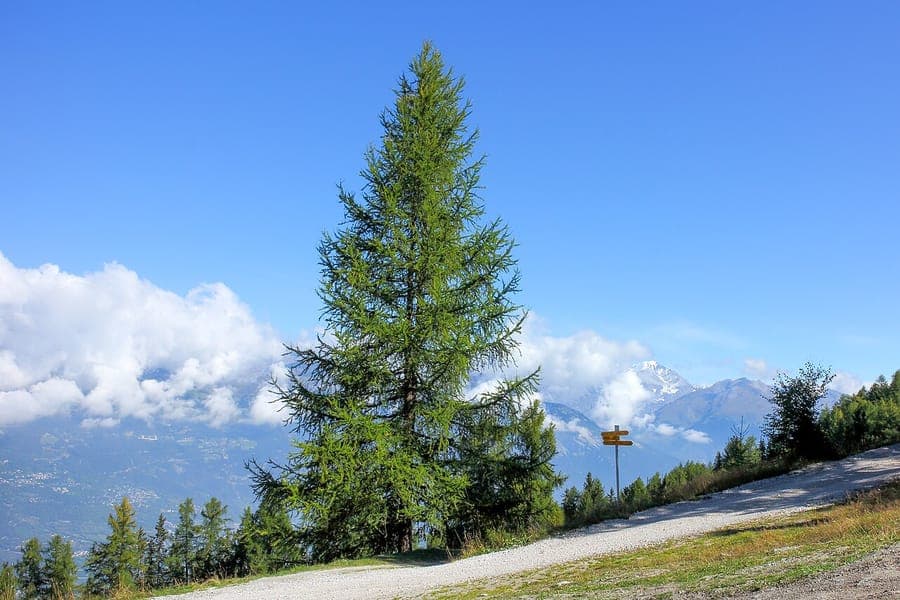
Dominicus Johannes Bergsma / CC BY-SA 4.0, via Wikimedia Commons
European Larch (Larix decidua): complete guide
Larix decidua
¿Quieres ver European Larch (Larix decidua): complete guide en tu jardín?
1 minuto, sin tarjeta de crédito
Overview
The European larch (Larix decidua) is a remarkable deciduous conifer that sheds its entire needle complement each autumn, revealing its striking skeletal form in winter. It is one of the few evergreen conifers that is not perpetually green, giving it a unique place in the European landscape and providing year-round seasonal interest.
Native to the Alps, Sudeten Mountains, and Carpathians, the European larch is a robust, long-lived tree reaching ages of 2,000 years in its native habitat. In temperate regions, it is increasingly popular in both forestry and private gardens for its aesthetic appeal through all seasons.
Appearance and Bloom
The European larch grows to 30-40 meters in its native alpine habitat but typically reaches 15-25 meters in temperate gardens. The tree develops an elegant, pyramidal form with gently drooping branches. Spring brings pale, soft green needle emergence; summer foliage is dark green and densely packed. October-November sees a dramatic transformation as all needles turn golden-orange before falling, revealing the warm, reddish-brown to gray-toned branch structure beneath.
Flowering and pollination: Bloom occurs April-May. Male flowers are small yellow cones along shoot undersides; female cones are purple-red. After self-pollination, small brown cones (2-4 cm) mature within the first year, opening to release seed in autumn.
Ideal Location
The European larch thrives in full sun (6+ hours daily) on well-drained sites with moderate air movement. Although cold-hardy, it prefers cooler, upland-like environments - quite unlike hot, dry exposures.
In temperate gardens:
- North-facing slopes with summer afternoon shade - ideal
- Large garden spaces (minimum 10 meters from buildings, walls)
- Paired with windbreaks from shrubs or hedges
- Less suited to south-facing hot slopes with intense midday sun
Elevation tolerance: up to approximately 2,200 meters in European mountains; sea-level conditions in temperate zones present no obstacle.
Soil
The European larch is adaptable regarding soil type, thriving in sand, loam, and calcareous substrates. Essential factors include:
- Drainage: Critical. Waterlogged conditions cause root rot. In wet sites, raise planting areas 30-50 cm with sandy soil mix.
- pH: Neutral to slightly acidic (5.5-7.0) is optimal. On very chalky soils, careful amendment with peat can help.
- Fertility: Moderate. Young trees benefit from initial slow-release fertilizer; mature trees need minimal supplementation.
- Texture: Sandy-loam is ideal; heavy clay requires drainage improvement.
Tip: When planting, backfill with soil from nearby woodland; this promotes mycorrhizal (fungal-root) colonization.
Watering
Once established, the European larch requires minimal supplemental watering, especially after its second growing season. However:
First two years post-planting:
- Regular watering (2-3 times weekly) during growing season (April-August)
- During dry spells (>10 days without rain): daily watering
- Autumn: gradually reduce as needle drop commences
Mature trees (3+ years):
- No supplemental watering in average years
- Only in severe droughts (July-August with no rain) should supplemental irrigation occur
- No frost protection watering needed in temperate winters
Irrigation method: Drip systems recommended for larger gardens, especially during establishment.
Diseño gratis
¿Quieres ver European Larch (Larix decidua): complete guide en tu jardín? Crea un diseño gratis ahora.
Pruning and Maintenance
The European larch requires minimal pruning:
**Formative years (1-5 years):
- Avoid deliberate pruning; allow natural development
- Remove only dead, damaged, or crossing shoots (January-March)
- Note: sap bleeds from cut wounds in spring; this is normal
Mature trees:
- Maintenance pruning only: remove dead wood
- Gradually remove lower branches as tree matures (create 1-2 meter clearance for light penetration)
- Avoid winter pruning after October; March-April is preferable
Pest management:
- Larch miners (small flies) are the primary pest, creating leaf-mining galleries
- Biological control usually unnecessary; trees recover quickly
- Very rarely: forest fires in dry years; preventive watering helps
Maintenance Calendar
January-March: Prune damaged shoots, prepare for growth April-May: Light green needle emergence (beautiful observation period) June-August: Summer growth, full dark-green foliage, possible miner infestations September-October: Needle color change (golden-orange) November-December: Needle drop, winter dormancy, exposed branch structure January-March: Assess frost damage (rarely severe)
Winter Hardiness
The European larch is extremely cold-hardy (USDA Zone 2-3, to approximately -40°C). Temperate winter conditions pose no threat.
Winter care:
- Young trees (first winter): optional protective soil mound around root zone (unnecessary in milder climates)
- Avoid watering established trees in dry winters (January-February without snow/rain) as dormant trees don't need water
- Clear heavy snow from young branches to prevent breakage
Companion Planting
The European larch pairs excellently with:
Good companions:
- Other conifers: Spruce, fir (complementary forms)
- Broadleaf trees: Beech, oak (natural mixed-forest environment)
- Understory: Evergreen ground covers (yew, ivy) for color contrast
- Shrubs: Hazel, dogwood (low strata)
Poor combinations:
- Very hot south-facing slopes: Extreme heat stresses the tree
- Wet lowland sites: Waterlogging causes root rot
Closing Remarks
The European larch is a spectacular addition to temperate landscapes, unique for its seasonal transformations. Its golden autumn colors make October through December visually striking; its exposed winter branch structure adds dramatic silhouettes. This makes it ideal for prominent placement where seasonal change is appreciated.
Plan your garden design via gardenworld.app for optimal tree placement and understory selection. With proper siting and drainage, the European larch becomes a low-maintenance, long-lived specimen that will delight generations.
For more tree selection advice and landscape design: visit gardenworld.app.
¿Quieres ver European Larch (Larix decidua): complete guide en tu jardín? Crea un diseño gratis ahora.
Sube una foto, elige un estilo y obtén un diseño fotorrealista con lista de plantas en menos de un minuto.
Más de 10.000 jardines diseñados
Sin tarjeta de crédito


Plantas similares
Abies delavayi: complete guide
Abies delavayi
Delavayi fir is an elegant, medium-sized coniferous tree from the Pinaceae family with dark green needles. This Asian evergreen is perfect for alpine gardens and large landscapes.
Taiwan fir: complete guide
Abies kawakamii
Discover the magnificent Taiwan fir, a rare evergreen conifer from Taiwan's mountain regions. Learn growth requirements, care tips, and why this beautiful tree is perfect for collectors of unique garden specimens.
Farges fir: complete guide
Abies fargesii
Discover the majestic Farges fir, an impressive conifer from China's mountains with elegant foliage and columnar form. Ideal for large gardens.