
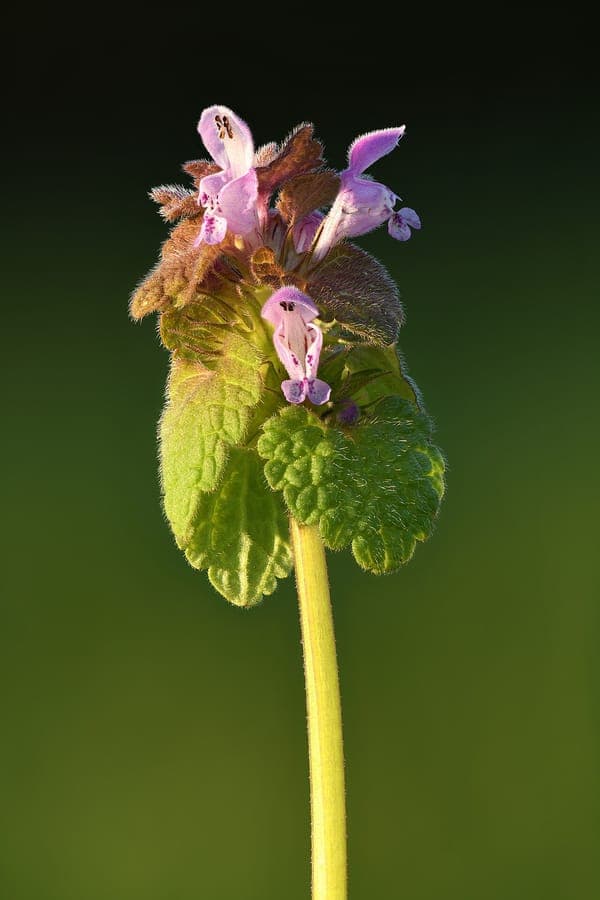
Ivar Leidus / CC BY-SA 4.0, via Wikimedia Commons
Purple dead-nettle: complete guide
Lamium purpureum
¿Quieres ver Purple dead-nettle: complete guide en tu jardín?
1 minuto, sin tarjeta de crédito
Overview
Purple dead-nettle (Lamium purpureum) is an elegant, low-growing plant from the mint family that adapts perfectly to shaded gardens. With its striking purple-red foliage and delicate pink flowers, this groundcover creates a distinguished tapestry in the landscape. This European native grows naturally in woodland edges and moist areas, where it gracefully outcompetes weeds and unwanted vegetation.
It effortlessly creates a soothing green presence and functions as a natural weed suppressant. On gardenworld.app, we frequently recommend purple dead-nettle for modern garden designs where texture and refinement matter.
Appearance and Bloom
Purple dead-nettle reaches a modest height of just 15-30 cm, making it ideal as a groundcover. The foliage displays characteristic reddish-purple tones with fine textured leaves, especially intense in color during spring. Two-lipped flowers appear in pink to lilac shades during spring (March-May) and sometimes again in autumn.
The flowers attract bees and pollinators, providing valuable food sources in early season when sustenance is scarce. The plant remains present year-round, providing structural interest to the garden throughout the seasons.
Ideal Location
Purple dead-nettle thrives in shaded to partially shaded locations. Although tolerating some sunlight (2-4 hours daily), it performs optimally beneath trees, against north-facing walls, and in other sheltered spots. Full sun can dry foliage and cause discoloration.
It excels as an underplanting for larger shrubs and trees where little else establishes well. Place it in visible borders where its purple-red foliage can achieve maximum visual impact.
Soil Type
Purple dead-nettle is very flexible regarding soil requirements, provided adequate moisture retention. It grows better in humus-rich, organically enhanced soils but tolerates less fertile grounds. The plant prefers moderately moist to wet soil but is quite drought-tolerant once established.
Ensure good drainage to prevent waterlogging. Adding compost or leaf mold improves soil quality and promotes long-term growth. A pH range of neutral to slightly acidic (6.0-7.0) is optimal.
Watering
Purple dead-nettle has moderate water needs. During the growing season (March-October), water regularly, especially during dry periods. Once established, it is very drought-tolerant and can withstand extended dry spells.
It grows particularly moisture-loving in woodland and wetland conditions but also accepts drier spots beneath trees. Prevent excessive wetness, especially in winter when water absorption decreases. If grown in containers, water more regularly, avoiding complete drying of the soil.
Diseño gratis
¿Quieres ver Purple dead-nettle: complete guide en tu jardín? Crea un diseño gratis ahora.
Pruning and Maintenance
Purple dead-nettle requires minimal maintenance. After flowering, light pruning helps keep the plant compact, though not strictly necessary. In late spring, remove dead or damaged foliage.
The plant spreads readily via runners and seed, so periodic removal of plants prevents unwanted spread. For sharp borders, install a half-buried barrier to contain spread. No fertilizer needed; a mulch layer of compost suffices.
Maintenance Calendar
March: Plant awakens from winter dormancy; initial growth begins; refresh mulch layer. April-May: Peak bloom; natural seed dispersal occurs. June-July: Growth acceleration; prune back if needed to maintain boundaries. August-September: Repeat flowering; regular watering needed. October-November: Intensifying autumn coloration; winter preparation. December-February: Dormancy; plant remains decorative through purple-red foliage.
Winter Hardiness
Purple dead-nettle is completely winter hardy to USDA zone 4 (-30°C). Growing naturally from Macaronesia to West Siberia, it withstands frost without issue. Foliage retains decorative color throughout winter, provided no extreme frost periods occur.
Under standard weather conditions, no protection needed. The plant survives without difficulty throughout the Netherlands, Belgium, and northern France. Extreme frost periods may cause leaf loss, but the plant fully regenerates in spring.
Companion Planting
Purple dead-nettle pairs excellently with other shade-loving groundcovers. Combine with spotted dead-nettle (Lamium maculatum), heucheras, ivy, and small ferns for a layered texture experience. Add cuckoo pint (Arum), evergreen shrubs, and hellebores for seasonal interest.
Beneath tree roots, it grows readily with painterly effects, fine-textured ferns, and moisture-loving insect plants. In brighter shade locations, shade-tolerant sedum species serve a similar textural role.
Closing Thoughts
Purple dead-nettle is essential for any shaded garden. Its compact growth, year-round interest, and minimal maintenance requirements make it gold for gardeners seeking reliability. The plant thrives beneath trees, against walls, and in difficult spots where little else succeeds.
At gardenworld.app, we regularly use purple dead-nettle to transform shadowy areas into interesting, textured plantings. With minimal effort and no chemical fertilizers, you create a flourishing groundcover that provides satisfaction for years.
¿Quieres ver Purple dead-nettle: complete guide en tu jardín? Crea un diseño gratis ahora.
Sube una foto, elige un estilo y obtén un diseño fotorrealista con lista de plantas en menos de un minuto.
Más de 10.000 jardines diseñados
Sin tarjeta de crédito


Plantas similares
Apple mint (Mentha x villosa): complete guide
Mentha x villosa
Meet apple mint (Mentha x villosa): a fruity-scented kitchen herb with woolly leaves, perfect for tea and mojitos.
Salvia peyronii: complete guide
Salvia peyronii
Discover Salvia peyronii, a rare Lebanese mountain sage. Growing tips, hardiness, and companion planting for a Mediterranean gravel garden.
Bigleaf mint (Mentha x rotundifolia): complete guide
Mentha x rotundifolia
Discover bigleaf mint: cultivation, care tips, and garden uses. Learn how to grow this aromatic herb with soft, hairy leaves.