
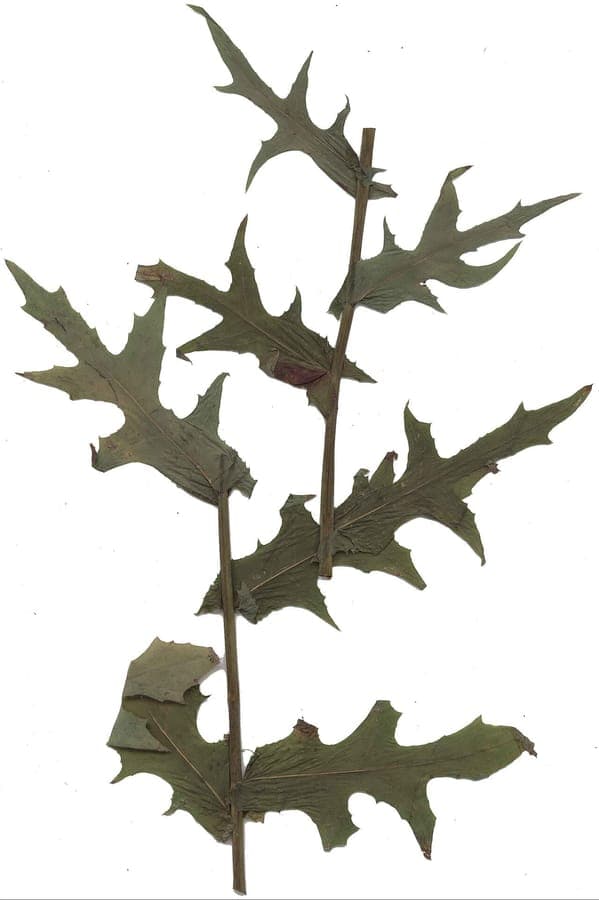
Wikimedia Commons / CC BY-SA 3.0, via Wikimedia Commons
Lactuca quercina: complete guide
Lactuca quercina
¿Quieres ver Lactuca quercina: complete guide en tu jardín?
1 minuto, sin tarjeta de crédito
Overview
Lactuca quercina, better known as wild lettuce or oak-leaved lettuce, is an interesting biennial plant from the Asteraceae family (daisy family). This plant originates from Europe and West Asia and is admired for its characteristic, deeply lobed leaves that resemble oak leaves and its numerous yellow flowers that resemble dandelions.
Lactuca quercina reaches a height of 30 to 100 centimeters, depending on growing conditions. In the first year, the plant forms a leaf rosette, and in the second year, an upright flowering stem appears bearing yellow flowers. This plant is valuable for both organic gardens and nature-friendly borders.
Appearance and bloom
The leaves of Lactuca quercina are strongly lobed and resemble oak leaves, which explains its scientific name. They are dark green with sometimes reddish accents. The leaves can grow up to 15 centimeters long. In the second year, the plant produces straight, hairy stems with yellow flowers approximately 1.5 centimeters in diameter.
The flowers appear from July to October and attract important pollinators. After flowering, characteristic thistle-like seed heads form with parachute-like fruits dispersed by wind.
Ideal location
Lactuca quercina grows best in full sun to partial shade. The plant needs at least four to six hours of direct sunlight per day for optimal growth and flowering. In full shade, the plant grows more slender and produces fewer flowers. Ensure an open, well-ventilated location.
Soil
This plant is very tolerant of different soil types. It grows well in nutrient-rich, moderately moist soils. Lactuca quercina also thrives on poor, dry soils, although growth may be less exuberant. The plant accepts acidic to alkaline soils (pH 5.5-7.5). Avoid waterlogging, especially in winter.
Diseño gratis
¿Quieres ver Lactuca quercina: complete guide en tu jardín? Crea un diseño gratis ahora.
Watering
After planting, water regularly until the plant is well established. Established plants are fairly drought-tolerant. During dry periods, additional watering may be beneficial. Water when the top centimeter of soil feels dry. Avoid excessive watering, as this can promote disease.
Pruning
Lactuca quercina requires minimal pruning in the first year. In the second year, you can remove spent flowers to encourage further blooming. After flowering, you can cut back the stem. Let some plants form seed heads for self-seeding and wild seedlings.
Maintenance calendar
Spring (year 1): Plant seed or young plants. Water regularly. Summer (year 1): Maintain leaf rosette. Water during drought. Autumn (year 1): Plant becomes dormant. Spring (year 2): Growth resumes. Water when needed. Summer (year 2): Flowers appear. Water when needed. Autumn (year 2): Seed dispersal. Plant dies.
Winter hardiness
Lactuca quercina is fully hardy to -15C. The plant survives winters in temperate climates easily. In very cold regions, mulching may be beneficial for extra protection.
Companion plants
Lactuca quercina combines beautifully with:
- Verbascum (mullein) - similar growth pattern
- Knautia macedonica - purple flowers
- Silene (campion) - texture contrast
- Dianthus barbatus - classic border combination
- Heuchera - interesting leaf structure
Closing
Lactuca quercina is a bird-like, characterful plant that encourages biodiversity. With its striking foliage, long flowering period, and ecological value, it forms a valuable element in organic gardens. For more plant combinations with wild character, visit gardenworld.app/nl or gardenworld.app/en.
¿Quieres ver Lactuca quercina: complete guide en tu jardín? Crea un diseño gratis ahora.
Sube una foto, elige un estilo y obtén un diseño fotorrealista con lista de plantas en menos de un minuto.
Más de 10.000 jardines diseñados
Sin tarjeta de crédito


Plantas similares
Calendula stellata: complete guide
Calendula stellata
Complete guide to Calendula stellata, the star-flowered marigold from Sicily: location, soil, watering and companion planting tips.
Korean chrysanthemum: complete guide
Chrysanthemum x rubellum
Chrysanthemum x rubellum is a hardy autumn perennial with single pink to copper flowers from August to November. Care and combinations.
Helianthus divaricatus: complete guide
Helianthus divaricatus
Helianthus divaricatus is a North American woodland sunflower with yellow summer blooms, ideal for naturalistic borders and shady edges.