
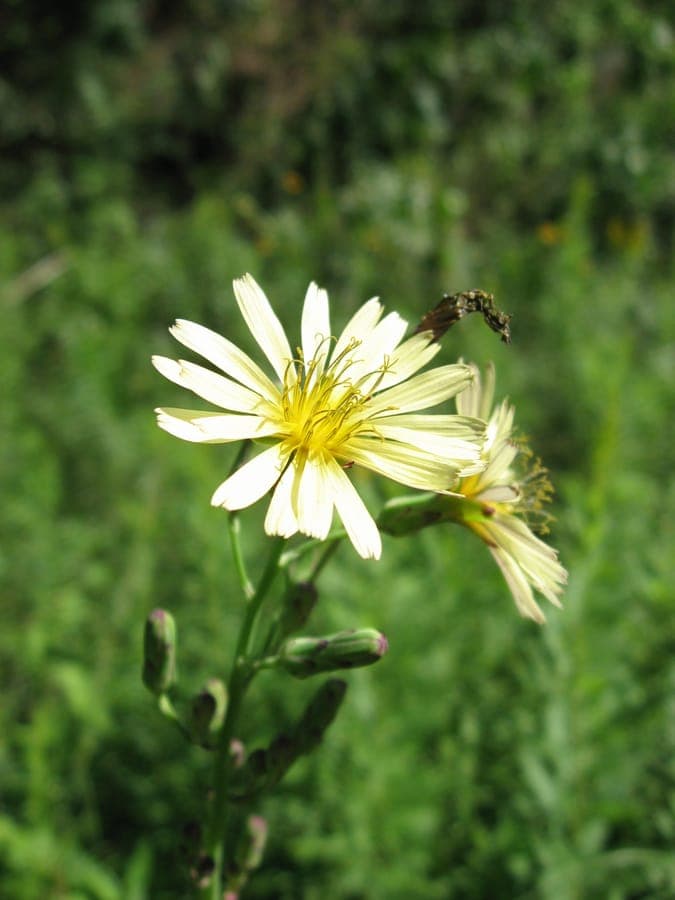
Σ64 / CC BY-SA 3.0, via Wikimedia Commons
Indian Lettuce: complete guide
Lactuca indica
¿Quieres ver Indian Lettuce: complete guide en tu jardín?
1 minuto, sin tarjeta de crédito
Overview
Indian lettuce (Lactuca indica) is a fascinating wild lettuce native to Southeast Asia, ranging from Japan to Vietnam and throughout Southeast Asia. This plant is known for its elegant growth habit, yellow flowers, and edible leaves that can be used in salads.
This is a versatile plant that grows in various conditions, from shade to partial light. The plant is suitable for natural gardens, woodland borders, and even in pots. The plant prefers moist soils but can also grow in drier conditions.
Appearance and bloom
Lactuca indica is a biennial or short-lived perennial typically reaching 30 to 100 centimeters in height. The plant has a slender, elegant growth habit with an upright stem.
The leaves are oblong to lance-shaped, often with toothed margins, and green to red-tinted. The leaves are edible and resemble wild lettuce. The plant grows from bottom to top, with leaves distributed along the stem.
The flowers are the highlight: small yellow flowers in loose clusters (panicles). Each flower is approximately 1 to 1.5 centimeters in diameter. Blooming lasts from July to September in temperate climates. After flowering, light seed capsules (achenes) form with feathery seed hooks dispersed by wind.
Ideal location
Indian lettuce thrives in shade to partial light. This distinguishes it from many other flowers. Place the plant where it receives 30 to 50% of daylight - under trees, on shaded sides of buildings, or in other shadowed corners.
The plant can also grow in full sun, though it becomes more drought-sensitive. In hot, dry climates, shade is preferred.
The plant grows well on slopes, along forest edges, and in natural garden situations.
Soil
Indian lettuce thrives in diverse soil types but prefers moist, humus-rich soils. The plant grows well in woodland-like soils with plenty of leaf compost and organic matter.
The pH can be neutral to slightly acidic (pH 6.0 to 7.5). The plant tolerates clay reasonably well, especially if humus content is high.
In container cultivation, use a mix with plenty of leaf compost and potting soil (minimum 40% leaf compost).
Diseño gratis
¿Quieres ver Indian Lettuce: complete guide en tu jardín? Crea un diseño gratis ahora.
Watering
Indian lettuce prefers moist soils. Regular watering is preferred, especially in young years. Do not let the soil surface dry out completely.
In garden conditions, water at least once weekly under normal conditions, twice weekly during dry periods. In containers, water daily during growing period.
The plant also grows along waterways and in wet soils, so water tolerance is high.
Pruning
Indian lettuce requires minimal pruning. The plant does not need pruning. However, you can harvest young leaves when they are well-developed.
Do not remove faded flowers - they can naturally reseed and produce new plants.
At season's end, the entire plant can be removed.
Maintenance calendar
Flowering period: July to September in temperate zones. Growing season: April to October in temperate climates.
Fertilizing: Once monthly during growing period with balanced fertilizer (NPK 10-10-10). For containers, twice monthly. In winter, stop feeding.
Pest management: Check for aphids and whitefly, especially in warm periods. Biological control with soapy water is sufficient.
Winter hardiness
Indian lettuce is not fully winter-hardy in temperate climates, but can overwinter in some conditions. In zone 8 and warmer, it can overwinter outdoors. In colder zones, the plant dies in first frost.
Minimum temperature: approximately 5 degrees Celsius. Hard frost will likely kill the plant.
Companions
Indian lettuce combines beautifully with:
- Other wild lettuce plants: Lactuca virosa, other Lactuca species
- Shade-loving flowers: Geranium, Aquilegia, Campanula
- Woodland ferns: Dryopteris, Polystichum, Osmunda
- Foliage plants: Heuchera, Hosta (small varieties), Alchemilla
For excellent plant selection, visit gardenworld.app for professional design advice and plant recommendations specific to your garden.
Create a natural woodland setting with varied texture plants.
Closing
Indian lettuce is a charming wild lettuce with fascinating history in Asia. With minimal maintenance, shade tolerance, edible leaves, and yellow summer flowers, this plant is ideal for natural and woodland garden styles. Whether you grow it for its ornamental value or for leaf harvest, it adds elegance and biological diversity to any garden.
Want to learn more about natural gardens? Visit gardenworld.app for professional design advice tailored to your garden.
¿Quieres ver Indian Lettuce: complete guide en tu jardín? Crea un diseño gratis ahora.
Sube una foto, elige un estilo y obtén un diseño fotorrealista con lista de plantas en menos de un minuto.
Más de 10.000 jardines diseñados
Sin tarjeta de crédito


Plantas similares
Calendula stellata: complete guide
Calendula stellata
Complete guide to Calendula stellata, the star-flowered marigold from Sicily: location, soil, watering and companion planting tips.
Korean chrysanthemum: complete guide
Chrysanthemum x rubellum
Chrysanthemum x rubellum is a hardy autumn perennial with single pink to copper flowers from August to November. Care and combinations.
Helianthus divaricatus: complete guide
Helianthus divaricatus
Helianthus divaricatus is a North American woodland sunflower with yellow summer blooms, ideal for naturalistic borders and shady edges.