
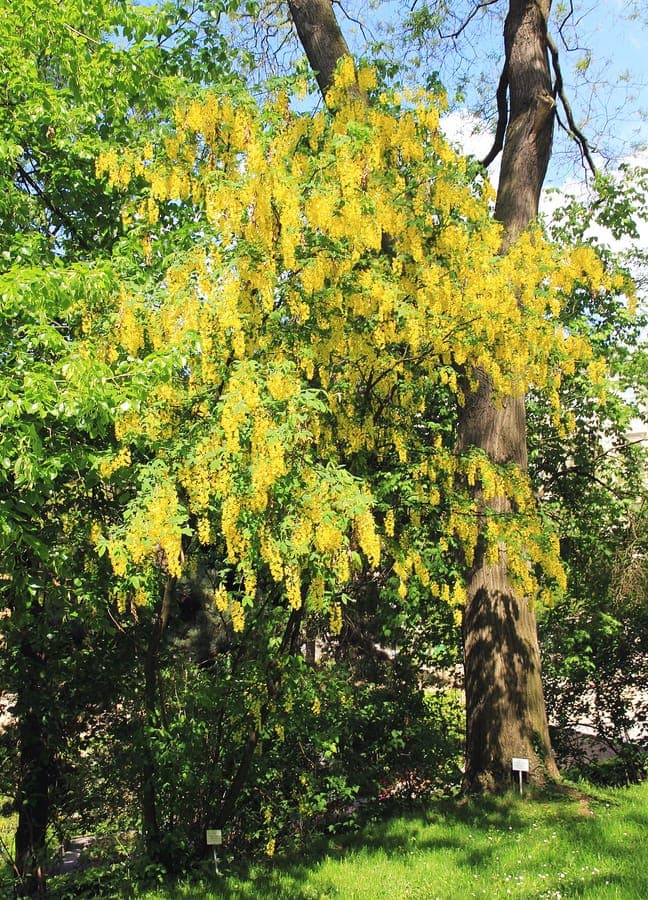
Karelj / CC BY-SA 3.0, via Wikimedia Commons
Alpine laburnum: complete guide
Laburnum alpinum
¿Quieres ver Alpine laburnum: complete guide en tu jardín?
1 minuto, sin tarjeta de crédito
Overview
The Alpine laburnum (Laburnum alpinum), sometimes called Scottish laburnum or mountain golden-chain, is an elegant shrub or small tree renowned for its cascades of golden yellow flowers in June and July. Native to the mountains of Central and Southern Europe - from the Alps to the Balkans - this plant combines alpine toughness with captivating beauty. Growing naturally on steep mountain slopes, the Alpine laburnum adapted to cold winters and variable moisture, making it ideal for temperate gardens worldwide.
What distinguishes the Alpine laburnum from its close relative, the common laburnum (Laburnum anagyroides), is its finer foliage, more compact habit, and notably longer flowering season. On gardenworld.app, this plant works exceptionally well as an accent shrub or focal-point tree in Mediterranean or rocky gardens. It pairs beautifully with purple clematis, pink magnolias, and white flowering crab apples - creating a symphony of spring and early summer color.
Appearance and bloom
The Alpine laburnum grows as a deciduous shrub or small tree, typically 4-8 meters (13-26 feet) tall, with an elegant, airy branching habit. The leaves are trifoliate (composed of three leaflets) and bright green; each leaflet is elliptical. The plant's appeal lies partly in its light, open foliage canopy - allowing dappled shade below while framing distant views.
Flowers appear in June and July in dense, pendant racemes 20-30 cm (8-12 inches) long. Each tiny bloom is sulfur-yellow, massed together in spectacular chains that cascade downward like golden waterfalls. These are the plant's triumphant moment - a pure, deliberate statement of color that can anchor any garden's design. Following bloom, glossy, flattened seed pods develop, ripening in August and September and remaining decorative throughout autumn.
Ideal location
The Alpine laburnum thrives in full sun to light dappled shade. Position it where it receives at least 6-8 hours of direct sunlight daily; flowering will be most abundant in such conditions. In regions with hot, dry summers, afternoon shade can prevent stress.
Choose a well-draining site with good air circulation; the plant appreciates space to develop its natural form. When designing with gardenworld.app, position the Alpine laburnum against a north-facing bank, at the woodland's edge, or as a centerpiece focal point amid ornamental stone landscaping.
Soil and nutrition
The Alpine laburnum is not fussy about soil type. It grows in sandy, clay, and loamy soils alike, provided drainage is reasonable. Waterlogging is tolerated only moderately, so ensure drainage in wet gardens. Soil pH should be neutral to slightly alkaline (6.5-7.5).
As a nitrogen-fixing legume, this plant manufactures its own nitrogen via root-symbiotic fungi, so extra feeding is rarely needed. In poor soils, apply light kelp fertilizer in spring. For container-grown specimens, incorporate slow-release fertilizer at planting; thereafter, feed once per growing season.
Diseño gratis
¿Quieres ver Alpine laburnum: complete guide en tu jardín? Crea un diseño gratis ahora.
Watering
Once established, the Alpine laburnum is drought-tolerant and needs minimal supplemental water. In its first growing season, water regularly (especially during dry spells) to keep soil evenly moist around new roots. Thereafter, rainfall usually suffices. Only during extreme drought or when potted should active watering be necessary.
In wet winters, water excess becomes problematic, so ensure excellent drainage. Water well immediately after planting; average precipitation typically handles thereafter.
Pruning and maintenance
The Alpine laburnum requires minimal pruning. Allow it to assume its natural form, which develops into that characteristic graceful, airy silhouette. After flowering (August), remove spent flower heads and damaged branches. Prune wayward branches only if they obstruct passages or grow too heavy.
Remove deadwood annually. Since the plant self-seeds from pods, remove these before they split to prevent unwanted seedlings. Otherwise, this plant is refreshingly low-maintenance; no intensive annual pruning is required.
Maintenance calendar
February-March: Check for winter damage and rank growth; perform light formative pruning.
April-May: Plant new specimens; growth accelerates.
June-July: Flowering period. Enjoy! Water during drought.
August-September: Remove seed pods (optional); perform autumn maintenance.
October-November: Leaf fall; prepare for winter dormancy.
December-January: Winter rest; extreme cold protection rarely needed.
Winter hardiness
The Alpine laburnum is exceptionally winter-hardy and thrives in USDA zones 5-8 (some sources cite zone 4). It tolerates temperatures down to approximately -25°C (-13°F) without significant damage. In harsh alpine climates, it naturally grows even at higher elevations than lowland specimens.
Throughout the Netherlands, Belgium, France, and Germany, winter protection is unnecessary. Young plants can be mulched during exceptionally severe winters, but mature specimens withstand any temperate winter effortlessly.
Companion planting
The Alpine laburnum pairs beautifully with:
- Purple-flowering climbers: Clematis alpina or double-flowered Clematis 'Nelly Moser' create rich color contrast against the gold.
- Early-blooming groundcover: Helleborus niger (Christmas rose) or Helleborus argutifolius form attractive foreground displays with lime-green flowers.
- Alpine shrubs: Ilex crenata (Japanese holly) or Daphne mezereum offer foliage contrast.
- Spring bulbs: Narcissus, tulips, and hyacinths flourish beneath the tree; their spring brilliance follows the laburnum's golden display.
On gardenworld.app, visualize these combinations in a garden design where texture and bloom timing harmonize perfectly.
Final tips
The Alpine laburnum is a bewitching plant that creates its own golden waterfalls in June-July. Position it prominently where its flowering can be fully appreciated. Remember: all plant parts are toxic (especially seed pods), so exercise caution in households with children or pets.
For a professional garden design incorporating the Alpine laburnum at its ideal location, create a design on gardenworld.app. With photorealistic 3D visualization, see exactly how the plant appears in your garden - and receive plant recommendations perfectly harmonized with your design. Design now and create your dream garden with golden summer blooms.
¿Quieres ver Alpine laburnum: complete guide en tu jardín? Crea un diseño gratis ahora.
Sube una foto, elige un estilo y obtén un diseño fotorrealista con lista de plantas en menos de un minuto.
Más de 10.000 jardines diseñados
Sin tarjeta de crédito


Plantas similares
Glicina china: guia completa
Wisteria sinensis
Todo sobre la Glicina China (Wisteria sinensis): plantacion, poda, entrenamiento y cuidado. Consejos de expertos para racimos en cascada espectaculares.
Escoba europea: guía completa
Cytisus scoparius
Aprende a cultivar y cuidar la escoba europea (Cytisus scoparius): condiciones ideales, poda, plantas acompañantes y calendario estacional.