
Sten Porse / CC BY-SA 3.0, via Wikimedia Commons
Kalopanax: complete guide
Kalopanax septemlobus
¿Quieres ver Kalopanax: complete guide en tu jardín?
1 minuto, sin tarjeta de crédito
Overview
Kalopanax septemlobus, commonly known as Tree-aralia or Castor-aralia, is an impressive deciduous tree native to Far Eastern Russia, China, Japan, and Korea. Belonging to the Araliaceae family, this tree stands out for its unusual architecture and striking foliage. The name septemlobus refers to the characteristic seven-lobed leaves that resemble chestnut leaves. Growing naturally in temperate forests, this is an excellent choice for larger gardens where you want to create a statement piece.
Beyond botanical interest, this tree is invaluable for garden designers seeking strong vertical structure and visual drama. With its upright form and natural elegance, Kalopanax recalls Japanese garden traditions.
Appearance and Bloom
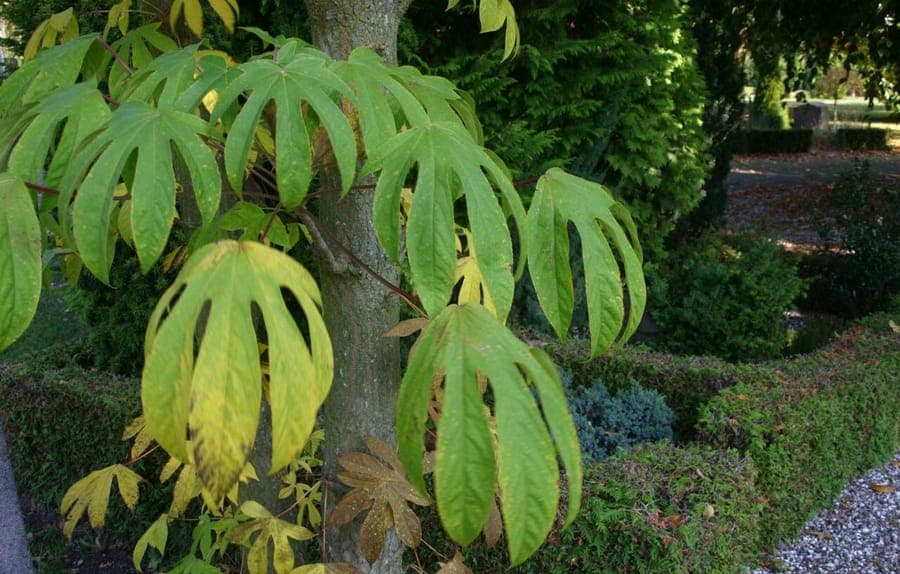
Kalopanax septemlobus is characterized by its deeply lobed leaves with seven distinctive points. Leaves can reach up to 30 centimeters wide with pronounced texture and grooved surfaces. What truly sets this tree apart is its dark, rough bark that becomes especially attractive in winter.
Small white-yellow flowers appear in summer, grouped in panicles. Though not spectacular in size, these blooms contribute to the tree's complete seasonal rhythm. Following flowering, small black berries form, providing autumn food for birds.
Foliage turns golden-brown to reddish-brown in autumn, making the tree particularly attractive during this season. This fall color display lasts several weeks and represents a landscape highlight.
Ideal Location
Position Kalopanax septemlobus in full sun to light shade. At least six hours of direct daily sunlight supports optimal growth and foliage development. This tree thrives in temperate climates and overwinters outdoors without difficulty in northern regions.
Ensure the tree receives sufficient space, both horizontally and vertically. Avoid planting too close to other large trees, as its dominant form requires adequate space to fully display its beauty.
In urban gardens, use this tree as a specimen - positioned where it's clearly visible from the house. It's also suitable for larger borders, provided it isn't overshadowed by neighboring plants.
Soil
Kalopanax grows best in nutrient-rich, well-draining soil. Although fairly adaptable, it performs optimally in soil with a pH between 6.0 and 7.5. Ensure the soil contains adequate organic matter.
When planting, work compost into the soil to improve structure. The tree tolerates various soil types, from clay to sandy, provided drainage is adequate. Waterlogging causes root problems, so ensure proper drainage.
After planting, apply mulch. A 5-7 centimeter layer helps retain soil moisture and warmth while supporting healthy root development.
Watering
Water your Kalopanax septemlobus regularly, especially during the first growing season after planting. Young specimens need more water than established trees. Maintain consistent soil moisture while avoiding waterlogging.
During hot summers, particularly in dry periods, increase watering frequency. Drip irrigation is effective for young trees. Once established, the tree tolerates drought better, though regular moisture remains beneficial.
Winter watering is minimal. However, monitor soil moisture if there's little snow or rain. Container-grown trees need more regular watering than field-planted specimens.
Diseño gratis
¿Quieres ver Kalopanax: complete guide en tu jardín? Crea un diseño gratis ahora.
Pruning
Kalopanax displays a naturally elegant growth form requiring minimal pruning. The main objective is maintaining the tree's structural integrity. Remove dead, diseased, or damaged branches as soon as you notice them.
Late winter (January to March) is optimal for major pruning work. Make clean cuts and avoid over-pruning, which can distort the tree's natural form. Height reduction may be necessary in smaller gardens where space is limited.
Young trees may need formative pruning to develop a strong central stem. Remove competing leaders to establish a single robust trunk.
Maintenance Calendar
January to March: Perform major pruning. Inspect for disease. Winter fertilizing if needed.
April to May: Planting season. Refresh mulch. Monitor new growth.
June to August: Regular watering during dry periods. Observe flowering and berry formation. Check for pest activity.
September to October: Enjoy fall coloring. Prepare for winter. Stop fertilizing.
November to December: Clear fallen leaves. Protect young plantings from frost.
Winter Hardiness
Kalopanax septemlobus is fully winter hardy throughout northern Europe. The tree tolerates temperatures well below freezing without damage. It leafs out in early spring, so frost can occasionally damage new growth, but rarely proves fatal.
In harsh climates, young specimens benefit from some protection during early winters. A mulch layer around the root zone provides extra insulation.
Once established (after 3 years), further winter protection is usually unnecessary. This tree is ideal for northern European winters.
Companion Plants
Kalopanax pairs well with shade-tolerant groundcovers and understory plants. Hostas work excellently beneath the canopy due to their shade tolerance and contrasting leaf forms.
Wildflowers and low perennials, such as moss phlox and bellflower, create natural, elegant underplanting. Avoid heavy root competitors directly around the base.
In light woodland settings, Kalopanax functions beautifully as a mid-layer element between low groundcovers and taller canopy trees. Ferns add texture without competing for space.
Closing
Kalopanax septemlobus is an unforgettable tree that adds architecture and seasonal rhythm to any garden. With its distinctive leaves, natural elegance, and winter hardiness, it's a prime choice for northern European gardeners.
Discover more insights on gardenworld.app, where thousands of experts guide you about garden plants. For purchasing this tree, I recommend consulting specialist nurseries that can advise on best sizes and forms.
This tree truly shines in larger gardens where space is plentiful. With minimal maintenance investment, you'll enjoy a plant that remains valuable season after season.
Enjoy your Kalopanax septemlobus! Visit gardenworld.app for more inspiration and tips.
¿Quieres ver Kalopanax: complete guide en tu jardín? Crea un diseño gratis ahora.
Sube una foto, elige un estilo y obtén un diseño fotorrealista con lista de plantas en menos de un minuto.
Más de 10.000 jardines diseñados
Sin tarjeta de crédito


Plantas similares
American marsh pennywort: complete guide
Hydrocotyle americana
Everything about Hydrocotyle americana: location, soil, moisture and winter care. A delicate groundcover for shaded pond edges and boggy garden borders.
Devil's club: complete guide
Oplopanax horridus
Full guide to growing Oplopanax horridus: ideal site, soil, watering, and care for this dramatic spiny woodland shrub.
Water pennywort: complete guide
Hydrocotyle umbellata
Everything about Hydrocotyle umbellata: ideal location, soil, watering, winter care and pond planting. A versatile aquatic plant for garden ponds and boggy spots.