
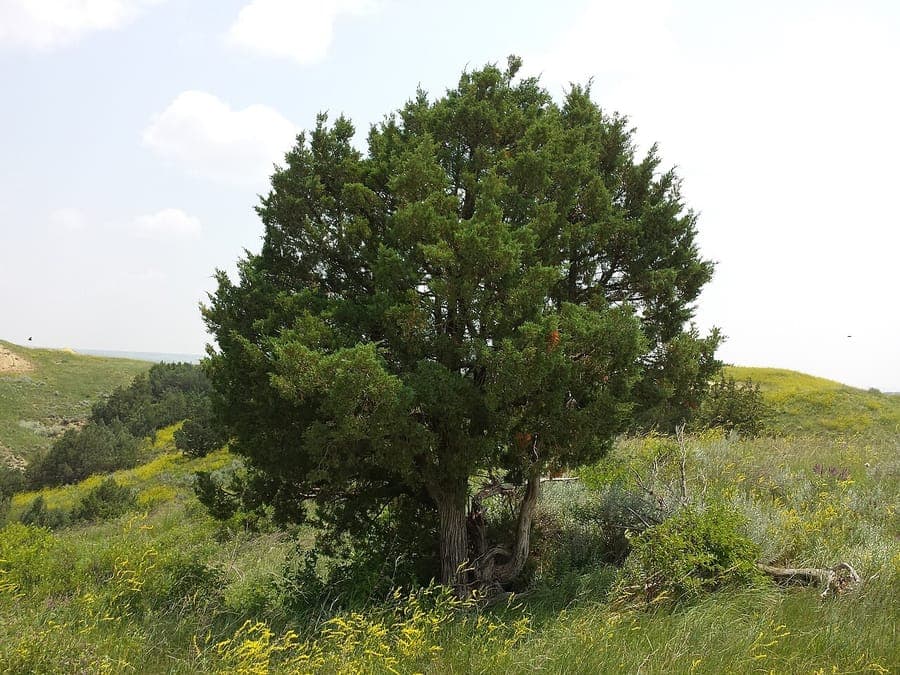
John Brew https://www.inaturalist.org/people/brewbooks / CC BY 4.0, via Wikimedia Commons
Rocky Mountain Juniper: Complete Guide
Juniperus scopulorum
¿Quieres ver Rocky Mountain Juniper: Complete Guide en tu jardín?
1 minuto, sin tarjeta de crédito
Overview
The Rocky Mountain juniper (Juniperus scopulorum) is a native conifer of the mountain regions of western North America, ranging from western Canada to northern Mexico. Highly valued in landscaping for its elegant form, drought tolerance, and minimal maintenance requirements, this tree reaches 20-40 feet in height, though many cultivars remain smaller.
Appearance & Bloom
The foliage consists of delicate, scale-like needles with a distinctive silvery-blue to steel-gray coloration that deepens to bronze-purple in winter months. The plant naturally develops a narrow columnar or pyramidal silhouette. Growth is typically slow and steady. Female plants produce small blue berries covered with white bloom, while male plants produce inconspicuous pollen cones.
Ideal Location
Position in full sun (6+ hours daily) for best color and form. The plant tolerates partial shade but becomes somewhat less dense and loses some silvery tone. Extremely wind-tolerant, making it excellent for exposed hillsides and windy locations. Avoid areas with poor drainage or constantly high water tables.
Soil
This conifer thrives in virtually all well-draining soil types: sandy, loamy, or clayey. The critical requirement is adequate drainage. Acceptable pH range is broad (5.0-8.5). Over-fertilized soils produce weak growth. Amend poor soils with compost at planting, but avoid heavy feeding.
Watering
Once established, Rocky Mountain juniper is remarkably drought-tolerant and requires minimal supplemental water. Water regularly during the first growing season to promote establishment. Mature plants rely primarily on natural rainfall. During extreme drought, periodic watering supports vigor, but the plant rarely demands it.
Diseño gratis
¿Quieres ver Rocky Mountain Juniper: Complete Guide en tu jardín? Crea un diseño gratis ahora.
Pruning
This species requires virtually no pruning and develops an attractive shape naturally. Remove only dead or damaged branches in early spring. Excessive pruning diminishes the plant's natural beauty. Given slow growth, patience is an asset when managing mature specimens.
Maintenance Calendar
- February-March: Inspect for winter damage; remove deadwood
- April-May: Plant new specimens
- June-September: Monitor moisture during drought periods
- October-November: Apply protective mulch to young plants before winter
Winter Hardiness
This species is exceptionally hardy (USDA zones 4-8, tolerating temperatures to -25°C / -13°F). In temperate maritime climates, it thrives without protection. Extreme continental winters may stress young plants, but established trees rarely suffer significant damage.
Companion Plants
This conifer pairs beautifully with ornamental grasses, sedums, and other alpine groundcovers. Grouping with other conifers (spruce, pine) leverages its distinctive silvery-blue color for stunning contrast. Visit gardenworld.app for design inspiration.
Conclusion
The Rocky Mountain juniper deserves wider recognition in modern landscapes. Its elegant form, striking color, minimal maintenance demands, and exceptional longevity make it a superior choice for dry gardens and contemporary design schemes. Plants are widely available from specialty nurseries. With the right location and basic care, you'll enjoy decades of beauty from this remarkable mountain native. For integrated garden design featuring conifers, explore gardenworld.app.
¿Quieres ver Rocky Mountain Juniper: Complete Guide en tu jardín? Crea un diseño gratis ahora.
Sube una foto, elige un estilo y obtén un diseño fotorrealista con lista de plantas en menos de un minuto.
Más de 10.000 jardines diseñados
Sin tarjeta de crédito


Plantas similares
Cupressus macnabiana: complete guide
Cupressus macnabiana
The Fragrant Cypress offers elegant growth with fine, aromatic foliage. Perfect for temperate climates and as specimen trees in contemporary gardens.
Cupressus guadalupensis: complete guide
Cupressus guadalupensis
The Guadalupe cypress: an elegant conifer for gardens. Complete cultivation guide for this Mexican cypress. Information about care, location, form and maintenance.
Austrocedrus chilensis: complete guide
Austrocedrus chilensis
Discover Austrocedrus chilensis, the Chilean Cedar ornamental conifer. Elegant specimen with fine foliage and columnar form for permanent structure.