
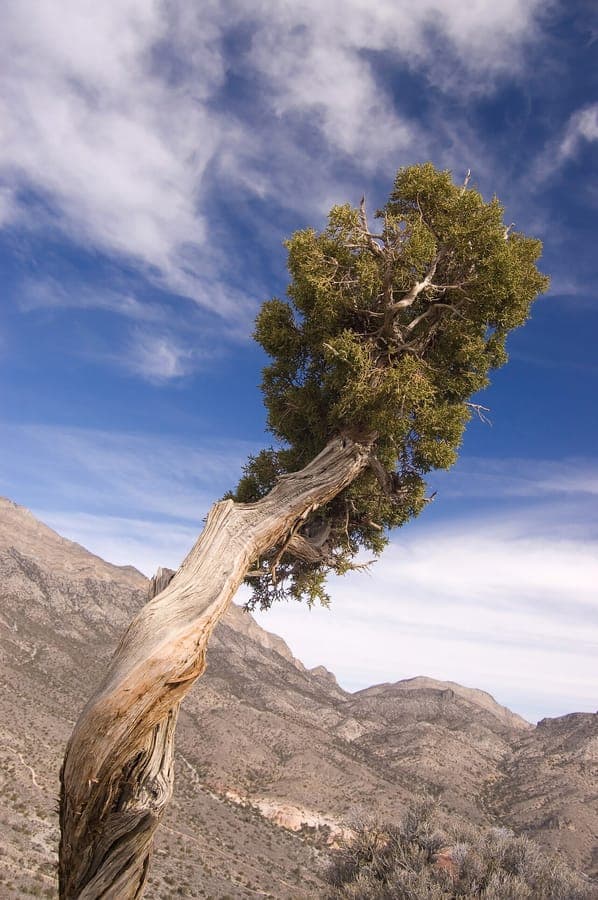
Fcb981 / CC BY-SA 3.0, via Wikimedia Commons
Utah juniper: complete guide
Juniperus osteosperma
¿Quieres ver Utah juniper: complete guide en tu jardín?
1 minuto, sin tarjeta de crédito
Overview
The Utah juniper (Juniperus osteosperma) is a native conifer of the American Southwest. This species grows naturally in Utah, Colorado, Nevada, and New Mexico. It is an extremely compact, slow-growing juniper distinguished by exceptional drought tolerance.
The name 'osteosperma' refers to the hard seeds (osteo = hard, sperma = seed). This plant is also known as desert juniper or big-berry juniper.
Appearance and blooms
Utah juniper forms a compact, rounded to pyramidal habit reaching 3-8 meters in height. The bark is reddish-brown to gray with distinctive vertical fissures. The foliage consists of gray-green to blue-green needles that lie very closely together.
The plant is dioecious: male specimens produce yellow pollen cones, while females bear blue-black fruits (actually modified cones) that ripen in the second year.
Ideal location
This juniper thrives in fully sunny locations. Minimum 6-8 hours of direct sun is essential for dense growth and natural form. The plant is unsuitable for shaded sites.
Use this plant in xeriscapes, alpine borders, rock gardens, or as a specimen plant. Its compact size also suits large containers on patios and terraces.
Soil
The Utah juniper is not fussy about soil composition. It grows in nearly all soils as long as drainage is excellent. Ideal pH range: 6.5-8.2.
Heavy clay soils must be improved with sand and gravel. The ideal soil is lean to moderately fertile. Highly fertile soils can promote vigorous growth and loss of the compact form.
Diseño gratis
¿Quieres ver Utah juniper: complete guide en tu jardín? Crea un diseño gratis ahora.
Watering
Once established, this plant is extremely drought-tolerant. Water moderately during the first year after planting, then practically no supplemental water is needed.
Avoid regular watering; the plant actually thrives in arid conditions. Natural rainfall is usually sufficient. During very dry periods, you may water sparingly if the plant shows visible drought stress.
Pruning
Pruning is rarely needed. Remove only dead, damaged, or diseased branches in spring. The plant maintains its natural form naturally.
If you do wish to shape it, do so carefully and gradually. Aggressive pruning can unbalance the plant and cause growth disorders.
Maintenance calendar
March-April: Inspect for winter damage; remove dead wood.
May-October: Growing season; no maintenance needed (only encourage growth in the first year).
November-February: Winter dormancy; no maintenance needed.
Winter hardiness
The Utah juniper is very winter-hardy and thrives in USDA zones 4-9. The plant tolerates temperatures down to -30C without issues. Extreme summer temperatures and intense sun exposure are also well-tolerated.
Companion plants
Combine the Utah juniper with other desert plants:
- Artemisia species (wormwood)
- Atriplex species
- Ephedra
- Lavatera species
- Yucca species
Also pairs well with low-growing sedums and ornamental grasses like Festuca glauca.
In closing
The Utah juniper is an excellent low-maintenance plant for those wishing to create an authentic, natural desert garden. The plant requires no feeding, minimal water, and virtually no pruning.
Availability: Intratuin, Gamma (Netherlands); OBI, Hornbach (Germany); Truffaut, Jardiland (France).
More information: gardenworld.app/en, gardenworld.app/nl
¿Quieres ver Utah juniper: complete guide en tu jardín? Crea un diseño gratis ahora.
Sube una foto, elige un estilo y obtén un diseño fotorrealista con lista de plantas en menos de un minuto.
Más de 10.000 jardines diseñados
Sin tarjeta de crédito


Plantas similares
Cupressus macnabiana: complete guide
Cupressus macnabiana
The Fragrant Cypress offers elegant growth with fine, aromatic foliage. Perfect for temperate climates and as specimen trees in contemporary gardens.
Cupressus guadalupensis: complete guide
Cupressus guadalupensis
The Guadalupe cypress: an elegant conifer for gardens. Complete cultivation guide for this Mexican cypress. Information about care, location, form and maintenance.
Austrocedrus chilensis: complete guide
Austrocedrus chilensis
Discover Austrocedrus chilensis, the Chilean Cedar ornamental conifer. Elegant specimen with fine foliage and columnar form for permanent structure.