
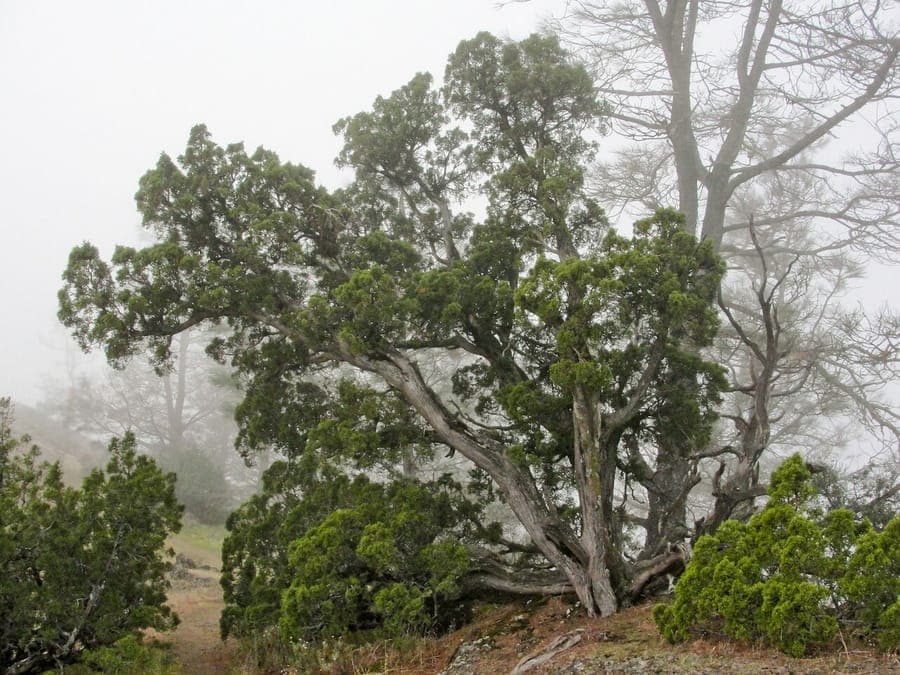
Miguel Vieira from Walnut Creek, CA, USA / CC BY 2.0, via Wikimedia Commons
Juniperus californica: complete guide
Juniperus californica
¿Quieres ver Juniperus californica: complete guide en tu jardín?
1 minuto, sin tarjeta de crédito
Overview
Juniperus californica, known as California juniper or cedar, is a robust, drought-tolerant conifer native to California, Arizona, Nevada, and northwestern Mexico. This rugged species adapted to arid, mountainous terrain of the southwestern United States proves exceptionally hardy. Growing as shrub or small tree, it excels in dry climate gardens, Mediterranean landscapes, and xeriscaping projects.
Appearance and Characteristics
California juniper typically reaches 2 to 8 meters tall with natural, irregular branching. Foliage features scale-like leaves in gray-green to blue-green. The plant produces no traditional flowers but bears blue to black fruits (actually scale-covered seed cones) approximately 8-12 millimeters. These "berries" attract birds and contribute to the plant's natural aesthetic.
Ideal Location
Juniperus californica demands dry, sunny locations. Provide full sun with minimum 8 hours direct daily sunlight. This plant tolerates wind exceptionally well, even in mountainous windswept areas. Avoid moist locations and high humidity areas.
Soil
For optimal growth, provide:
- Extremely well-draining, sandy or rocky soil
- Low fertility acceptable
- Dry to very dry conditions preferred
- Excellent drainage essential
- Alkaline soil tolerated
Watering
Once established, this plant is extremely drought-tolerant requiring minimal water. During the first two years, water regularly to encourage deep rooting. Once established, the plant survives without supplemental water. Avoid overwatering, which causes root problems.
Diseño gratis
¿Quieres ver Juniperus californica: complete guide en tu jardín? Crea un diseño gratis ahora.
Pruning
California juniper requires minimal pruning. Remove dead branches as needed but otherwise let the plant maintain natural form. Heavy pruning risks damage and should be avoided. The plant naturally develops attractive silhouette.
Maintenance Calendar
Spring: Check for winter damage in harsh climates; increase watering needs. Summer: Minimal care; water only during extreme drought. Autumn: Prepare for winter; check for pests. Winter: No maintenance needed in most cases.
Winter Hardiness
This plant is very winter-hardy, tolerating temperatures to -15 degrees Celsius, though it originates from warmer regions. In northern climates with severe winters, performance diminishes. It grows best where winters remain moderate.
Companion Plants
California juniper pairs excellently with other drought-tolerant plants like sage, rosemary, yucca, and Mediterranean-inspired species. In xeriscaping gardens, it provides excellent background for lower-growing ground covers. It also attracts beneficial insects and birds.
Closing
Juniperus californica is indispensable for dry climate gardens and xeriscaping projects. Its quiet presence and minimal maintenance needs make it ideal for modern, low-maintenance gardens. Visit local garden centers for quality plants and expert advice. Discover more garden plants at gardenworld.app/nl and gardenworld.app/en.
¿Quieres ver Juniperus californica: complete guide en tu jardín? Crea un diseño gratis ahora.
Sube una foto, elige un estilo y obtén un diseño fotorrealista con lista de plantas en menos de un minuto.
Más de 10.000 jardines diseñados
Sin tarjeta de crédito


Plantas similares
Cupressus macnabiana: complete guide
Cupressus macnabiana
The Fragrant Cypress offers elegant growth with fine, aromatic foliage. Perfect for temperate climates and as specimen trees in contemporary gardens.
Cupressus guadalupensis: complete guide
Cupressus guadalupensis
The Guadalupe cypress: an elegant conifer for gardens. Complete cultivation guide for this Mexican cypress. Information about care, location, form and maintenance.
Austrocedrus chilensis: complete guide
Austrocedrus chilensis
Discover Austrocedrus chilensis, the Chilean Cedar ornamental conifer. Elegant specimen with fine foliage and columnar form for permanent structure.