
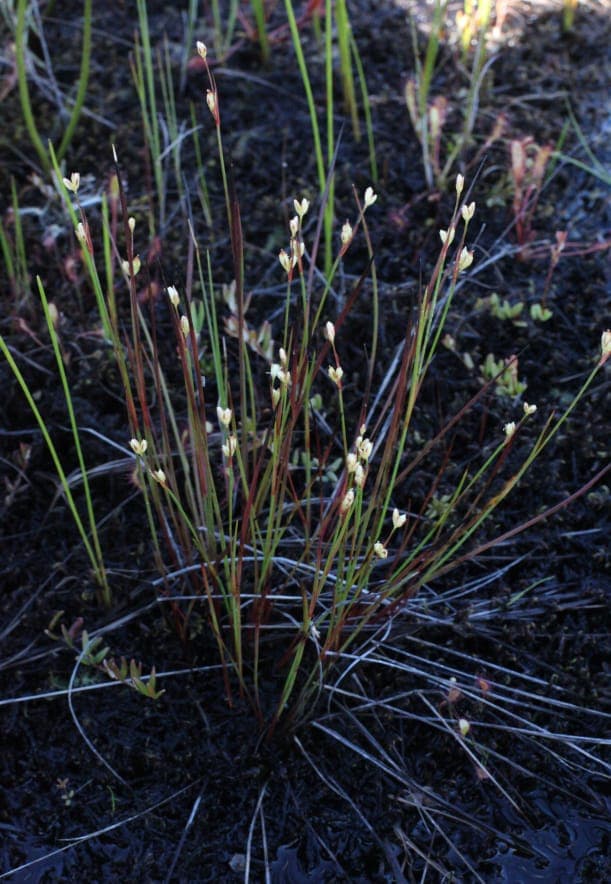
Ilya Filippov / CC BY 4.0, via Wikimedia Commons
Juncus stygius: complete guide
Juncus stygius
¿Quieres ver Juncus stygius: complete guide en tu jardín?
1 minuto, sin tarjeta de crédito
Overview
Juncus stygius, better known as moor rush or bog rush, is an elegant grass-like plant from the Juncaceae family. This plant is found in temperate zones of the Northern Hemisphere, especially in marshes, wet meadows, and along waterbanks. With its fine, upright leaves and compact growth habit, moor rush forms a valuable addition to water gardens, wet borders, and ecological garden projects.
Juncus stygius reaches a height of 10 to 30 centimeters and forms dense clumps of fine leaves. The plant grows optimally in wet to very wet soils and plays an important role in water ecosystems by providing food and shelter for aquatic animals. This makes it an ideal choice for gardens focused on biodiversity and water management.
Appearance and bloom
The leaves of Juncus stygius are very fine, almost thread-like, and grow in compact, upright clumps. They have a dark green to grass-green color. The flowering is subtle and consists of small, inconspicuous brown flowers that appear in summer.
Although the flowers are not spectacular, the plant forms an interesting structural component in gardens with its fine, graphic leaves. After flowering, small seed heads follow that add botanical interest.
Ideal location
Juncus stygius grows best in full sun to partial shade. The plant needs at least four to six hours of direct sunlight per day. Full shade leads to weaker growth. Ensure the plant is in a location where water can stand or where the soil is regularly wet.
Soil
This plant requires wet to very wet soils for optimal growth. Juncus stygius thrives in acidic marshes, fens, and aquatic terrains. The ideal pH is between 5.0 and 6.5. Standard potting soil is unnecessary; standardized garden soils with high moisture content suffice. In very dry gardens, plant establishment will be less successful.
Diseño gratis
¿Quieres ver Juncus stygius: complete guide en tu jardín? Crea un diseño gratis ahora.
Watering
Juncus stygius must never dry out. The plant requires constantly wet conditions, ideally with permanent standing water of 5-10 centimeters. In pots, this can be achieved with regular watering or by placing the pot in a water reservoir. In borders, ensure moisture retention through regular watering and possibly mulching with organic material.
Pruning
Juncus stygius requires minimal pruning. Dead leaves can be removed in early spring. Soon you can divide old, intertwined clumps and repot for renewal. Avoid pruning healthy growth, as this can be harmful to the plant's appearance.
Maintenance calendar
Spring: Remove dead leaves. Division in March-April. Summer: Keep water constant. Observe growth. Autumn: Prepare for winter inactivity. Slightly reduce water. Winter: Plant becomes inactive. Minimal water needed.
Winter hardiness
Juncus stygius is fully hardy in temperate zones of Northern Europe. The plant tolerates temperatures down to -20C. In very cold regions, mulching may be beneficial. The plant survives overwintering in closed marsh areas and underwater.
Companion plants
Juncus stygius combines well with:
- Carex (sedge) - similar ecology
- Iris laevigata - elegant flowers
- Primula japonica - purple flowering clusters
- Astilbe - fine texture contrast
- Hosta - interesting leaf shape
Closing
Juncus stygius is an indispensable plant for water gardens and wet landscapes. With its elegant fine texture, compact growth, and ecological value, it forms a valuable element in gardens focused on water management and biodiversity. For more water-related plant combinations, visit gardenworld.app/nl or gardenworld.app/en.
¿Quieres ver Juncus stygius: complete guide en tu jardín? Crea un diseño gratis ahora.
Sube una foto, elige un estilo y obtén un diseño fotorrealista con lista de plantas en menos de un minuto.
Más de 10.000 jardines diseñados
Sin tarjeta de crédito


Plantas similares
Short-fruited Rush (Juncus brachycarpus): complete guide
Juncus brachycarpus
Complete guide to Juncus brachycarpus: wet soil, pond margins, bloom season, division and winter care for this North American rush in garden ponds.
Smallhead rush: complete guide
Juncus brachycephalus
Smallhead rush (Juncus brachycephalus) - a slender North American wetland plant for pond margins and boggy garden zones. Full care guide.
Mertens' rush: complete guide
Juncus mertensianus
Mertens' rush (Juncus mertensianus) - a compact alpine wetland plant with purple-brown flower heads for cool pond margins. Full growing guide.