
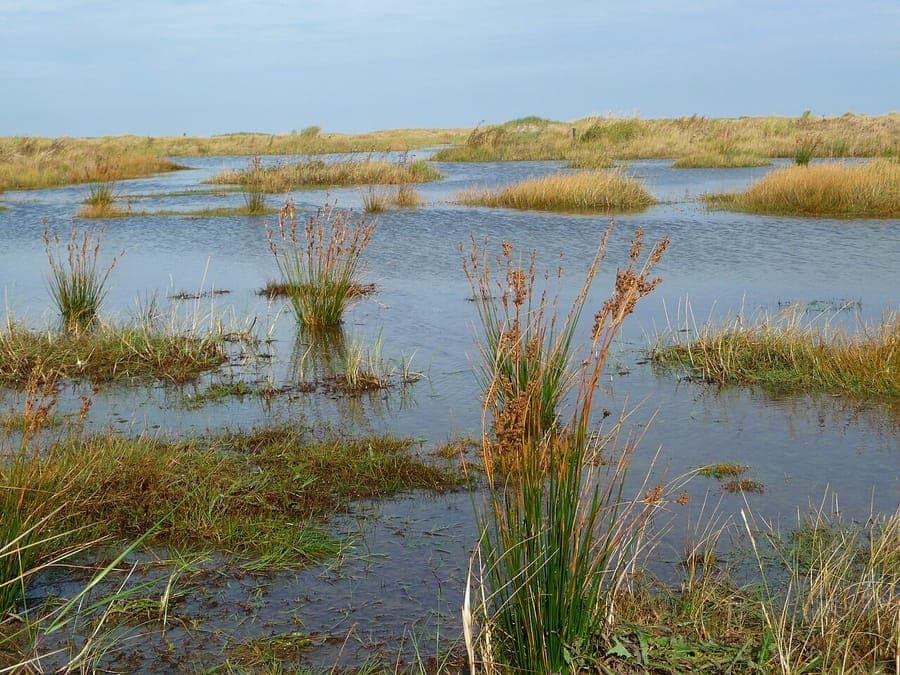
4028mdk09 / CC BY-SA 3.0, via Wikimedia Commons
Sea rush: complete guide
Juncus maritimus
¿Quieres ver Sea rush: complete guide en tu jardín?
1 minuto, sin tarjeta de crédito
Overview
Juncus maritimus, commonly known as sea rush, is a unique, salt-tolerant plant from the Juncaceae family, native to coastal regions from the Azores through Europe to Central Asia. This is a specialist in saline habitats - arguably the most salt-adapted rush across all of Europe. The name directly refers to its preference for maritime, salt-rich environments.
For British coastal gardeners, sea rush is a remarkable choice for salt marsh designs, salt-tolerant gardens, and wetland restoration. With its strong, vertical growth habit, it creates structure where other plants surrender to salt spray. On gardenworld.app, you can visualise how this plant makes salt gardening possible - ideal for adventurous gardeners near the coast.
Appearance & bloom cycle
Sea rush forms upright, sturdy leafy stems reaching 60–150 centimetres, with a grey-green to olive-tinted colour. Stems are smooth and feel rigid - an adaptation to salty, windy coastal environments. The overall appearance is robust, functional, and unadorned.
Flowering occurs June to July. Flowers appear in dense, dark brown to grey-brown clusters along stem tips. These are highly attractive to insects inhabiting coastal wetlands. After flowering, small seed capsules develop.
Ideal location: saline waterside, salt marsh, coastal wetland
Sea rush grows best in full sun - minimum 6 hours of direct sunlight daily. This isn't a shade-tolerant species. Sunny coastal wetland locations are ideal.
The key to success: saline soil and salt-water tolerance. Plant it along salt-water edges, in salt marshes, in brackish wetlands, or near salt marshes. This isn't a universally accommodating plant - it's specifically adapted to saline environments. In design terms, this is truly a coastal plant.
Soil requirements
Sea rush thrives in saline soils - this is its strength. pH can range from neutral to alkaline (7.0–8.0). Saline, mineral-rich soil is ideal.
Ideal soil characteristics: moderate salt concentration (0.5–2% salt content), consistent moisture availability, and mineral-rich compositions. This is not a plant for fresh, acidic soils.
Diseño gratis
¿Quieres ver Sea rush: complete guide en tu jardín? Crea un diseño gratis ahora.
Watering
Sea rush is moisture-loving and salt-water tolerant - even salt-loving. In coastal environments, seawater or brackish water will naturally reach the plant. This is actually ideal.
Young plants in freshwater zones need daily irrigation - roughly 2–3 litres daily. But if possible, use salt-water spraying or saline irrigation - this helps the plant thrive.
Pruning
Pruning is rarely needed. Sea rush maintains form well. In spring, remove dead or damaged stems, or in autumn cut back yellowed stems to about 15 centimetres above ground.
Use sharp, sterilised secateurs.
Maintenance calendar
- January: check soil moisture
- February: light cleanup of dead material
- March: water young plants
- April: increase watering (salt or fresh)
- May: monitor flower development
- June: first flowering observed
- July: flowering period continues
- August: watch for seed set
- September: leave seed heads for wildlife
- October: cut back old stems
- November: verify soil moisture
- December: let natural snow cover protect
Winter hardiness
Sea rush is hardy to USDA zone 5 - perfectly suited to UK coastal areas. Temperatures down to -15°C cause no problems. In severe winters, above-ground growth may die back, but roots survive.
Ensure soil is well-moistured in November. Salt-water intrusion can actually be protective - salted water protects against extreme frost.
Companion plants
Combine with other salt-tolerant species: glasswort (Salicornia), sea aster (Aster tripolium), limonium (Limonium), and other salt-tolerant coastal plants.
Also interesting with other maritime plants and salt marsh ecosystems.
Closing
Sea rush is a specialised plant for coastal gardening. It brings salt-water resistance and maritime drama. Perfect for experimental, ecologically-minded coastal gardeners.
Find it at specialist nurseries focusing on salt marshes and salt-tolerant plants, sometimes at larger garden centres. Choose healthy specimens. On gardenworld.app, design a complete coastal garden project centred on sea rush - perfect for maritime garden designs.
¿Quieres ver Sea rush: complete guide en tu jardín? Crea un diseño gratis ahora.
Sube una foto, elige un estilo y obtén un diseño fotorrealista con lista de plantas en menos de un minuto.
Más de 10.000 jardines diseñados
Sin tarjeta de crédito


Plantas similares
Short-fruited Rush (Juncus brachycarpus): complete guide
Juncus brachycarpus
Complete guide to Juncus brachycarpus: wet soil, pond margins, bloom season, division and winter care for this North American rush in garden ponds.
Smallhead rush: complete guide
Juncus brachycephalus
Smallhead rush (Juncus brachycephalus) - a slender North American wetland plant for pond margins and boggy garden zones. Full care guide.
Mertens' rush: complete guide
Juncus mertensianus
Mertens' rush (Juncus mertensianus) - a compact alpine wetland plant with purple-brown flower heads for cool pond margins. Full growing guide.