
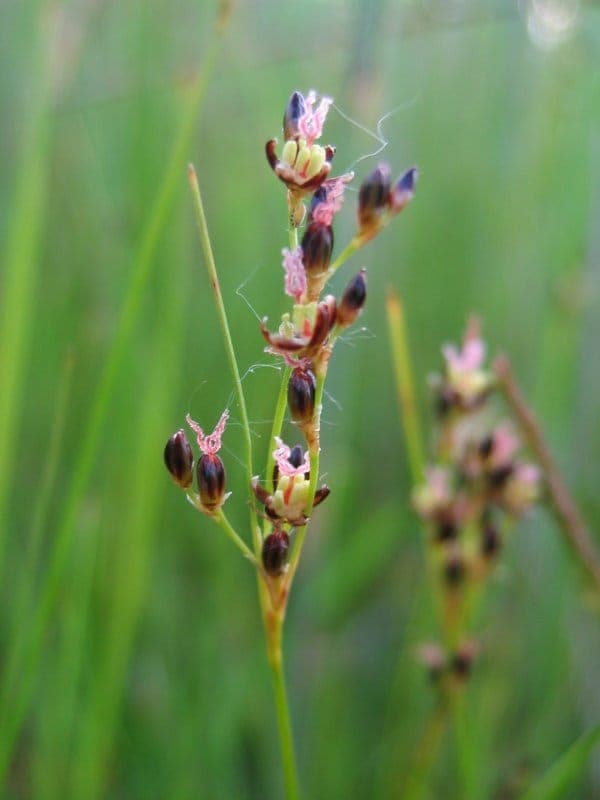
Kristian Peters -- Fabelfroh 07:02, 9 July 2006 (UTC) / CC BY-SA 3.0, via Wikimedia Commons
Juncus gerardii: complete guide
Juncus gerardii
¿Quieres ver Juncus gerardii: complete guide en tu jardín?
1 minuto, sin tarjeta de crédito
Overview
Juncus gerardii, commonly known as saltmeadow rush or black needle rush, is a resilient grasslike sedge that thrives in extreme environments where conventional ornamental grasses fail. This species occurs naturally in salt marshes, coastal flats, and periodically inundated zones across coastal Europe from Great Britain to the Mediterranean. It has become increasingly popular in ecological landscaping and sustainable garden design for its unparalleled salt and waterlogging tolerance.
For gardeners in coastal regions, this grass offers a low-maintenance, native solution to difficult sites. Gardenworld.app recommends Juncus gerardii for creating authentic wetland gardens and resilient landscapes adapted to climate change.
Appearance and Bloom Cycle
Juncus gerardii forms upright tufts reaching 40-60 cm in height. The foliage is distinctly needle-like (filiform), dark green to blue-green, creating a fine, linear texture. This characteristic appearance makes it instantly recognizable in landscape compositions.
Flowering occurs from June through August with small, inconspicuous dark brown flowers clustered into compact inflorescences. The reddish-brown seed heads persist into autumn, providing textural interest. Mature plants display attractive golden to chestnut brown tones as the season progresses.
Ideal Location
Plant Juncus gerardii in full sun to partial shade situations. The grass performs best with 5-6 hours of direct sunlight daily. In exposed coastal gardens subject to salt spray and wind, it remains vigorous due to its exceptional salt tolerance.
Use this grass in wetland margins, water retention areas, coastal gardens, and any periodically flooded zones. It excels in bioswales, rain gardens, and sustainable urban water management schemes. Gardenworld.app specialists frequently specify it for ecological restoration projects.
Soil Requirements
Juncus gerardii is exceptionally undemanding regarding soil. It thrives on wet, saline, heavy clay and loamy soils where other plants perish. The species tolerates pH from neutral to alkaline (7.0-7.5). Perfect drainage is unnecessary; persistent moisture and periodic inundation are essential.
In conventional gardens without natural waterlogging, create saline conditions or use mineral-enriched water. Poor, mineral-rich substrates are ideal. Avoid rich fertilized soils; this species prefers nutrient-poor, saline conditions that mimic its native habitat.
Diseño gratis
¿Quieres ver Juncus gerardii: complete guide en tu jardín? Crea un diseño gratis ahora.
Watering
Juncus gerardii requires consistently wet to saturated conditions. Plant it in zones that remain wet throughout the growing season. The species tolerates both freshwater inundation (marshes) and brackish flood events (coastal areas).
Maintain high moisture levels April through October. Supplementary irrigation during dry spells helps. In coastal sites, saline water actively benefits the plant by reinforcing its salt-marsh habitat value.
Pruning and Maintenance
Juncus gerardii demands minimal pruning. In late autumn (October-November), cut back dead foliage to 5-10 cm height. This encourages vigorous spring growth. Use gloves; the rigid leaves can be sharp.
In natural wetland settings, allow the grass to spread and colonize. In designed gardens, light shaping maintains aesthetic form. Remove dead matter in March before active growth resumes.
Maintenance Calendar
March: Spring inspection and dead-wood removal. April-May: Active growth phase; ensure water availability. June-August: Flowering period; monitor seed dispersal. September-October: Autumn coloration develops. November-February: Winter dormancy with minimal management; light pruning October.
Winter Hardiness
Juncus gerardii is extremely hardy throughout temperate Europe. In the UK, Netherlands, and northern France, it persists outdoors year-round without protection. The species tolerates temperatures to -15 degrees Celsius without damage and remains evergreen in maritime climates.
Companion Plants
Juncus gerardii pairs excellently with salt and waterlogging-tolerant natives. Combine with Phragmites australis (common reed), Atriplex portulacoides (sea purslane), and Suaeda maritima (annual seablite) for authentic salt-marsh habitats. For biodiversity: Scirpus maritimus and Sarcocornia perennis. Pair also with Eriophorum (cottongrass) and Juncus acutiflorus for diverse wetland palettes. These combinations create ecologically valuable habitats valued at garden centres throughout northern Europe and featured on gardenworld.app.
¿Quieres ver Juncus gerardii: complete guide en tu jardín? Crea un diseño gratis ahora.
Sube una foto, elige un estilo y obtén un diseño fotorrealista con lista de plantas en menos de un minuto.
Más de 10.000 jardines diseñados
Sin tarjeta de crédito


Plantas similares
Short-fruited Rush (Juncus brachycarpus): complete guide
Juncus brachycarpus
Complete guide to Juncus brachycarpus: wet soil, pond margins, bloom season, division and winter care for this North American rush in garden ponds.
Smallhead rush: complete guide
Juncus brachycephalus
Smallhead rush (Juncus brachycephalus) - a slender North American wetland plant for pond margins and boggy garden zones. Full care guide.
Mertens' rush: complete guide
Juncus mertensianus
Mertens' rush (Juncus mertensianus) - a compact alpine wetland plant with purple-brown flower heads for cool pond margins. Full growing guide.