
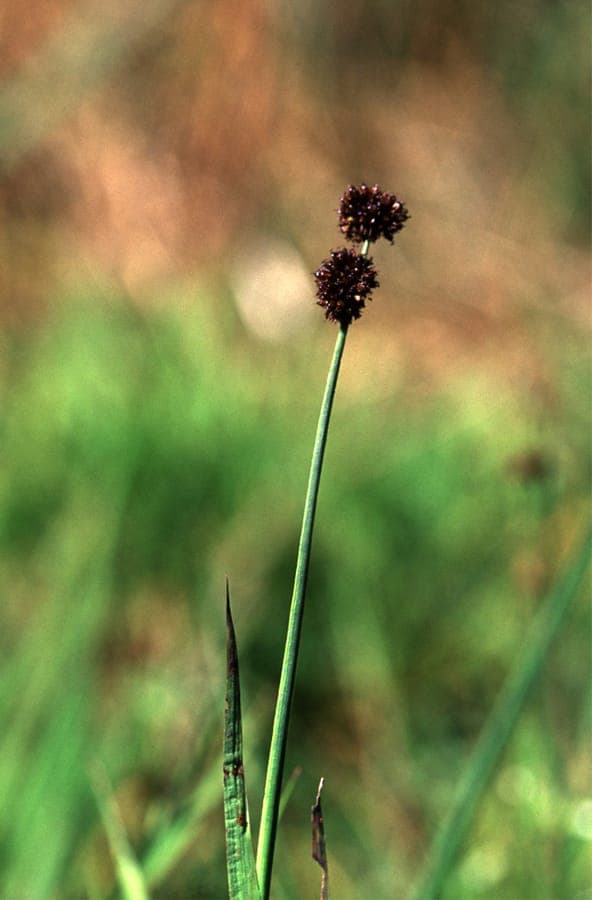
Gordon Leppig & Andrea J. Pickart / Public domain, via Wikimedia Commons
Sword-leaf rush: complete guide
Juncus ensifolius
¿Quieres ver Sword-leaf rush: complete guide en tu jardín?
1 minuto, sin tarjeta de crédito
Overview
Juncus ensifolius, commonly known as sword-leaf rush, is a striking vertical plant from the Juncaceae family, native to montane regions from the Pacific Northwest of North America (Alaska to Mexico). While the name refers to its characteristically sword-like blades, this is a remarkably versatile sedge that thrives in wetland edges, marshy grasslands, and stream-side habitats. Despite being less familiar in European gardens than its relatives, it deserves serious consideration for water features and bog gardens.
For British gardeners, sword-leaf rush offers architectural interest and ecological value. Its columnar form provides sharp vertical contrast against lower-growing aquatic plants. On gardenworld.app, you can visualise how this plant integrates into a water garden design - ideal for pond edges, marshy borders, and naturalistic water features.
Appearance & bloom cycle
Sword-leaf rush grows as upright, leafy stems reaching 30–80 centimetres high, creating an elegant columnar silhouette. Stems are pale green, later becoming yellowish-green, with subtle blue-grey undertones. The foliage texture is fine and graceful - less coarse than many other rush species.
Flowering occurs June to August. Flowers emerge at stem tips in dense, dark brown or purplish clusters called inflorescences. These are truly ornamental and highly attractive to pollinators. After flowering, small, glossy seeds develop in neat capsules - a stage equally beautiful and valuable for birds and insects.
Ideal location: waterside, wetland, and wet soil
Full sun to light shade suits sword-leaf rush well - aim for 4–6 hours of direct sunlight daily. In deeper shade, plants become straggly and produce fewer flowers.
Moisture is non-negotiable. Place it along pond edges, in boggy patches, on wet margins, or beside streams. This isn't a drought-tolerant species. Waterside is its happy place. In design terms, it's the perfect transition plant between water and land - functional and beautiful.
Soil requirements
Wet to very wet soil is ideal, preferably sandy loam or clay-silt mixtures. pH from neutral to slightly acidic (6.0–7.0) works well. Standing water isn't a problem - this is a plant that naturally inhabits wetlands.
Ideal soil characteristics: high organic matter, consistent moisture availability, and minimal compaction for easy root penetration. Mix in peat substitute or well-rotted compost when planting.
Diseño gratis
¿Quieres ver Sword-leaf rush: complete guide en tu jardín? Crea un diseño gratis ahora.
Watering
This is a water-loving plant. Young plants need near-daily watering in their first growing season, especially if not adjacent to a pond - roughly 2–3 litres daily for an established specimen.
Best approach: plant directly at water's edge or in a bog garden. If you must rely on hand-watering, prepare for frequent summer irrigation. Stagnant water isn't a concern - provided roots have oxygen access (as they do in open water), sword-leaf rush thrives.
Pruning
Pruning is rarely needed. The plant holds its form well and doesn't become unruly. In spring, remove dead or damaged stems, or in autumn cut back yellowed stems to about 10 centimetres above ground.
Use sharp, sterilised secateurs - prevents disease spread. Otherwise, leave the plant largely untended. Its natural form is part of its appeal.
Maintenance calendar
- January: check soil moisture levels
- February: light cleanup of dead material
- March: water young plants if conditions are dry
- April: increase watering as growth resumes
- May: monitor flower development
- June: first flowering observed
- July: flowering continues, deadheading not needed
- August: end of bloom period, watch for seed set
- September: leave seed heads for wildlife
- October: cut back old stems
- November: verify soil moisture before winter
- December: let natural snow cover protect plants
Winter hardiness
Sword-leaf rush is hardy to USDA zone 3 - perfectly suited to UK gardens and beyond. Temperatures down to -30°C cause no problems. In severe winters, above-ground growth may die back, but roots survive and produce fresh shoots in spring.
Ensure soil is well-moistured in November - desiccation in freezing conditions is worse than wet frost. Snow provides natural insulation - leave it be.
Companion plants
Combine with other moisture-loving plants: common reed (Phragmites australis), water avens (Geum rivale), hemp agrimony (Eupatorium cannabinum), and skunk cabbage (Lysichiton americanus). With lower-growing plants like swamp lily (Saururus cernuus).
In wet borders, pair with ferns (Dryopteris species), astilbes, and hostas - all plants thriving in moist, fertile soil.
Closing
Sword-leaf rush isn't an everyday garden plant, but that's precisely its charm. It brings vertical architecture to aquatic landscapes and helps stabilise wet areas. A rush for gardeners willing to experiment.
Find it at specialist nurseries and larger garden centres, particularly in aquatic plant sections. Choose healthy, well-rooted specimens. On gardenworld.app, design a complete water garden project centred on sword-leaf rush - perfect for natural, ecologically-minded garden schemes.
¿Quieres ver Sword-leaf rush: complete guide en tu jardín? Crea un diseño gratis ahora.
Sube una foto, elige un estilo y obtén un diseño fotorrealista con lista de plantas en menos de un minuto.
Más de 10.000 jardines diseñados
Sin tarjeta de crédito


Plantas similares
Short-fruited Rush (Juncus brachycarpus): complete guide
Juncus brachycarpus
Complete guide to Juncus brachycarpus: wet soil, pond margins, bloom season, division and winter care for this North American rush in garden ponds.
Smallhead rush: complete guide
Juncus brachycephalus
Smallhead rush (Juncus brachycephalus) - a slender North American wetland plant for pond margins and boggy garden zones. Full care guide.
Mertens' rush: complete guide
Juncus mertensianus
Mertens' rush (Juncus mertensianus) - a compact alpine wetland plant with purple-brown flower heads for cool pond margins. Full growing guide.