
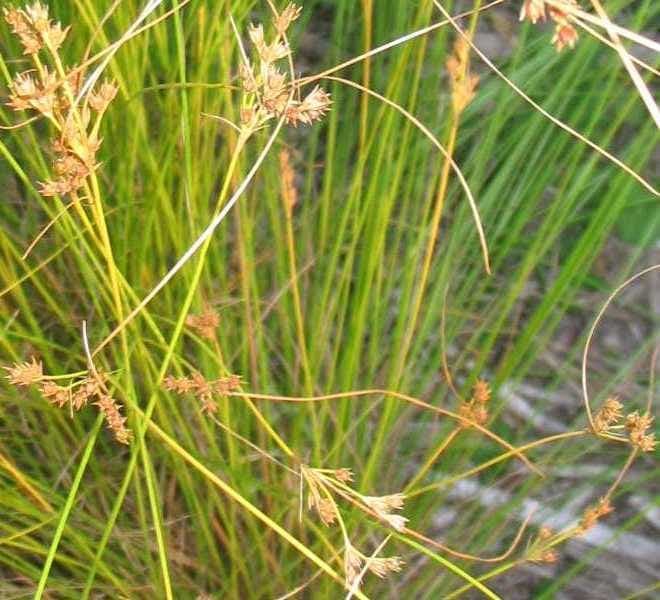
Peter Chen / CC BY 4.0, via Wikimedia Commons
Juncus dudleyi: complete guide
Juncus dudleyi
¿Quieres ver Juncus dudleyi: complete guide en tu jardín?
1 minuto, sin tarjeta de crédito
Overview
Juncus dudleyi, commonly called Dudley's rush or wood rush, is a graminoid plant from the Juncaceae family. This moisture-loving perennial grows across North America from Canada to Mexico and is prized for its elegant, upright structure. The plant plays crucial roles in wetland restoration, rain garden design, and streamside plantings due to its adaptability to wet conditions.
Dudley's rush is particularly valuable in ecological gardening projects where it supports local fauna and prevents erosion. This plant combines practical functionality with subtle aesthetic appeal.
Appearance and blooming
Juncus dudleyi displays striking graminoid characteristics with fine, upright stems reaching 30 to 60 centimeters high. The leaves are extremely narrow, triangular, and grayish-green, creating an elegant silhouette.
The flowers are tiny and inconspicuous, appearing in green flower clusters positioned along the stems. Though not ornamentally showy, these inflorescences provide structure and bird seed. The plant forms graceful tufts that look attractive in groupings and help stabilize wet areas.
Ideal location
Juncus dudleyi is remarkably flexible regarding light. The plant thrives in sunny to partially shaded positions with minimum 4 to 6 hours daily sunlight. In shadier environments, growth may be slightly slower but remains healthy.
The plant excels in wet spots, rain gardens, and waterside plantings. Position it along pond margins, in rain barrel runoff areas, and in shallow water features.
Soil
This plant prefers wet to very wet soil and can even grow in standing water for weeks. Unlike many garden plants, Juncus dudleyi actually thrives under wet conditions. The plant accepts various soil types from sandy to clay.
PH preferences are flexible, adapting to slightly acidic to neutral ranges (5.5 to 7.0). No special soil amendments are needed, making this plant perfect for challenging, poorly drained sites.
Diseño gratis
¿Quieres ver Juncus dudleyi: complete guide en tu jardín? Crea un diseño gratis ahora.
Watering
Water is essential for Juncus dudleyi. Keep soil continuously wet. In garden settings, consistent irrigation or placement in moisture zones is ideal.
The plant tolerates flooding and can even grow in shallow water, making it perfect for water buffering and moisture retention in sustainable gardens. Even in drier climates, regular irrigation maintains vigor.
Pruning
Juncus dudleyi requires minimal pruning. The plant grows elegantly on its own. Simply remove dead or damaged stems in early spring before new growth begins.
Leave previous seasons' growth through winter for structure and wildlife habitat. Major pruning occurs in early spring.
Maintenance calendar
Spring: Clear old growth. Transplant if needed. Check moisture. Summer: Enjoy growth. Maintain adequate moisture. Watch flowers develop. Fall: Leave old growth for winter interest. Maintain moisture. Winter: Minimal activity. Plant stands as rustic structure. Provides winter visual interest.
Winter hardiness
Juncus dudleyi is extremely hardy and tolerates temperatures well below -20 degrees Celsius. The plant grows throughout North America and adapts to diverse climates.
In cold regions, aboveground portions may die back, but rhizomes survive and sprout in spring. This makes the plant ideal for northern gardens.
Companion plants
Juncus dudleyi grows well alongside other moisture-loving plants:
Phragmites australis - Reed stems for structure Typha species - Cattails for ecosystem support Acorus gramineus - For contrasting foliage Carex species - Complementary sedges
Combined plantings create naturalistic and ecologically valuable gardens.
Closing thoughts
Juncus dudleyi is an extraordinary plant for wet areas and ecologically responsible gardens. Its elegant structure, minimal maintenance needs, and wildlife support make it ideal for sustainable gardening. Plant it along waterways and in moist areas for maximum effectiveness and beauty.
Available at garden centers. Visit gardenworld.app/en for more plant guides!
¿Quieres ver Juncus dudleyi: complete guide en tu jardín? Crea un diseño gratis ahora.
Sube una foto, elige un estilo y obtén un diseño fotorrealista con lista de plantas en menos de un minuto.
Más de 10.000 jardines diseñados
Sin tarjeta de crédito


Plantas similares
Short-fruited Rush (Juncus brachycarpus): complete guide
Juncus brachycarpus
Complete guide to Juncus brachycarpus: wet soil, pond margins, bloom season, division and winter care for this North American rush in garden ponds.
Smallhead rush: complete guide
Juncus brachycephalus
Smallhead rush (Juncus brachycephalus) - a slender North American wetland plant for pond margins and boggy garden zones. Full care guide.
Mertens' rush: complete guide
Juncus mertensianus
Mertens' rush (Juncus mertensianus) - a compact alpine wetland plant with purple-brown flower heads for cool pond margins. Full growing guide.