
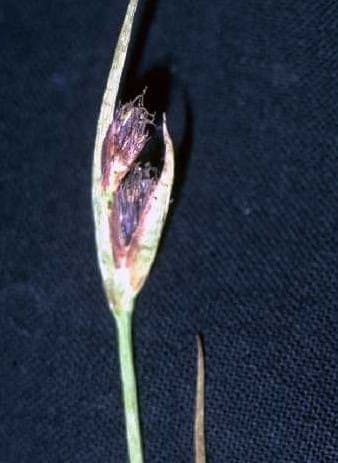
Robert H. Mohlenbrock. USDA NRCS. 1992. Western wetland flora: Field office guide to plant species. West Region, Sacramento. Courtesy of USDA NRCS Wetland Science Institute. / Public domain, via Wikimedia Commons
Juncus castaneus: complete guide
Juncus castaneus
¿Quieres ver Juncus castaneus: complete guide en tu jardín?
1 minuto, sin tarjeta de crédito
Overview
Juncus castaneus, commonly known as chestnut rush, is a compact rush species found in subalpine and alpine regions across the Northern Hemisphere. This diminutive plant reaches only 15-40 centimeters tall, forming small, tight tufts. Chestnut rush is exceptionally hardy and ideal for alpine gardens and mountainous terrain.
The plant grows naturally in wet, nutrient-poor mountain meadows and boggy soils. Chestnut rush is perfect for small spaces, rock gardens, or locations with limited area. This plant provides structure and unique color in high-elevation alpine gardens.
Appearance and bloom
Chestnut rush forms fine tufts of extremely narrow, linear leaves. The leaves are merely 1-2 millimeters wide and green-colored. The plant reaches only 15-40 centimeters height, making it exceptionally compact compared to other rush species.
Characteristic chestnut-brown flower clusters appear June-July as dense, compact inflorescences approximately 1-2 centimeters long. These distinctive brown flower heads give the plant its common name. After flowering, small seed capsules develop. The blooms are subtle but highly characteristic.
Ideal location
Chestnut rush thrives in full sun to partial shade. The plant grows in wet, boggy soils in mountain habitats. For optimal growth, prefer moist, not waterlogged conditions. The plant thrives at elevations up to 3,000 meters.
Plant in alpine rock gardens, small mountain basins, or moisture-zone installations. The species prefers cool temperatures and struggles in warm lowland climates.
Soil
Chestnut rush grows in acidic, nutrient-poor mountain soils. The plant prefers pH below 6.0. Heavy clay soils are unsuitable. Sandy to sandy-clay soils rich in organic matter are ideal.
The plant prefers mineral soils from mountain regions. Add sand and fine gravel to improve drainage. Nitrogen-rich soils may inhibit growth. Allow water to drain thoroughly to prevent root rot.
Diseño gratis
¿Quieres ver Juncus castaneus: complete guide en tu jardín? Crea un diseño gratis ahora.
Watering
Chestnut rush requires regular moisture from growing season through autumn. The plant grows in mountain areas where snowmelt provides abundant water. In lowland gardens, water twice weekly. Cover the planting base with 2-3 centimeters of fine gravel to retain moisture. Ensure the plant never dries completely but never becomes waterlogged.
Pruning
Chestnut rush requires no pruning. Remove dead or withered leaves in early spring. The plant naturally maintains its neat, compact form.
Maintenance calendar
April-May: Growing period with regular water. June-July: Flowering period. July-September: Seed ripening. October: Rest period with minimal water. November-March: Winter dormancy, no water except snowmelt.
Winter hardiness
Chestnut rush is exceptionally hardy to -40 degrees Celsius. The plant grows winter-hardy throughout European mountains. Winter protection is unnecessary. The plant tolerates snow cover without damage.
Companion plants
Chestnut rush pairs well with other alpine plants like alpine primrose, silene, and dianthus. Grouping different sedge species creates interesting textures. Saxifraga species make excellent companions.
Avoid large plants that might overshadow this diminutive sedge.
Closing thoughts
Chestnut rush offers elegant compact structure for alpine and mountain gardens. This exceptionally hardy plant is ideal for high-elevation mountain gardens and alpine rock gardens. With minimal care, this rush flourishes in mountain installations. Discover more mountain garden ideas on gardenworld.app for alpine design inspiration.
¿Quieres ver Juncus castaneus: complete guide en tu jardín? Crea un diseño gratis ahora.
Sube una foto, elige un estilo y obtén un diseño fotorrealista con lista de plantas en menos de un minuto.
Más de 10.000 jardines diseñados
Sin tarjeta de crédito


Plantas similares
Short-fruited Rush (Juncus brachycarpus): complete guide
Juncus brachycarpus
Complete guide to Juncus brachycarpus: wet soil, pond margins, bloom season, division and winter care for this North American rush in garden ponds.
Smallhead rush: complete guide
Juncus brachycephalus
Smallhead rush (Juncus brachycephalus) - a slender North American wetland plant for pond margins and boggy garden zones. Full care guide.
Mertens' rush: complete guide
Juncus mertensianus
Mertens' rush (Juncus mertensianus) - a compact alpine wetland plant with purple-brown flower heads for cool pond margins. Full growing guide.