
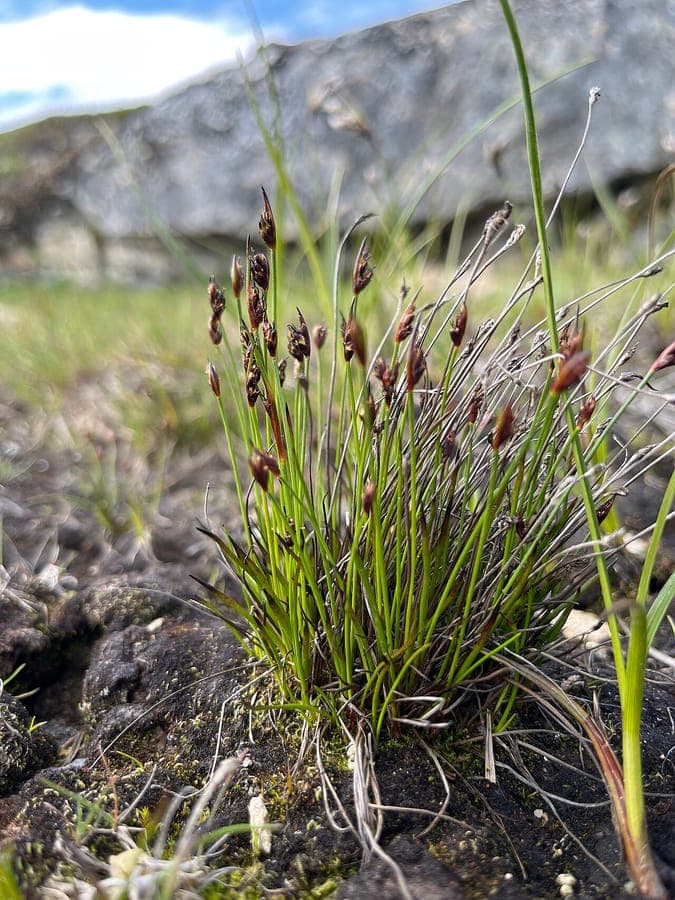
(c) Ida B D Jacobsen, some rights reserved (CC BY) / CC BY 4.0, via Wikimedia Commons
Juncus biglumis: complete guide
Juncus biglumis
¿Quieres ver Juncus biglumis: complete guide en tu jardín?
1 minuto, sin tarjeta de crédito
Overview
Juncus biglumis, known as two-flowered rush, is a delicate alpine rush from subarctic and subalpine regions of the Northern Hemisphere. This compact rush is appreciated for its fine, upright foliage and small purple flowers. With a rhizomatous growth pattern, it forms dense mats ideal for wetland gardens, forest edges, and alpine troughs.
On gardenworld.app, we help you integrate this alpine beauty into your front garden design.
Appearance and Bloom Time
Juncus biglumis grows as a highly compact plant, only 5-15 cm tall. The leaves are very narrow, almost hair-like, and form dense greenish tufts. The flowers are very small, typically dark purple to almost black, and appear in two loose clusters (hence "biglumis"). They bloom from June through July.
After blooming, small seed capsules develop on short stems.
Ideal Location
Juncus biglumis grows best in full sun to light half-shade. This alpine plant loves open, unshaded locations where light and air can circulate well. Plant it in a location with good air circulation to prevent fungal diseases. In very warm climates, light afternoon shade can be beneficial.
Ideal for rock gardens, alpine troughs, and marginal plantings.
Soil
This alpine rush thrives in very well-draining soils, very important! A pH between 5.0 and 7.5 is acceptable. Plant in a mixture of alpine soil, gravel, and sand for perfect drainage. Heavy clay soils will certainly lead to rot. In containers, a mixture of peat, sand, and gravel works well.
Organic matter should be minimal; over-fed soils harm growth.
Diseño gratis
¿Quieres ver Juncus biglumis: complete guide en tu jardín? Crea un diseño gratis ahora.
Watering
Juncus biglumis has moisture-loving roots but hates stagnant water. Water regularly during the growing period, but ensure the planting hole dries between waterings. In natural habitats, it grows in mountain seepage areas. Mulch helps retain moisture without waterlogging.
In winter, watering can be greatly reduced.
Pruning
Juncus biglumis requires no pruning. Remove dead leaves or flower stems as they disappear. Every 3-4 years the plant material can be carefully divided for rejuvenated growth.
With careful division, the plant can be completely rebuilt in 2-3 years.
Maintenance Calendar
Spring (March-April): Check growth, remove dead material Early Summer (May-June): Regular watering, flowering Summer (July-August): Moisture retention, flowers fade Fall (September-October): Adjust moisture toward dormancy Winter (November-February): Minimal maintenance, protect from overgrowth
Winter Hardiness
Juncus biglumis is fully winter hardy to -30 C and many cold subarctic regions. The plant does not completely disappear in winter and may remain frost-free under a snow cover. No special protection needed in European climates.
In very heavy snowfall, shelter can help prevent splitting.
Companion Plants
Combine Juncus biglumis with other alpine rushes such as Carex ornithopoda and Carex ericetorum. Other alpine sedges and Saxifraga species form beautiful combinations. In borders, plant it with low-growing Phlox, Dryas, and Minuartia. Group plantings of 3-5 work very decoratively.
Rushes create fine contrasts with broader-leaved alpines.
Closing
Juncus biglumis brings delicate texture and alpine beauty to gardens. With excellent drainage and full sun, this subarctic rush grows without much maintenance. Discover more plant combinations on gardenworld.app/en.
¿Quieres ver Juncus biglumis: complete guide en tu jardín? Crea un diseño gratis ahora.
Sube una foto, elige un estilo y obtén un diseño fotorrealista con lista de plantas en menos de un minuto.
Más de 10.000 jardines diseñados
Sin tarjeta de crédito


Plantas similares
Short-fruited Rush (Juncus brachycarpus): complete guide
Juncus brachycarpus
Complete guide to Juncus brachycarpus: wet soil, pond margins, bloom season, division and winter care for this North American rush in garden ponds.
Smallhead rush: complete guide
Juncus brachycephalus
Smallhead rush (Juncus brachycephalus) - a slender North American wetland plant for pond margins and boggy garden zones. Full care guide.
Mertens' rush: complete guide
Juncus mertensianus
Mertens' rush (Juncus mertensianus) - a compact alpine wetland plant with purple-brown flower heads for cool pond margins. Full growing guide.