
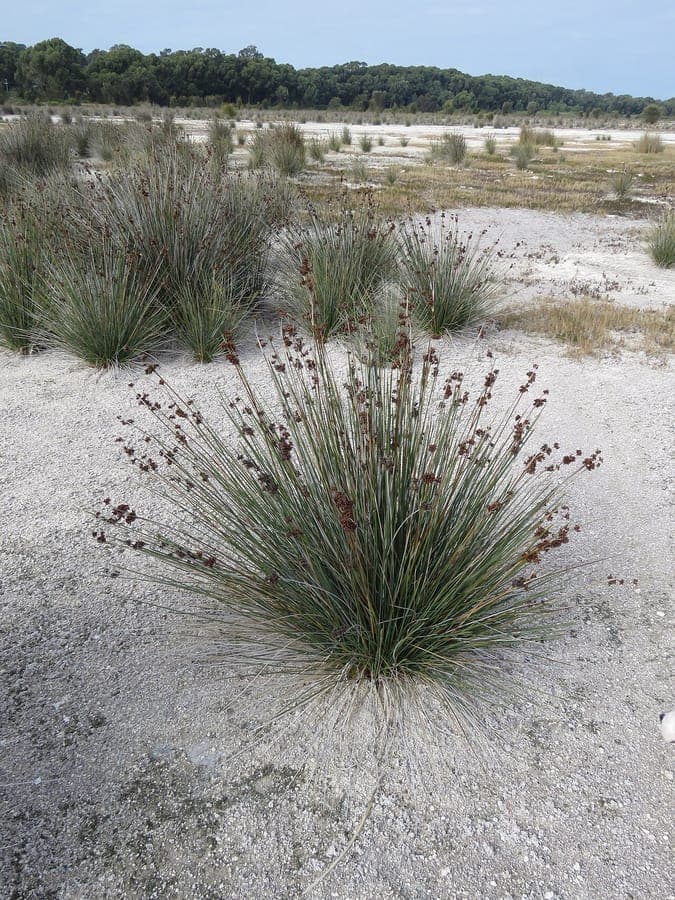
Calistemon / CC BY-SA 4.0, via Wikimedia Commons
Juncus acutus: complete guide
Juncus acutus
¿Quieres ver Juncus acutus: complete guide en tu jardín?
1 minuto, sin tarjeta de crédito
Overview
Juncus acutus, commonly known as sharp rush or spiny rush, is a distinctive sedge-like plant found in temperate to subtropical regions. This monocot forms dense clumps of fine, sharp-edged stems that are highly characteristic. The plant grows naturally in salt-tolerant and wet habitats.
Sharp rush excels in aquatic gardens, coastal landscapes, and waterside plantings. The plant reaches 50-80 centimeters height and establishes quickly into dense colonies. It is renowned for exceptional salt tolerance, making it superb for coastal developments and exposed locations.
Appearance and bloom
Sharp rush forms dense tufts of very fine, stiff stems growing upright. The narrow leaves are 2-4 millimeters wide with sharp edges, hence the name. Coloring ranges from green to grey-green. The stems feel rough and bristly to touch.
Flower spikes appear May-July as brown to olive-toned inflorescences resembling small pompoms, approximately 2-4 centimeters long. After flowering, small brown seed capsules develop. The plant maintains its form and color into autumn, providing year-round structure.
Ideal location
Sharp rush thrives in full sun to partial shade. The plant grows in both saturated and drier soils, showing excellent flexibility. For optimal growth, prefer moist to wet locations saturated most of the year. This plant is especially suited to marshes, pond edges, ditches, and wet depressions. Plant on banks minimum 10 centimeters above normal water level for stability.
Soil
Sharp rush grows in nearly any soil type provided moisture is adequate. The plant prefers slightly acidic to neutral soils, pH 6.5 to 7.5. Saline soils pose no problem; the plant actually thrives in salty conditions. The plant adapts excellently to heavy clay through sandy soils. Adding organic matter improves moisture retention but is not essential. A layer of fine gravel beneath planting aids drainage.
Diseño gratis
¿Quieres ver Juncus acutus: complete guide en tu jardín? Crea un diseño gratis ahora.
Watering
Sharp rush requires regular moisture. In wet habitats where it naturally occurs, supplemental watering is unnecessary. However, ensure the plant doesn't dry excessively. Regular watering is essential during establishment. In drier locations, water two to three times weekly. The plant tolerates short drought periods but grows optimally with consistent moisture. Drip irrigation works excellently.
Pruning
Sharp rush requires no conventional pruning. Remove dead or damaged stems in spring. In autumn, cut the plant close to ground level as winter preparation if desired.
During growing season, gentle thinning of dense clumps can help air circulation but remains optional. The plant naturally maintains neat form.
Maintenance calendar
May-July: Flowering period with regular watering. July-September: Seed ripening with regular moisture. October-March: Dormant season with minimal care. February-April: Growth period with regular watering. May: Feeding unnecessary but compost addition beneficial.
Winter hardiness
Sharp rush is hardy to -15 degrees Celsius in European climates, making it winter hardy in Northern Europe. In severe frost, the plant may freeze to ground level but regenerates in spring. Winter protection is normally unnecessary.
Companion plants
Sharp rush pairs well with other aquatic plants and reed species. Other sedge varieties create interesting textural combinations. Water iris and bog myrtle thrive in similar wet habitats.
Ground covers like additional sedge species and small Carex varieties can grow nearby. Lawn grass is unsuitable due to wet conditions.
Closing thoughts
Sharp rush offers unique structure and exceptional salt tolerance for aquatic gardens and coastal landscapes. This hardy plant is ideal for water margins, marshes, and wet depressions. Visit gardenworld.app for more water plant ideas and design concepts featuring water elements. With minimal care, this sedge flourishes beautifully in water-related garden installations.
¿Quieres ver Juncus acutus: complete guide en tu jardín? Crea un diseño gratis ahora.
Sube una foto, elige un estilo y obtén un diseño fotorrealista con lista de plantas en menos de un minuto.
Más de 10.000 jardines diseñados
Sin tarjeta de crédito


Plantas similares
Short-fruited Rush (Juncus brachycarpus): complete guide
Juncus brachycarpus
Complete guide to Juncus brachycarpus: wet soil, pond margins, bloom season, division and winter care for this North American rush in garden ponds.
Smallhead rush: complete guide
Juncus brachycephalus
Smallhead rush (Juncus brachycephalus) - a slender North American wetland plant for pond margins and boggy garden zones. Full care guide.
Mertens' rush: complete guide
Juncus mertensianus
Mertens' rush (Juncus mertensianus) - a compact alpine wetland plant with purple-brown flower heads for cool pond margins. Full growing guide.