
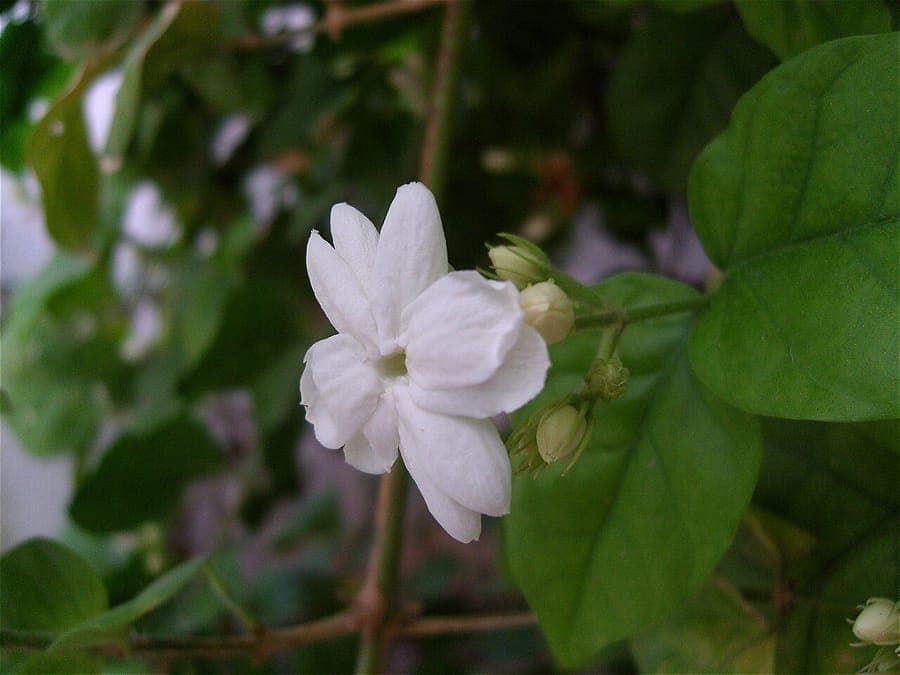
Habib M'henni / CC BY-SA 3.0, via Wikimedia Commons
Arabian jasmine: complete guide to growing this intoxicating night-blooming climber
Jasminum sambac
¿Quieres ver Arabian jasmine: complete guide to growing this intoxicating night-blooming climber en tu jardín?
1 minuto, sin tarjeta de crédito
Overview
Arabian jasmine (Jasminum sambac) is an elegant, fragrant climbing vine from Bhutan and India. This tropical gem produces snow-white, intensely fragrant flowers that release their full perfume in the evening. With fine, delicate foliage and graceful habit, it makes a stunning addition against walls or trellises. In temperate climates, grow it in containers outdoors from May through October, overwintering indoors.
Appearance and bloom cycle
Arabian jasmine grows as a slender, twining vine reaching 2-3 meters in ideal conditions. Stems are green to reddish-green, fine and flexible. Opposite, elliptical to lance-shaped leaves measure 1-3 cm, bright green with a subtle gloss. The flowers are a true highlight: star-shaped, about 1-1.5 cm across, pure white, and extraordinarily fragrant. Blooming extends from May through October, with indoor specimens sometimes flowering into winter.
Ideal location
Arabian jasmine requires full sun – at least 6 hours of direct sunlight daily – for maximum fragrance production. Place it on a south- or southwest-facing wall where it receives all-day sun. Train it against walls or trellises for optimal growth. Indoors, position on a sunny windowsill. Half-shade is acceptable in hot summers, but flowering and fragrance diminish. Fresh air circulation promotes strong, healthy growth.
Soil requirements
Use standard potting soil enriched with compost or aged manure. A blend of potting compost with 20% humus-rich additions works excellently. In containers, use general-purpose potting compost. pH can be slightly acidic to neutral (6-7). Good drainage is important, though this plant tolerates more moisture than succulents. Heavy clay soils need amendment with sand.
For trellis-trained specimens, provide adequate container size – minimum 40-50 litres for mature plants.
Watering
Arabian jasmine loves regular watering, especially during the growing season. Keep soil consistently moist (not soggy). In summer, this may mean daily watering in dry conditions. Winter demands far less; ensure soil doesn't dry out completely but avoid constant wetness. Water soil, not flowers, which can diminish fragrance. Morning watering is best. Misting foliage helps prevent spider mites and keeps the plant clean.
Diseño gratis
¿Quieres ver Arabian jasmine: complete guide to growing this intoxicating night-blooming climber en tu jardín? Crea un diseño gratis ahora.
Pruning
Pruning creates neater, fuller plants. In early spring (March), lightly trim to desired size. Remove dead, diseased, or weak branches. Train the vine along trellises by gently tying soft stems. Regularly remove spent flowers to encourage further blooming. Old woody stems tolerate hard pruning without damage.
Maintenance calendar
Spring (March-May): Prune and train on trellis. Gradually increase watering. Feed with half-strength, phosphorus-rich fertiliser. Move outdoors after last frost.
Summer (June-August): Water regularly, especially during drought. Feed fortnightly at half strength. Enjoy the night fragrance. Monitor for spider mites and scale insects.
Autumn (September-October): Gradually reduce watering. Stop feeding. Bring indoors by mid-October.
Winter (November-February): Minimal water; plant is dormant. Cool conditions (10-15°C) promote next year's blooming. Monitor for brown scale.
Frost hardiness
Arabian jasmine is absolutely frost-sensitive and cannot tolerate temperatures below 5°C. Bring it indoors when night temperatures drop below 10°C. Ideal overwintering occurs in a cool room (10-15°C) with good light. In warm rooms (18-22°C), it grows but next season's flowering may suffer.
Companion plants
Arabian jasmine pairs beautifully with other fragrant plants:
- Clematis (select species): Additional flowering vines for rich coverage.
- Gardenia: Another tropical fragrant shrub for mixed containers.
- Mandevilla: Coloured flowers for contrast.
- Trachelospermum (Star jasmine): Also fragrant, hardier alternative.
Shared containers or adjacent trellises create harmonious, fragrant displays.
Final thoughts
Arabian jasmine rewards care with intoxicating evening fragrance. Position it strategically where you can enjoy the perfume in the evening. Self-sown seeds provide future plants. Cuttings root easily in summer. Need help integrating this beauty into your garden design? Visit gardenworld.app – upload a garden photo and receive personalised plant recommendations. Explore more fragrant plants on gardenworld.app's plant blog.
¿Quieres ver Arabian jasmine: complete guide to growing this intoxicating night-blooming climber en tu jardín? Crea un diseño gratis ahora.
Sube una foto, elige un estilo y obtén un diseño fotorrealista con lista de plantas en menos de un minuto.
Más de 10.000 jardines diseñados
Sin tarjeta de crédito


Plantas similares
Rough menodora: complete guide
Menodora scabra
Full guide to Menodora scabra: a drought-tolerant desert subshrub with bright yellow flowers, ideal for rock gardens and xeriscapes.
Fraxinus dipetala: complete guide
Fraxinus dipetala
California ash or two-petal ash from southwestern USA. Beautiful spring flowers, drought-tolerant. Experimental choice for warm Mediterranean front gardens.
Syringa komarowii: complete guide
Syringa komarowii
Syringa komarowii is a striking lilac from central China with elegant flower spikes and lovely foliage. Discover the complete care guide here.