
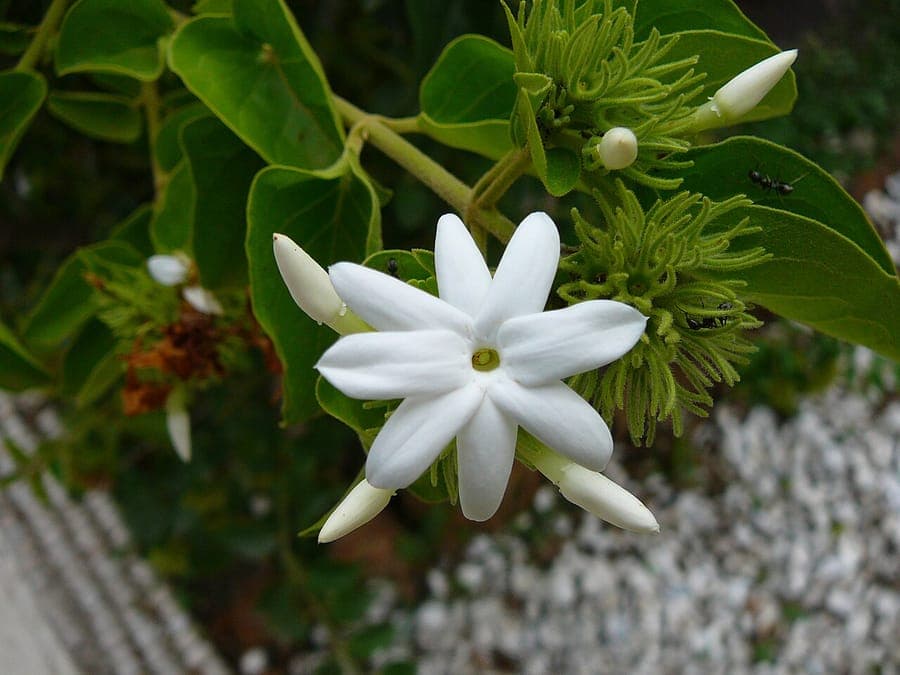
Atamari / CC BY-SA 3.0, via Wikimedia Commons
Jasminum multiflorum: complete guide
Jasminum multiflorum
¿Quieres ver Jasminum multiflorum: complete guide en tu jardín?
1 minuto, sin tarjeta de crédito
Overview
Jasminum multiflorum, commonly known as star jasmine or snow jasmine, is an ornament for any garden with its luxuriant growth and enchanting fragrance. This Asian climbing plant from the Oleaceae family has been treasured for centuries for its star-shaped flowers that bloom up to twice per year. In tropical and subtropical climates, this plant blooms almost year-round.
The name "multiflorum" refers to the many flowers that appear simultaneously. A mature plant can literally carry hundreds of white flowers at once, creating an unforgettable display in the garden.
Appearance and bloom
Star jasmine is a twining plant that can climb 3-4 meters high. The leaves are small, round to oval-shaped, and evergreen. The flowers are the highlight: star-shaped, snow-white and filled with a sweet, intoxicating fragrance that is particularly strong in the evening.
The blooming period runs from October to May in temperate climates, sometimes with a second flush of flowers in summer. Each flower lasts only a day, but because the plant produces so many blooms, the effect is continuously beautiful. After flowering, small black berries appear.
The plant grows well in warmer regions where temperatures do not drop below 5 degrees Celsius. In temperate climates, winter protection is needed.
Ideal location
Star jasmine loves a sunny spot where it receives at least 6-8 hours of direct sunlight. Even in semi-shade it grows well, but blooms more abundantly in full sun. Plant it against a south-facing wall, garden screen or pergola where it can climb safely.
In very hot regions, light afternoon shade can be beneficial to prevent flowers from shriveling. A sheltered position is ideal due to the delicate flowers.
Soil
This jasmine thrives best in loose, well-draining soil with a neutral to slightly acidic pH. Heavy, clay-based material can cause root rot, so add sand or perlite to improve structure.
When planting, mix plenty of aged compost or leaf mold into the soil. This helps retain moisture without causing waterlogging.
Watering
Give star jasmine regular water during the growing season. The soil should be evenly moist, but not wet. In warm weather you may need to water two to three times per week. Soil moisture testing with your finger works best: stick your finger 2-3 cm into the soil. If it feels dry, water.
Water much less in winter, especially if the plant is indoors. Overwintering means dormancy, so the plant needs much less water.
Mist the foliage as much as possible to increase humidity. This also discourages natural pests.
Diseño gratis
¿Quieres ver Jasminum multiflorum: complete guide en tu jardín? Crea un diseño gratis ahora.
Pruning
Star jasmine grows quickly and can become unruly without regular pruning. The best time to prune is after flowering, in May or June. Remove dead flowers and old or damaged wood.
Keep the plant somewhat in shape, but do not prune too drastically. The plant recovers quickly from pruning and blooms again within weeks.
Maintenance calendar
March-April: Clean up dead branches and prune after winter.
May-June: Feed with a bloom-promoting fertilizer. Regular deadheading of flowers.
July-August: Good water management during warm weather.
September-October: Preparation for bloom period. Less feeding.
November-February: Winter protection. Limited maintenance.
Winter hardiness
Jasminum multiflorum is frost-sensitive and does not tolerate temperatures below 5 degrees Celsius well. In milder winters (Netherlands, Belgium) it can remain outside with root protection, provided it is well-protected. In colder regions, overwintering indoors or in a greenhouse is necessary.
Bring the plant indoors in October or November and place it in a cool, light room. A bedroom or garage with windows is ideal. The temperature should remain between 10-15 degrees Celsius.
Companion plants
Star jasmine is a wonderful neighbor to other Mediterranean plants. Combine it with red bougainvillea, purple clematis or yellow passionflower for a color palette.
Romein can grow well around the same structure. Low-growing plants like lavender or santolina provide volume beneath the jasmine.
Closing
Jasminum multiflorum is a valuable addition to any gardener's collection, especially those with warmer growing conditions. The fragrance can transform your garden into a scented paradise. Despite some care around winter protection, this climbing plant is relatively low-maintenance and rewards with years of blooms.
With consistent moisture management, winter protection and regular pruning, you can enjoy this architectural jewel for decades. Find star jasmine in spring at local nurseries and garden centers.
For more information and garden design ideas, visit gardenworld.app and gardenworld.app.
¿Quieres ver Jasminum multiflorum: complete guide en tu jardín? Crea un diseño gratis ahora.
Sube una foto, elige un estilo y obtén un diseño fotorrealista con lista de plantas en menos de un minuto.
Más de 10.000 jardines diseñados
Sin tarjeta de crédito


Plantas similares
Rough menodora: complete guide
Menodora scabra
Full guide to Menodora scabra: a drought-tolerant desert subshrub with bright yellow flowers, ideal for rock gardens and xeriscapes.
Fraxinus dipetala: complete guide
Fraxinus dipetala
California ash or two-petal ash from southwestern USA. Beautiful spring flowers, drought-tolerant. Experimental choice for warm Mediterranean front gardens.
Syringa komarowii: complete guide
Syringa komarowii
Syringa komarowii is a striking lilac from central China with elegant flower spikes and lovely foliage. Discover the complete care guide here.