
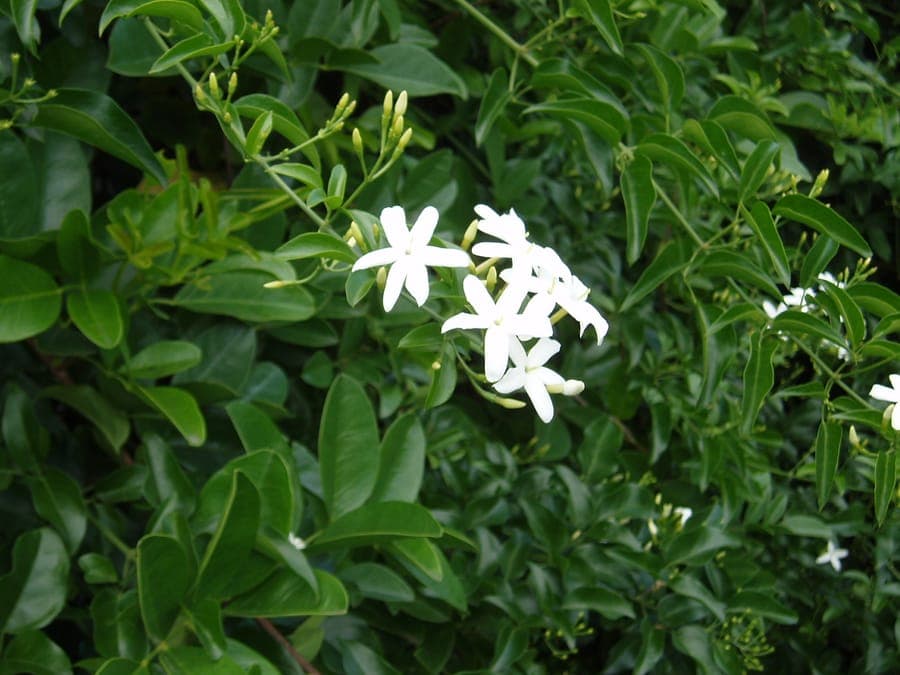
Ji Chunfeng / CC BY 4.0, via Wikimedia Commons
Brazilian jasmine: complete guide
Jasminum fluminense
¿Quieres ver Brazilian jasmine: complete guide en tu jardín?
1 minuto, sin tarjeta de crédito
Overview
Brazilian jasmine (Jasminum fluminense), native to tropical Africa through Arabian Peninsula, is a vigorous, elegant climbing plant from the Oleaceae family. Also called Jazmin de trapo, this plant behaves as an invasive species in some Mediterranean climates, proving its vigor. In temperate zones it thrives as a container or greenhouse plant.
Appearance and bloom
Brazilian jasmine develops slender, graceful vines with fine, glossy dark green leaves. The plant grows rapidly and can reach impressive heights under favorable conditions. Small, white star-shaped flowers appear in clusters with delicate fragrance. Flowering concentrates during summer and early autumn months in temperate climates.
Ideal location
Place Brazilian jasmine in full sun to very light shade, receiving at least 5-6 hours direct sunlight daily. As an outdoor climber (in warmer regions), it works beautifully along pergolas, screens or walls. In temperate zones, grow it in containers and move to warm locations during winter.
Soil
Brazilian jasmine tolerates diverse soil types but prefers well-draining, moderately fertile soil. Use standard potting soil for container cultivation, optionally mixed with 20% sand or perlite for better drainage. Ideal pH ranges around neutral to slightly alkaline (6.5-7.5).
Watering
Water regularly during the growing period (May-September) but avoid waterlogging. Allow soil to dry slightly between waterings. During warm periods daily watering may be necessary. Reduce significantly in winter and cold periods. This plant is more drought-tolerant than many jasmine species.
Diseño gratis
¿Quieres ver Brazilian jasmine: complete guide en tu jardín? Crea un diseño gratis ahora.
Pruning
Prune Brazilian jasmine regularly during the growing season to stimulate compact growth. Remove long, thin branches and dead wood. Begin pruning in spring (March-April) and continue light pruning through the growing period for a full, dense plant.
Maintenance calendar
January-March: Light pruning, minimal watering, keep in cool location April-May: Taper pruning, gradually increase watering June-September: Intensive growing season; regular watering, monthly feeding October-November: Reduce watering, prepare for cold December: Move plant to warm location, minimal watering
Winter hardiness
Brazilian jasmine is NOT winter hardy in temperate zones. Temperatures below 5-10 degrees Celsius cause leaf drop and possible plant death. In southern regions, it might overwinter in very protected, warm locations, but this is risky. Container cultivation with winter protection is recommended.
Companion plants
Successfully combine with:
- Clematis (summer-flowering varieties)
- Campsis (Trumpet vine)
- Rosa (garden roses)
- Wisteria (Blue rain) - for greenhouse
- Trachelospermum (Star jasmine)
Final thoughts
Brazilian jasmine is a beautiful, fast-growing climber perfect for gardeners wanting quick results. Elegant white flowers and ornamental foliage make it attractive for pergolas and walls. For gardenworld.app, this plant offers possibilities for rapid coverage of climbing structures on terraces or protected locations.
¿Quieres ver Brazilian jasmine: complete guide en tu jardín? Crea un diseño gratis ahora.
Sube una foto, elige un estilo y obtén un diseño fotorrealista con lista de plantas en menos de un minuto.
Más de 10.000 jardines diseñados
Sin tarjeta de crédito


Plantas similares
Rough menodora: complete guide
Menodora scabra
Full guide to Menodora scabra: a drought-tolerant desert subshrub with bright yellow flowers, ideal for rock gardens and xeriscapes.
Fraxinus dipetala: complete guide
Fraxinus dipetala
California ash or two-petal ash from southwestern USA. Beautiful spring flowers, drought-tolerant. Experimental choice for warm Mediterranean front gardens.
Syringa komarowii: complete guide
Syringa komarowii
Syringa komarowii is a striking lilac from central China with elegant flower spikes and lovely foliage. Discover the complete care guide here.