
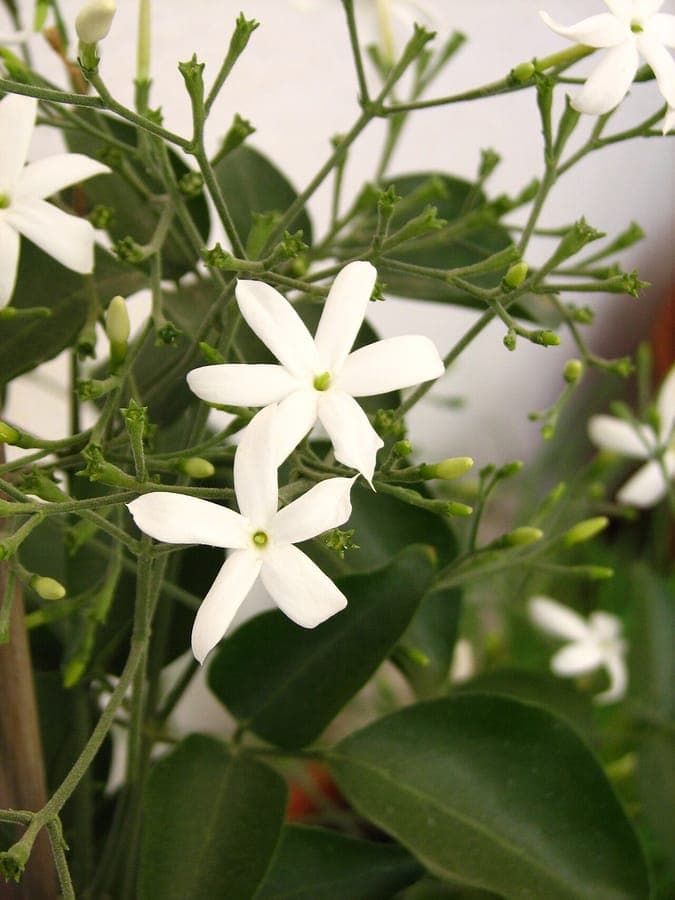
Daniel Feliciano / CC BY-SA 4.0, via Wikimedia Commons
Azorean jasmine: complete guide
Jasminum azoricum
¿Quieres ver Azorean jasmine: complete guide en tu jardín?
1 minuto, sin tarjeta de crédito
Overview
The Azorean jasmine (Jasminum azoricum) is an exotic climbing plant from the Azores islands (Madeira). In Northern Europe, it is a cherished flowering plant that produces abundant fragrance. This plant originates from subtropical Macaronesia and behaves as a semi-hardy plant. In warm years it may overwinter outdoors, but in typical summer cultivation it provides beautiful blooms from June through October.
Appearance and Bloom
The Azorean jasmine is a vigorous climbing shrub that can grow 2-3 meters, depending on support structure. The foliage consists of fragrant compound leaves with three leaflets, typical of the jasmine family. The flowers are small (approximately 1-1.5 cm), white, and appear in clusters. They emit an intense fragrance that becomes especially strong in the evening. Blooming period runs from June/July through October. Small dark berries develop from flowers, though these rarely ripen in Northern European gardens.
Ideal Location
Choose full sun or very light shade. The Azorean jasmine wants at least 5-6 hours of direct sun daily. Position it against a warm, sunny terrace, wall, or trellis. In harsh wind it can look somewhat battered. Wind protection helps. For maximum flower and fragrance development, a full south-facing aspect is ideal. In cold, shaded locations, the plant grows but rarely flowers profusely.
Soil
Use well-draining potting soil or garden soil with sand. This plant forms deep roots and dislikes waterlogged environments. Not-overly-rich soil is fine; excessive nutrition stimulates foliage at the expense of flowers. For container growers: use Mediterranean plant potting soil or add 30% sand to standard mix. Acidic soil (pH below 6) is not ideal; neutral to slightly alkaline soil (pH 6-8) works better.
Watering
Well-established plants tolerate drought reasonably well, but grow better with regular moisture. Young plants (first year) need regular watering, especially during dry summers. Water deeply 1-2 times per week during growth period. Avoid waterlogging; drainage is crucial. In containers: water when top 2 cm of soil feels dry. In autumn, dry out more quickly to induce winter dormancy.
Diseño gratis
¿Quieres ver Azorean jasmine: complete guide en tu jardín? Crea un diseño gratis ahora.
Pruning
Pruning encourages more compact growth and more flowers. After winter: cut back to approximately 30 cm height. This removes frost-damaged foliage and stimulates new growth. During growing season: pinch young foliage to encourage branching. For climbers: train pruning toward desired form. After flowering (October-November) you can prune moderately, but not drastically.
Maintenance Calendar
January-March: Frost-protected location. Moderate feeding. April-May: Growth begins. Regular watering. June-August: Blooming in full swing. Water weekly during dry spells. August-October: Continued blooming and fragrance. September-October: Begin autumn hardening. October-December: Reduce watering. Prepare for winter.
Winter Hardiness
The Azorean jasmine is not winter-hardy outdoors in cold regions. Temperatures below -5°C cause serious damage or kill the plant. In Northern Europe, outdoor overwintering is only feasible in very mild coastal climates (warmest January). For most planting: cultivate as a container plant and bring indoors for winter. In a greenhouse or conservatory, you can keep it year-round. Protect from night frosts.
Companion Plants
Combine the Azorean jasmine with other Mediterranean climbers: bindweed, passion flower, Clematis, or clematis. In containers: group with other fragrant plants like lavender or rosemary. Underplant with flowers for seasonal color. Also stunning with dark green foliage for contrast.
Closing Thoughts
The Azorean jasmine is unquestionably a must-have for balconies and terraces with warm, sunny microclimates. Its intense fragrance at sunset is delightful. Nurseries and garden centers stock this plant, sometimes as Jasmineiro-branco or Jasmim-da-bahia. Consult gardenworld.app for more climbers and terrace plants. For all your questions about fragrant plants and Mediterranean gardening: gardenworld.app is your guide.
¿Quieres ver Azorean jasmine: complete guide en tu jardín? Crea un diseño gratis ahora.
Sube una foto, elige un estilo y obtén un diseño fotorrealista con lista de plantas en menos de un minuto.
Más de 10.000 jardines diseñados
Sin tarjeta de crédito


Plantas similares
Rough menodora: complete guide
Menodora scabra
Full guide to Menodora scabra: a drought-tolerant desert subshrub with bright yellow flowers, ideal for rock gardens and xeriscapes.
Fraxinus dipetala: complete guide
Fraxinus dipetala
California ash or two-petal ash from southwestern USA. Beautiful spring flowers, drought-tolerant. Experimental choice for warm Mediterranean front gardens.
Syringa komarowii: complete guide
Syringa komarowii
Syringa komarowii is a striking lilac from central China with elegant flower spikes and lovely foliage. Discover the complete care guide here.