
J.M.Garg / CC BY-SA 4.0, via Wikimedia Commons
Jasminum auriculatum: complete guide
Jasminum auriculatum
¿Quieres ver Jasminum auriculatum: complete guide en tu jardín?
1 minuto, sin tarjeta de crédito
Overview
Jasminum auriculatum, also known as needle-flower jasmine or Indian jasmine, is an elegant climbing plant native to the Indian subcontinent. This beautiful plant stands out for its delicate white flowers with a pleasant fragrance and its fine, graceful foliage that remains green year-round. In warm regions, this jasmine grows excellently and produces flowers for many years throughout the growing season. The plant is particularly suitable for warmer gardens and conservatories in temperate climates. With its elegant growth pattern and numerous blooms, this jasmine creates a spectacular climbing experience for garden lovers everywhere.
Appearance and bloom
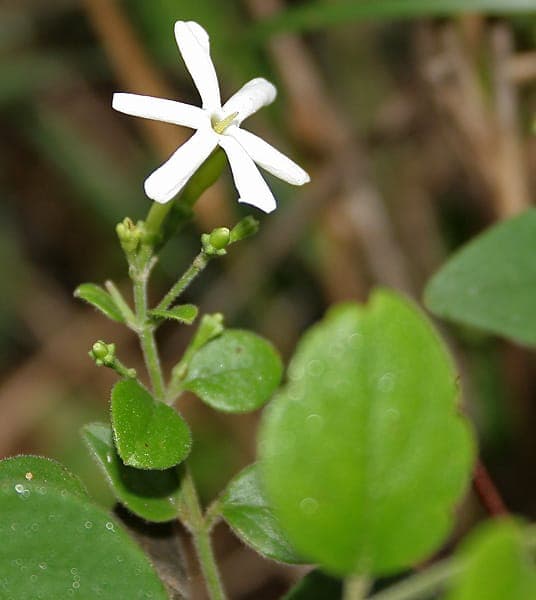
The needle-flower jasmine has long, slender stems with small, elliptical leaves that give it a very ornamental appearance and remain green throughout the season. Delicate white flowers appear during an extended season, especially during summer and autumn months from July to October. The flowers are small but very numerous, causing the plant to be completely covered with blooms creating beautiful contrast against the fine foliage. The fragrance is mild and pleasant, though subtle, and very enjoyable for those near the plant. The flower clusters form densely on the stems, resulting in a very full, blooming appearance throughout the growing season.
Ideal location
This jasmine thrives best in a warm, sunny spot where it receives protection from cold winds. At least 5 to 6 hours of direct sunlight daily is ideal for optimal bloom and growth. In warm countries it also performs acceptably in semi-shade, but abundant sunlight encourages richer flowering and stronger growth. Protect from strong, cold winds that can damage the plant or slow growth. In temperate climates, this plant may suffer in winter due to frost sensitivity, so a cool greenhouse is better. Plant against a warm wall or under a warm roof for best results in cooler regions.
Soil
The needle-flower jasmine prefers well-draining, lightly nutrient-rich soil with plenty of organic material. A mixture of garden soil with extra organic material and perlite works well for optimal drainage. The pH can be neutral to slightly acidic (6.0 to 7.0). This plant dislikes stagnant water, so ensure good drainage by adding gravel to the bottom of pots. Growing in pots provides better control in temperate zones and offers flexibility during frost periods.
Diseño gratis
¿Quieres ver Jasminum auriculatum: complete guide en tu jardín? Crea un diseño gratis ahora.
Watering
During the growing season, water regularly once the top layer feels dry. However, never let it become oversaturated; good drainage is essential for preventing root rot. In winter, greatly reduce watering, especially if the plant dies back in cooler conditions or enters a resting period. Foliar spraying in dry periods helps prevent spider mites. Lukewarm water is better than cold water for this tropical species.
Pruning
This jasmine responds well to pruning and forms more beautifully when pruned regularly. After flowering, shorten older stems to encourage bushier growth and more blooms next season. For indoor cultivation, prune regularly to maintain shape and prevent overgrowth. Winter hardiness is the limit, so in early spring, prune hard for new growth and enhanced vigor.
Maintenance calendar
March-May: Prune and prepare for growth period, raise temperature. June-September: Water regularly, enjoy the blooms, no deadheading necessary, manage spider mites. October-November: Reduce watering as temperatures fall, reduce feeding. December-February: Minimal watering; protect from frost if outdoors, bring inside. In warmer regions, fewer seasonal interventions needed.
Winter hardiness
The needle-flower jasmine is not winter-hardy in temperate zones (frost-sensitive below 5 degrees Celsius). In colder areas, grow as a container plant and bring indoors during winter. In warm regions, it can stay outdoors. In areas with cold winters, a greenhouse or heated greenhouse house is recommended. Protection from frost below 5 degrees is critical for plant survival.
Companion plants
In warm garden: combine with other tropical climbers such as passion flower and bougainvillea. Plant against a warm wall or pergola for maximum sunlight uptake. In temperate zones, grow as container plant with climbing support; beautiful on terrace in summer months. Combine with other container exotics such as Trachelospermum and other warm-loving climbers for a tropical atmosphere.
Closing thoughts
Those who love elegant, fine-leafed climbing plants with soft blooms and fragrance will enjoy the Jasminum auriculatum greatly. This plant from the Indian subcontinent is perfect for heated growing locations and summer use on the terrace. For purchase, check local garden centers or specialized nurseries for houseplants and exotic climbers. With gardenworld.app, you can design an exotic garden corner where this jasmine looks beautiful. For more information about jasmine varieties, consult gardenworld.app for complete plant profiles.
¿Quieres ver Jasminum auriculatum: complete guide en tu jardín? Crea un diseño gratis ahora.
Sube una foto, elige un estilo y obtén un diseño fotorrealista con lista de plantas en menos de un minuto.
Más de 10.000 jardines diseñados
Sin tarjeta de crédito


Plantas similares
Rough menodora: complete guide
Menodora scabra
Full guide to Menodora scabra: a drought-tolerant desert subshrub with bright yellow flowers, ideal for rock gardens and xeriscapes.
Fraxinus dipetala: complete guide
Fraxinus dipetala
California ash or two-petal ash from southwestern USA. Beautiful spring flowers, drought-tolerant. Experimental choice for warm Mediterranean front gardens.
Syringa komarowii: complete guide
Syringa komarowii
Syringa komarowii is a striking lilac from central China with elegant flower spikes and lovely foliage. Discover the complete care guide here.