
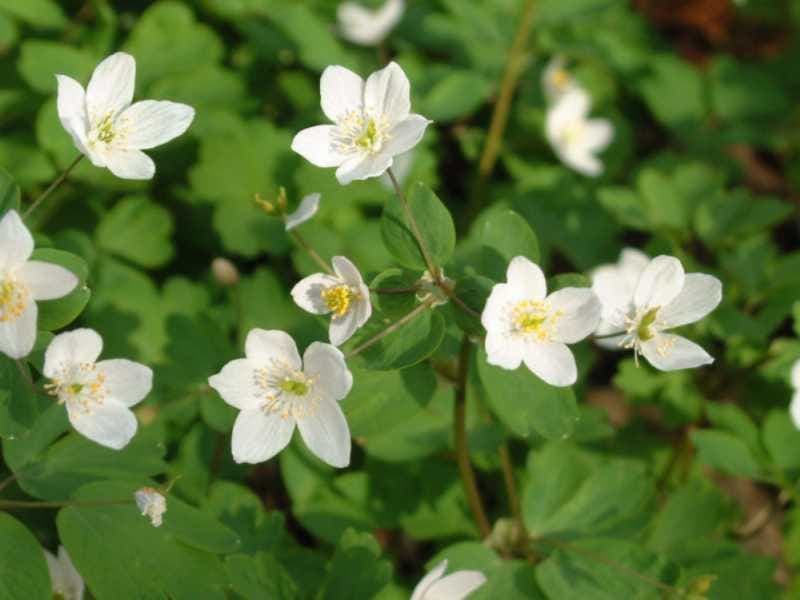
The original uploader was Macarpi at Hungarian Wikipedia. / CC BY-SA 3.0, via Wikimedia Commons
Isopyrum thalictroides: complete guide
Isopyrum thalictroides
¿Quieres ver Isopyrum thalictroides: complete guide en tu jardín?
1 minuto, sin tarjeta de crédito
Overview
Isopyrum thalictroides, commonly known as Rue Anemone, is a charming herbaceous plant from the Ranunculaceae family. This European ground cover grows naturally in woodland areas from France to Eastern Europe and has also established itself in Denmark. It is a delicate plant perfect for gardeners who appreciate fine textures and subtle blooms.
Appearance and Bloom Time
Isopyrum thalictroides reaches a modest height of 15 to 30 centimeters and spreads via underground rhizomes. The plant is characterized by finely-divided foliage that closely resembles much larger Thalictrum (Meadow-rue) species. The flowers are small yet elegant: pure white blossoms with yellow stamens appearing in March, April and May. The plant grows in mixed woodland edges and open spaces with quiet charm.
Ideal Location
This plant thrives best in semi-shaded to shaded environments, such as beneath native trees, among rocks, or in borders with other shade-loving perennials. Isopyrum thalictroides works excellently in woodland gardens and naturalistic garden designs. It can also be used as a ground cover beneath larger shrubs or trees.
Soil
The plant feels at home in nutrient-rich, well-draining woodland soil. The pH range is around neutral (pH 7 to 7.5). It establishes itself in mixed humus-rich clay soil with good water drainage. Ensure sufficient organic matter in the form of leaf mold or compost to improve growing conditions.
Watering
Isopyrum thalictroides prefers consistently moist soil without waterlogging. Provide regular watering during dry periods, especially for newly planted specimens. In woodland settings, they benefit from the natural moisture supply of leaf mold. In gardens, it is important to prevent excessive water accumulation.
Diseño gratis
¿Quieres ver Isopyrum thalictroides: complete guide en tu jardín? Crea un diseño gratis ahora.
Pruning
This plant requires minimal pruning. After flowering, any faded parts can be removed. The plant dies back in summer and poses no maintenance challenge. Simply clean up wilted leaves in autumn as part of general garden maintenance.
Maintenance Calendar
March-April: Enjoy the bloom, plant emerges from dormancy. May: Blooming ends, foliage continues to develop. June-July: Plant weakens and withdraws underground. August-October: Rest period, no maintenance needed. November-February: Winter dormancy, plant is active beneath soil.
Winter Hardiness
Isopyrum thalictroides is fully hardy well below 0 degrees Celsius. The plant is native to Europe where harsh winters occur. It easily survives in all climate zones of the Netherlands, Belgium and France.
Companion Plants
Perfect companions for Isopyrum thalictroides include:
- Anemone nemorosa (Wood Anemone)
- Helleborus species (Hellebore)
- Epimedium (Barrenwort)
- Ajuga reptans (Bugle)
- Polystichum setiferum (Soft Shield Fern)
Conclusion
Isopyrum thalictroides is an excellent choice for gardeners seeking subtle beauty and natural appeal. This plant brings the magic of woodland landscapes into your own garden with only minimal maintenance required. Available at major garden centers. For more inspiration with your garden design, visit gardenworld.app. For international plant information, consult gardenworld.app for comprehensive plant details.
¿Quieres ver Isopyrum thalictroides: complete guide en tu jardín? Crea un diseño gratis ahora.
Sube una foto, elige un estilo y obtén un diseño fotorrealista con lista de plantas en menos de un minuto.
Más de 10.000 jardines diseñados
Sin tarjeta de crédito


Plantas similares
Drummond's anemone: complete guide
Anemone drummondii
Discover Drummond's anemone (Anemone drummondii): a silvery-grey mountain plant for cool rock gardens and alpine troughs.
Korean clematis: complete guide
Clematis serratifolia
Clematis serratifolia is a hardy climber with fragrant yellow bell flowers in August-September. Pruning group 3, location and care tips.
Aquilegia brevistyla: complete guide
Aquilegia brevistyla
Discover Aquilegia brevistyla, the elegant North American columbine. Growing tips, shade tolerance, and design ideas for woodland and shadowed gardens.