
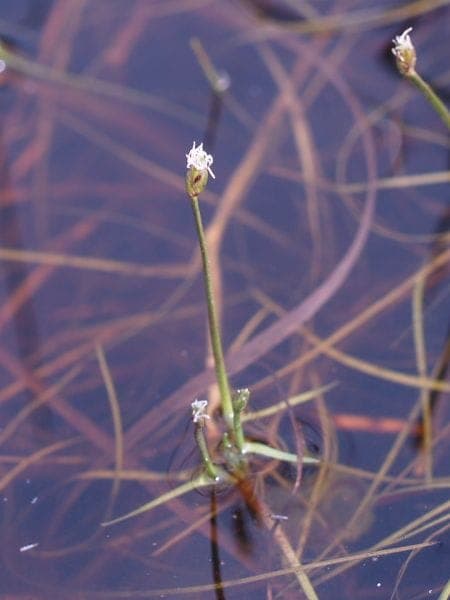
Ruppia2000 / CC BY-SA 3.0, via Wikimedia Commons
Floating Club-rush: complete guide
Isolepis fluitans
¿Quieres ver Floating Club-rush: complete guide en tu jardín?
1 minuto, sin tarjeta de crédito
Overview
Floating club-rush, scientifically Isolepis fluitans, is a subtle yet essential aquatic plant from the sedge family. This fine, hollow-stemmed plant grows naturally in nutrient-poor, acidic waters across Europe and beyond. Though unobtrusive, floating club-rush plays a crucial ecological role in aquatic ecosystems. For gardeners, it offers a fascinating opportunity to maintain water biotopes and aquaria vibrantly and naturally.
Floating club-rush is not merely practical but aesthetically appealing with delicate, lush growth. The plant absorbs excess nutrients causing water deterioration, a crucial function in modern water garden systems.
Appearance & Bloom
Floating club-rush grows as extremely fine, thread-like vegetation, typically not exceeding 20-30 centimeters in aquaria, though wild populations sometimes grow taller. Leaves are remarkably thin, almost thread-like, arising in small tufts growing loosely apart. Each leaf is cylindrical, just millimeters thick, giving the plant delicate, luxuriant appearance.
The plant flowers underwater with very small, inconspicuous blooms practically invisible to human observation. Blooming is biologically less important than vegetative propagation via runners. This makes the plant ideal for aquaria where flowering is unnecessary for reproduction.
Grouped, floating club-rush forms dense, lush mats filtering light and oxygen, ideal for fish and aquatic insects.
Ideal Location
Floating club-rush thrives in clear or soft water areas with good water circulation. Position it in partial to fully lit aquaria, though it survives in lower light. In pond water, dappled shade prevents extreme temperature fluctuation.
The plant excels in: aquaria, small ponds, water table systems, and marsh cultivation. For terrarium use requiring water, it functions as ground cover.
Soil
Floating club-rush is not strongly root-dependent, often growing suspended without substrate binding. However, if planting directly, add light, nutrient-poor acidic substrate with abundant sand. The plant prefers fine sand over clay or heavy soils.
The plant absorbs nutrients directly from water, making soil care secondary.
Diseño gratis
¿Quieres ver Floating Club-rush: complete guide en tu jardín? Crea un diseño gratis ahora.
Watering / Water Conditions
Floating club-rush tolerates soft acidic water better (pH 4.5-5). Temperature should remain between 15-25 degrees Celsius, though softer conditions are manageable. Slow water circulation is essential; stagnant water invites sludge buildup and decline.
Perform regular 30% water changes every 2 weeks in aquaria, maintaining low nitrate levels.
Pruning
Floating club-rush grows slowly, requiring minimal pruning. Remove dead, brown tufts carefully preventing algae bloom. Thin excess material gently if becoming overcrowded, but avoid drastic cutting.
In aquaria, trim long runners gently by folding them back toward surface.
Maintenance Calendar
Spring: Check for winter damage (outdoor waters), begin slow nutrient feeding via supplements.
Summer: Monitor water temperature in outdoor basins. Add macronutrients carefully (nitrogen, phosphorus, potassium) if leaf yellowing occurs.
Autumn: Prepare for cooler temperatures. Add supplemental lighting in aquaria as natural light diminishes.
Winter: Outdoor populations often die back. Maintain indoor aquarium specimens at stable temperature.
Winter Hardiness
Floating club-rush is moderately cold hardy in temperate climates but dies back at frost. Move outdoor populations indoors in winter or manage outdoor specimens as semi-hardy wetlands.
Companion Plants
Floating club-rush pairs well with: small aquatic moss species, related Cyperaceae, and young water lilies. In aquaria: tetras, small goldfish, and shrimp appreciate it as shelter.
Closing
Though subtle, floating club-rush proves valuable in water garden design. It offers practical water filtering, visual texture, and ecological stability. For aquarium enthusiasts and water gardeners, it presents compelling possibilities. For more garden design inspiration, visit gardenworld.app.
¿Quieres ver Floating Club-rush: complete guide en tu jardín? Crea un diseño gratis ahora.
Sube una foto, elige un estilo y obtén un diseño fotorrealista con lista de plantas en menos de un minuto.
Más de 10.000 jardines diseñados
Sin tarjeta de crédito


Plantas similares
Flat-stemmed club-rush: complete guide
Bolboschoenus planiculmis
Everything about Bolboschoenus planiculmis: growing conditions, watering, care, and use as a pond margin or wetland plant in garden design.
Great Plains flatsedge: complete guide
Cyperus lupulinus
Everything about Great Plains flatsedge (Cyperus lupulinus): growing conditions, care, garden uses, and ecological value. Tips for pond margins and dry sandy soils.
Golden beak sedge: complete guide
Rhynchospora corymbosa
Everything about golden beak sedge (Rhynchospora corymbosa): a dramatic tropical marginal for pond edges, bog gardens, and wet habitats.