
Wikimedia Commons / CC BY-SA 3.0, via Wikimedia Commons
Isatis tinctoria: complete guide to dyer's woad
Isatis tinctoria
¿Quieres ver Isatis tinctoria: complete guide to dyer's woad en tu jardín?
1 minuto, sin tarjeta de crédito
Overview
Isatis tinctoria, commonly known as dyer's woad or woad, is a fascinating biennial plant from southeastern Europe with a rich history. This plant is celebrated for its historical use as a blue dye source and its attractive yellow flowers followed by characteristic blue seed pods.
Dyer's woad grows 80-120 cm tall and produces a rosette of long leaves in the first year, followed by flowering stems in the second year. It is hardy, efficient, and self-seeding, making it ideal for ecological and historic gardens.
Appearance & Bloom
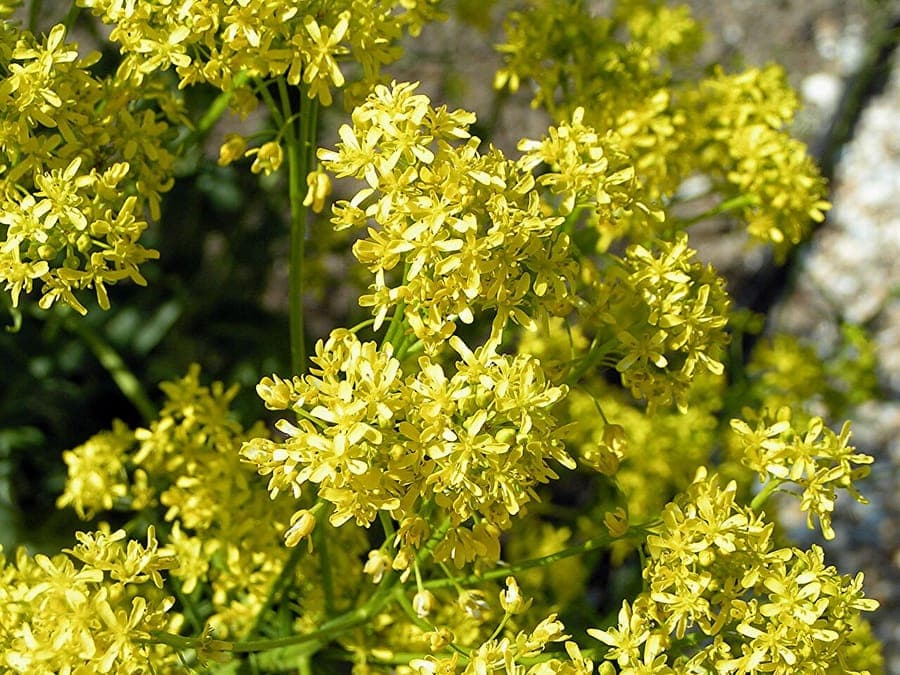
In the first year, the plant forms a rosette of large, elongated leaves with distinct vein structure. In the second year, the stems produce fine, yellow flowers in dense clusters (May to June).
After flowering, characteristic flat-elliptical seed pods appear that are first green, later brown, and finally a striking blue-black color. These seed pods are highly decorative.
Ideal Location
Dyer's woad thrives in full sun to partial shade. A minimum of 4-6 hours of sunlight daily is ideal. Plant in warm, drier locations. The plant is self-seeding, so plant it where it can naturally spread seed.
Protection from strong winds helps keep flower stems upright.
Soil
Dyer's woad prefers well-draining, not-too-rich soil. Heavy clay soils should be improved with sand or perlite. Lightly acidic to neutral pH is ideal (6-7.5).
The plant is highly tolerant and grows in poor, dry to normal-moist soil. Excessively fertile soil encourages mainly leaf growth.
Diseño gratis
¿Quieres ver Isatis tinctoria: complete guide to dyer's woad en tu jardín? Crea un diseño gratis ahora.
Watering
Moderate watering, especially in the first year. Once established, seedlings tolerate drought well. In very dry periods, water.
Supplemental water is minimally needed in normal rainfall years.
Pruning
Pruning is not necessary. Allow flowers to set seed for natural self-seeding in the next season, unless you wish to prevent self-seeding.
Remove dead stems after seed ripening.
Maintenance Calendar
March to May: Sow seed. Rosette growth in first year.
June to August: Second year: flowering and seed production. Allow seed to ripen.
September: Harvest seed and store for next year.
October to February: Winter. Plant disappears.
Winter Hardiness
Dyer's woad is hardy to USDA zone 4 (-30 degrees C). Perfect for northern gardens. The plant tolerates frost well.
Companion Plants
Dyer's woad pairs beautifully with:
- Salvia for blue flowers
- Lavandula for purple tones
- Artemisia for silver foliage
- Nepeta for blue blooms
- Achillea for yellow tones
Closing
Dyer's woad is a fascinating, historic plant with dual appeal: yellow flowers and blue seed pods. Perfect for heritage gardens, ecological gardens, and anyone interested in plant history.
Design your heritage garden with dyer's woad using gardenworld.app. Visualize how this fascinating plant transforms your garden with history and color.
Available at seed suppliers and specialty native plant nurseries. Create your dream garden today on gardenworld.app.
¿Quieres ver Isatis tinctoria: complete guide to dyer's woad en tu jardín? Crea un diseño gratis ahora.
Sube una foto, elige un estilo y obtén un diseño fotorrealista con lista de plantas en menos de un minuto.
Más de 10.000 jardines diseñados
Sin tarjeta de crédito


Plantas similares
Brassica cretica: complete guide
Brassica cretica
Brassica cretica, the Cretan cabbage, grows wild on Aegean cliffs. Discover how to grow this drought-tolerant, yellow-flowered Mediterranean perennial.
Corsican cabbage: complete guide
Brassica insularis
Corsican cabbage is a rare Mediterranean rock cabbage with white flowers and blue-green leaves. Location, soil and winter protection.
Prostrate cabbage: complete guide
Brassica procumbens
Prostrate cabbage is a creeping North African cliff plant with yellow flowers. Discover location, soil type and winter protection.