
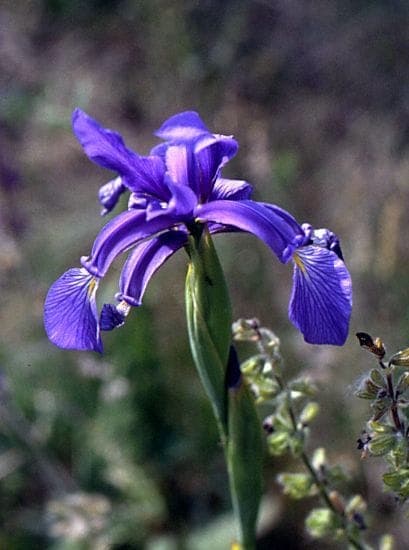
Franz Xaver / CC BY-SA 3.0, via Wikimedia Commons
Iris spuria: complete guide
Iris spuria
¿Quieres ver Iris spuria: complete guide en tu jardín?
1 minuto, sin tarjeta de crédito
Overview
Iris spuria is an elegant iris from Central and Northern Europe to Iran. This iris is renowned for its tall, slender growth and beautiful blue flowers. The plant reaches a height of 80-120 centimeters and blooms in May and June with multiple flowers per stem. Iris spuria is less well-known than bearded irises, but deserves much more attention for its elegance and robustness.
Appearance and bloom
Iris spuria is characterized by thin, elegant leaves that remain green and grow until flowering. The plant grows faster and more upright than other iris species. Flowers are medium-sized, typically blue to blue-violet with yellow markings on the lower petals (falls). The petals are narrower than in bearded irises. The stems carry many flowers that bloom successively, ensuring a long blooming period.
Ideal location
Iris spuria grows best in full sun, requiring at least 8 hours of direct sunlight daily. The plant is very cold-hardy to -20 degrees Celsius and suitable for all temperate climates. Plant in locations where plenty of sun is available. Iris spuria tolerates dry soils better than moisture, so ensure good drainage. A location on a slope is ideal.
Soil
Iris spuria requires well-draining soil with a pH between 7.5 and 8.0. The soil should be mineral-rich, so add gravel or sand to heavy soils. Rot is not a major problem if the soil drains well. For optimal growth, use a mixture of garden soil, sand, and gravel in a 2:1:1 ratio.
Diseño gratis
¿Quieres ver Iris spuria: complete guide en tu jardín? Crea un diseño gratis ahora.
Watering
Water Iris spuria moderately, especially during the growing season. The plant tolerates drought better than moisture. Water once weekly if there is no rain. During periods of heavy rain, supplemental watering is not needed. In winter, watering is not required.
Pruning
Pruning is simple and minimal: remove only spent flowers. After blooming, foliage can be cut back to approximately 30 centimeters in height for a neater appearance. Remove dead foliage each autumn. Iris spuria is rarely affected by diseases, so extra care is unnecessary.
Maintenance calendar
May to June: water regularly, remove spent flowers. July: trim foliage back to 30cm. August to September: divide plants (no fixed schedule). October to February: plant rests, no care needed. March to April: start of active growth.
Winter hardiness
Iris spuria is very winter-hardy, to -20 degrees Celsius or lower. The plant requires no winter protection. Snow and frost do not damage the plant. Foliage may freeze back in very cold winters, but the plant will rejuvenate.
Companion plants
Plant Iris spuria with other sun-lovers:
- Achillea (yarrow)
- Lavandula (lavender)
- Stachys (betony)
- Salvia (sage)
This arrangement creates a Mediterranean, sunny plant combination.
Closing
Iris spuria is a very underrated iris that deserves more recognition. The plant is robust, long-lived, and very easy to maintain. With minimal care, Iris spuria grows into a beautiful addition to any front yard. Local garden centers carry seedlings ready for immediate planting.
At gardenworld.app, you can have professional front yard designs created that optimally showcase Iris spuria with other sun-lovers.
¿Quieres ver Iris spuria: complete guide en tu jardín? Crea un diseño gratis ahora.
Sube una foto, elige un estilo y obtén un diseño fotorrealista con lista de plantas en menos de un minuto.
Más de 10.000 jardines diseñados
Sin tarjeta de crédito


Plantas similares
Iris pallida: complete guide
Iris pallida
Discover the soft purple Iris pallida, a classic front yard iris with fragrant rhizomes and reliable annual blooms. Perfect for sunny locations.
Iris sibirica: complete guide
Iris sibirica
Discover elegant Iris sibirica with fine blue flowers. Perfect for moist soils, 60-80cm tall. Excellent in groups and as a cut flower.
Iris lutescens: complete guide
Iris lutescens
Discover Iris lutescens, a dwarf iris with yellow and purple flowers. 25-40cm tall, perfect for front yard borders. Blooms early April-May.