
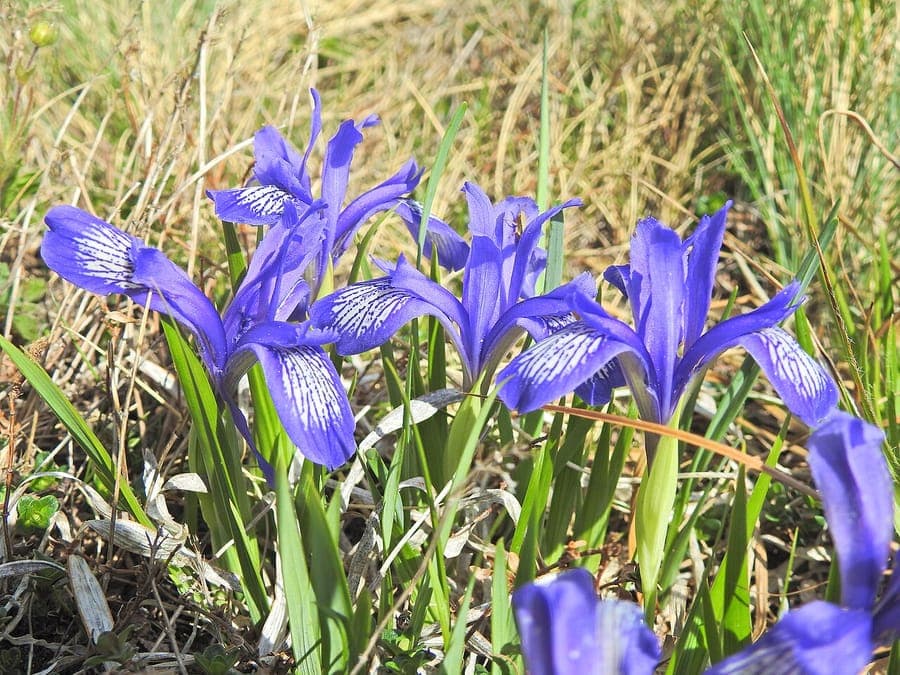
Xulescu g / CC BY-SA 4.0, via Wikimedia Commons
Iris ruthenica: complete guide
Iris ruthenica
¿Quieres ver Iris ruthenica: complete guide en tu jardín?
1 minuto, sin tarjeta de crédito
Overview
Iris ruthenica, also called the Purple-bract iris or Russian iris, is a hardy alpine plant native to Central-Eastern Europe and Siberia through to Korea. In nature, it grows on alpine meadows, dry slopes, and rocky terrain at elevations from 500 to 2000 meters. With compact growth (10-30 cm tall), it is ideal for front garden borders, alpine troughs, and rock gardens.
In gardenworld.app, iris ruthenica is a top choice for gardens seeking alpine elegance without complex care requirements. The plant survives temperatures down to -30 degrees Celsius and rarely succumbs to frost or snow damage.
Appearance and Bloom
The flowers of iris ruthenica appear in April through May, displaying delicate purple to violet blooms. The petals are narrower and more refined than those of large iris species. Typical iris morphology: upright standards and drooping falls, both in purple tones. Many specimens also feature yellow or cream accents at the base.
The foliage is narrow-leaved, gray-green, and groups in neat rosettes. After flowering, the foliage persists all season, providing garden structure.
Ideal Location
Iris ruthenica demands full sun: at least 6 hours of direct daily sunlight. A south or west-facing position is optimal. The plant thrives on sloping locations where drainage occurs naturally. Windy sites are no problem; the compact growth resists strong wind.
The plant is extremely hardy to -30 degrees Celsius. Snow cover is actually beneficial, protecting the soil from extreme temperature fluctuations.
Soil
Alpine rock garden soil is essential. Combine garden soil with substantial gravel or grit: 50% garden soil, 40% gravel, 10% coarse sand. pH can range from acidic to neutral (pH 5.5-7.0). Avoid chalky soils and excessive clay.
Excellent drainage is non-negotiable. In winter, excess water must drain away. If your soil is heavy, dig deep trenches and fill with the prepared mix.
Diseño gratis
¿Quieres ver Iris ruthenica: complete guide en tu jardín? Crea un diseño gratis ahora.
Watering
Iris ruthenica is extremely drought-tolerant. After planting, water regularly during the growth and bloom season (March-May). After May, drastically reduce watering. Summer and autumn: water only in extreme drought. Winter: no water at all.
The plant accepts very little moisture. Overwatering is more lethal than underwatering. If the plant appears pale gray-white, it is likely parched rather than thirsty.
Pruning
Pruning is barely necessary. Remove spent flowers after blooming (June). Keep dead foliage away from the rhizome in winter. Damaged leaves can be carefully removed from the rosette.
The plant itself rarely grows too large; division is seldom needed.
Maintenance Calendar
March-May: Growing season, water regularly, blooming period. June-July: Remove spent flowers, begin reducing water. August-October: Water only in drought. November-February: Winter dormancy, keep dry.
Annually in October, apply a light layer of mineral mulch (gravel or shell) around the plant.
Winter Hardiness
Iris ruthenica is extremely winter hardy to -30 degrees Celsius. This is one of the hardiest iris species. No protection needed in northern Europe. The plant loves being covered with snow in winter. If you live in a very dry climate, ensure extra drainage to prevent damage from rain.
Companion Plants
Pair iris ruthenica with other alpine and mountain plants:
- Pulsatilla (pasque flower) for simultaneous yellow or purple bloom
- Dianthus alpinus (alpine pink) for pink complement
- Veronica prostrata (speedwell) for blue accent
- Lewisia (alpine lover) for structure
- Saxifraga species for textural contrast
- Silene schafta (autumn catchfly) for summer bloom
Conclusion
Iris ruthenica is the ultimate choice for alpine garden enthusiasts. Its extreme winter hardiness, minimal water requirements, and refined blooms make it indispensable in rock gardens and alpine troughs. With gardenworld.app, you'll see how this Eastern European beauty transforms your front garden into an alpine mountain meadow.
Plant in autumn or November for best winter establishment. Divide in September if the plant spreads. Remember: this plant wants little water and plenty of air!
¿Quieres ver Iris ruthenica: complete guide en tu jardín? Crea un diseño gratis ahora.
Sube una foto, elige un estilo y obtén un diseño fotorrealista con lista de plantas en menos de un minuto.
Más de 10.000 jardines diseñados
Sin tarjeta de crédito


Plantas similares
Iris tingitana: complete guide
Iris tingitana
Iris tingitana, the Morocco iris, is the bulb species behind the Dutch iris: early blue-violet blooms that need a sunny, well-drained position.
Iris hookeri: complete guide
Iris hookeri
Hooker's Iris is a compact North American native plant with blue flowers. Low-growing and moisture-loving water plant.
Siskiyou iris: complete guide
Iris bracteata
Complete guide to Iris bracteata, the Siskiyou iris: location, soil, bloom cycle, watering, pruning and companion plants for this rare Pacific Coast iris.