
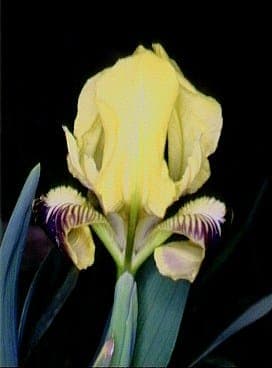
Girolamo Giardinauploaded by Esculapio / CC BY-SA 3.0, via Wikimedia Commons
Iris pseudopumila: complete guide
Iris pseudopumila
¿Quieres ver Iris pseudopumila: complete guide en tu jardín?
1 minuto, sin tarjeta de crédito
Overview
Iris pseudopumila, commonly called the Southern dwarf iris or Sicilian iris, is an elegant dwarf plant native to the Mediterranean region. Standing just 15-25 cm tall, this iris makes a perfect statement in rock gardens, borders, and front gardens. Native to Italy, Sicily, and the Balkans, it naturally inhabits dry, stony terrain where it thrives with minimal intervention.
This dwarf iris is beloved by garden enthusiasts for its refined flowers and compact growth habit. When designing with gardenworld.app, you'll see how perfectly this plant fits into modern front gardens with Mediterranean character.
Appearance and Bloom
The flowers of iris pseudopumila emerge in early spring, typically from February to April. The blooms are small but exquisitely detailed, displaying the typical iris form: upright petals (called 'standards') in purple or violet, and drooping petals (called 'falls') in complementary hues. Many specimens also feature yellow or blue accents depending on cultivar.
The foliage is gray-green, narrow, and stiff, forming dense rosettes at the plant's base. This creates a compact, orderly appearance year-round, even when not in bloom.
Ideal Location
Iris pseudopumila thrives in full sun locations. Ensure at least 6-8 hours of direct sunlight daily. A south-facing position against a wall or in the center of a border works exceptionally well. The plant is extremely hardy down to -15 degrees Celsius, making it suitable for virtually all European gardens.
Choose a location with excellent drainage where water never pools. During wet winters, waterlogging can cause rhizome rot.
Soil
This iris demands well-draining soil. Mix quality garden soil with gritty amendments: coarse sand, perlite, or gravel. An ideal blend consists of 60% garden soil, 30% grit, and 10% organic matter. This composition mimics the plant's natural stony habitat.
Soil pH should be neutral to slightly acidic (pH 6.0-7.5). Avoid heavy clay soils that retain moisture, as these lead to rhizome rot and disease.
Watering
Iris pseudopumila is drought-tolerant once established. Water regularly during the growing season (February-May), but drastically reduce watering after flowering ends. In summer and autumn, water only during extreme drought. In winter, provide little to no water.
Ensure water drains freely and never accumulates around the rhizome. Overwatering is the primary killer of this otherwise robust plant.
Diseño gratis
¿Quieres ver Iris pseudopumila: complete guide en tu jardín? Crea un diseño gratis ahora.
Pruning
Pruning is minimal. Remove spent flowers and dead leaves after the blooming period (May-June). Keep the plant tidy by removing old foliage at the base. Torn or damaged leaves can be carefully removed from the rosette.
There is no need to prune the rhizome itself. If the plant becomes too large (which rarely happens), you may gently divide the rhizome after flowering.
Maintenance Calendar
February-April: Blooming period, water regularly. May-June: Remove spent flowers, begin reducing water. July-October: Minimal maintenance; water only if drought occurs. November-January: Winter dormancy; no action needed except keeping foliage clean.
Annually in May, top-dress around the plant with a thin layer of grit or gravel for protection and improved drainage.
Winter Hardiness
Iris pseudopumila is extremely winter hardy. The rhizome survives temperatures from -15 to -20 degrees Celsius without protection. No winter cover is needed in the UK, Netherlands, Belgium, or France. In extremely cold regions (far northern Europe), you may add a thin 5 cm layer of dry mulch for extra protection, though this is rarely necessary.
The plant also grows well in containers, allowing for protected placement during harsh winters if desired.
Companion Plants
Pair iris pseudopumila with other drought-tolerant rock garden residents:
- Sedum varieties (stonecrop) for contrasting form and color
- Thymus (thyme) for fine texture and complementary blooms
- Saxifraga (saxifrage) for simultaneous or slightly later flowering
- Echinacea (coneflower) for summer violet tones
- Ornithogalum (star-of-Bethlehem) for yellow accents
- Dwarf conifers as background structure
All these plants share the same preference for excellent drainage and full sun.
Conclusion
Iris pseudopumila is the ultimate choice for those seeking a slow-growing, low-maintenance Mediterranean plant with early-season impact. Whether you have a small rock garden or extensive borders, this iris adds refinement while asking little in return. Using gardenworld.app, you can digitally integrate this beauty into your front garden design and see how it complements your personal style.
Plant in autumn or early winter for optimal dormancy and spring blooming. Remember: regular watering during growth season is essential, but this Southern darling will repay your modest effort with years of elegant flowering!
¿Quieres ver Iris pseudopumila: complete guide en tu jardín? Crea un diseño gratis ahora.
Sube una foto, elige un estilo y obtén un diseño fotorrealista con lista de plantas en menos de un minuto.
Más de 10.000 jardines diseñados
Sin tarjeta de crédito


Plantas similares
Iris tingitana: complete guide
Iris tingitana
Iris tingitana, the Morocco iris, is the bulb species behind the Dutch iris: early blue-violet blooms that need a sunny, well-drained position.
Iris hookeri: complete guide
Iris hookeri
Hooker's Iris is a compact North American native plant with blue flowers. Low-growing and moisture-loving water plant.
Siskiyou iris: complete guide
Iris bracteata
Complete guide to Iris bracteata, the Siskiyou iris: location, soil, bloom cycle, watering, pruning and companion plants for this rare Pacific Coast iris.