
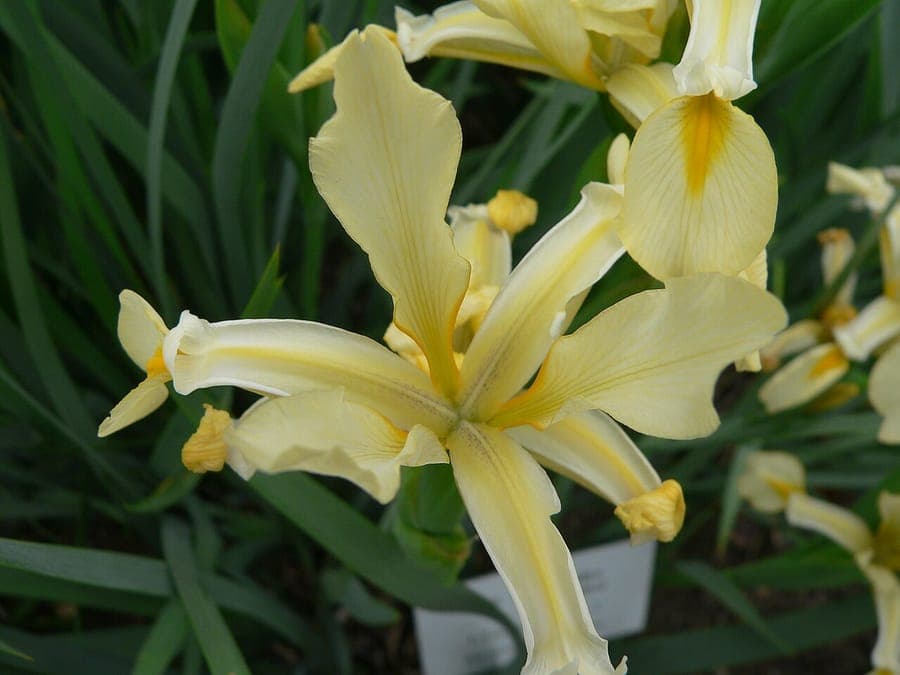
BS Thurner Hof / CC BY-SA 3.0, via Wikimedia Commons
Iris orientalis: complete guide
Iris orientalis
¿Quieres ver Iris orientalis: complete guide en tu jardín?
1 minuto, sin tarjeta de crédito
Overview
Iris orientalis, also known as Turkish iris or Seashore iris, is a stunning iris native to Greece and Turkey. This plant is indigenous to the Aegean Islands and the eastern Mediterranean region. Because of its elegant flowers with characteristic yellow bands, this iris is a favorite among garden designers seeking subtle yet striking blooms.
Appearance and Bloom Time
Iris orientalis grows to approximately 60 to 100 centimeters tall, depending on growing conditions. The plant produces stunning flowers with a combination of whitish-yellow colors. The flowers typically appear in May and June and have a classic iris structure with upright petals and drooping sepals. The foliage is narrow, cylindrical and remains decorative long after blooming.
Ideal Location
This iris is a sun-loving plant requiring at least 6 hours of direct sunlight daily. The plant thrives excellently on dry locations with gravel, rocks or in Mediterranean-style gardens. Perfect for drainage borders and rock gardens where moisture is minimal. In hot climates, light afternoon shade can be beneficial.
Soil
Iris orientalis feels at home in very well-draining soil with low moisture content. Sand, gravel or humus-poor clay are ideal. The plant tolerates poor soil and even chalky ground. Avoid heavy clay or regularly wet soil, as this leads to root rot.
Diseño gratis
¿Quieres ver Iris orientalis: complete guide en tu jardín? Crea un diseño gratis ahora.
Watering
Watering is minimal after the first two years of growth. In natural conditions, this iris is independent of regular precipitation. Ensure the soil dries well between waterings. Once established, Iris orientalis requires little to no supplemental watering in most climates.
Pruning
After blooming, faded flower stems can be removed. The foliage can be bent back when it begins to yellow in summer. Large sections of dead foliage can be removed in autumn. Overall, this plant is very low-maintenance.
Maintenance Calendar
April-May: Blooming preparation, growth active. June: Blooming season, full bloom. July-August: Bloom ends, foliage yellows. September-October: Rest period, keep adequately dry. November-March: Winter dormancy, no maintenance.
Winter Hardiness
Iris orientalis is hardy to approximately -15 degrees Celsius, meaning it survives well in most European gardens. However, in very wet winters, rot may occur due to water accumulation. Good drainage is therefore essential.
Companion Plants
Suitably combined with:
- Salvia officinalis (Common Sage)
- Lavandula (Lavender)
- Achillea (Yarrow)
- Santolina (Cotton Lavender)
- Thymus (Thyme)
- Cistus (Rock Rose)
Conclusion
Iris orientalis is an ideal plant for those wanting a low-maintenance Mediterranean garden with elegant blooms. This iris adds charm and color to dry borders and gravel gardens. Available at major garden centers. Get inspired at gardenworld.app for your garden design. Discover more plant information at gardenworld.app for optimal growing conditions.
¿Quieres ver Iris orientalis: complete guide en tu jardín? Crea un diseño gratis ahora.
Sube una foto, elige un estilo y obtén un diseño fotorrealista con lista de plantas en menos de un minuto.
Más de 10.000 jardines diseñados
Sin tarjeta de crédito


Plantas similares
Iris tingitana: complete guide
Iris tingitana
Iris tingitana, the Morocco iris, is the bulb species behind the Dutch iris: early blue-violet blooms that need a sunny, well-drained position.
Iris hookeri: complete guide
Iris hookeri
Hooker's Iris is a compact North American native plant with blue flowers. Low-growing and moisture-loving water plant.
Siskiyou iris: complete guide
Iris bracteata
Complete guide to Iris bracteata, the Siskiyou iris: location, soil, bloom cycle, watering, pruning and companion plants for this rare Pacific Coast iris.