
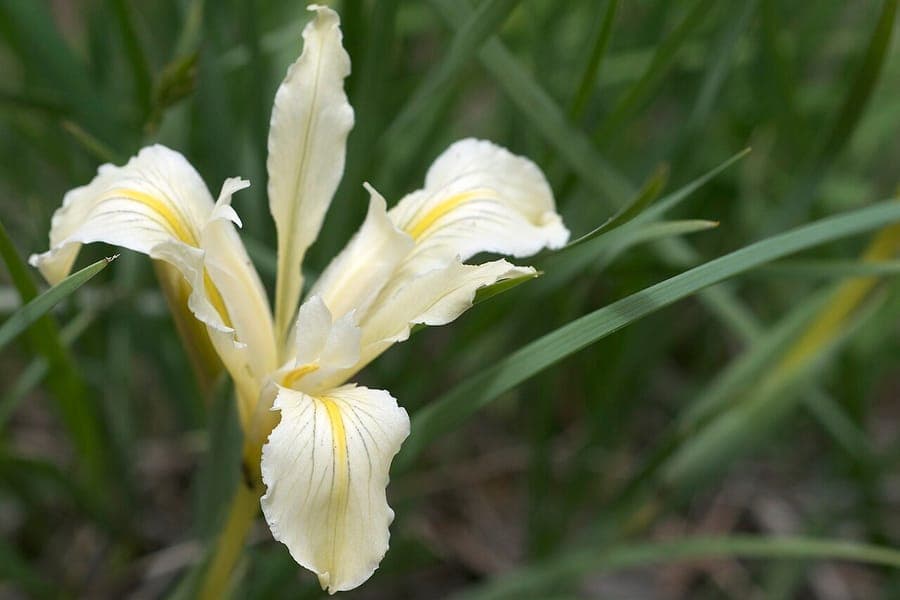
Eric in SF / CC BY-SA 3.0, via Wikimedia Commons
Ground iris (Iris macrosiphon): complete guide
Iris macrosiphon
¿Quieres ver Ground iris (Iris macrosiphon): complete guide en tu jardín?
1 minuto, sin tarjeta de crédito
Overview
The Ground iris, botanically Iris macrosiphon, is a low-growing iris from California that stands out for its compact habit and beautiful purple flowers. This plant is ideal for gardens with dry summers, particularly in warm and sunny climates. The name 'macrosiphon' refers to the large tube of the flower, which distinguishes this species from other Iris varieties.
This iris reaches a modest height of usually 15-30 centimeters and is therefore perfect for borders, rock gardens, or xeriscaping projects. The plant is hardy to about -15 degrees Celsius and requires minimal maintenance after establishment.
Appearance and bloom
The Ground iris has thin, grass-like foliage that grows low to the ground. The flowers appear in spring, typically between March and May, and display a characteristic form with drooping petals in shades of purple to violet. Each flower lasts only a few days, but the plant produces many blooms in succession, providing a long flowering period.
The flowers are approximately 5-7 centimeters in diameter and grow on short stems. The fragrance is light and pleasant, although not all flowers are equally fragrant. The plant forms shallow rhizomes that slowly spread, resulting in dense clusters.
Ideal location
Choose a spot in full sunlight for optimal blooming. The Ground iris thrives in zones with at least 6-8 hours of direct sunlight daily. In warmer climates, some afternoon shade and slightly moister soil can be beneficial, but in temperate zones full sun is essential.
This Californian iris suits wet winters but dry summers. Plant in a location where water can drain away after winter rainfall, especially in areas with significant precipitation or snow.
Soil
The Ground iris requires well-draining soil; this cannot be overstated. A sandy, humus-poor soil or a mixture of sand and grit is ideal. Add coarse sand or perlite to heavier clay soils to improve drainage.
The pH can be neutral to slightly acidic. Never add fresh manure or excessive organic matter, as this makes the plant susceptible to rot. After planting, minimal feeding is needed; an annual application of balanced fertilizer in spring suffices.
Diseño gratis
¿Quieres ver Ground iris (Iris macrosiphon): complete guide en tu jardín? Crea un diseño gratis ahora.
Watering
After planting, water regularly until the plant is established (first growing season). Once established, this iris is very drought-tolerant and requires minimal supplemental water during the growing period. Ensure the plant never sits in stagnant water, especially in summer.
In areas with dry summers and wet winters, the plant will adapt to the natural moisture pattern. In very dry summers, careful watering during rainless weeks can be helpful, but excessive watering is harmful.
Pruning
Minimal pruning required. Remove spent flowers and foliage after the flowering period. In late spring, you can remove dead leaves and tidy up the plant. Leave the plant undisturbed in autumn to prepare for winter hardiness.
Maintenance calendar
FEBRUARY-MARCH: Growing season begins. Apply light phosphate-rich fertilizer. Remove dead foliage. APRIL-MAY: Peak flowering period. Remove spent blooms. JUNE-AUGUST: Dry period. Minimal care needed. Check for pests. SEPTEMBER-OCTOBER: Winter preparation. No pruning. NOVEMBER-JANUARY: Rest period. Protect against extreme frost with mulch in very cold regions.
Winter hardiness
The Ground iris is very hardy to approximately -15 to -20 degrees Celsius. In regions with more extreme frost, a layer of mulch can provide protection. Ensure the soil drains well in winter; standing water is more dangerous than frost for this Californian species.
Companion plants
The Ground iris pairs well with other drought lovers such as lavender, sage, stipa grasses, and other Mediterranean plants. Soft yellow Achillea varieties offer beautiful color contrast against the purple flowers. Compact sedums and hardy alpine plants fill the base of the plant nicely.
Closing
The Ground iris is an underrated gem for garden designers seeking a compact, low-maintenance iris with character. Once established, this Californian beauty asks for little attention and provides years of purple splendor in spring.
You will find this plant at specialized nurseries. For reliable supply, visit your local garden center. More inspiration can be found on gardenworld.app, where you can create garden designs with numerous drought-tolerant plants. Design your xeriscape garden today on gardenworld.app for a green, low-maintenance result.
¿Quieres ver Ground iris (Iris macrosiphon): complete guide en tu jardín? Crea un diseño gratis ahora.
Sube una foto, elige un estilo y obtén un diseño fotorrealista con lista de plantas en menos de un minuto.
Más de 10.000 jardines diseñados
Sin tarjeta de crédito


Plantas similares
Iris tingitana: complete guide
Iris tingitana
Iris tingitana, the Morocco iris, is the bulb species behind the Dutch iris: early blue-violet blooms that need a sunny, well-drained position.
Iris hookeri: complete guide
Iris hookeri
Hooker's Iris is a compact North American native plant with blue flowers. Low-growing and moisture-loving water plant.
Siskiyou iris: complete guide
Iris bracteata
Complete guide to Iris bracteata, the Siskiyou iris: location, soil, bloom cycle, watering, pruning and companion plants for this rare Pacific Coast iris.