
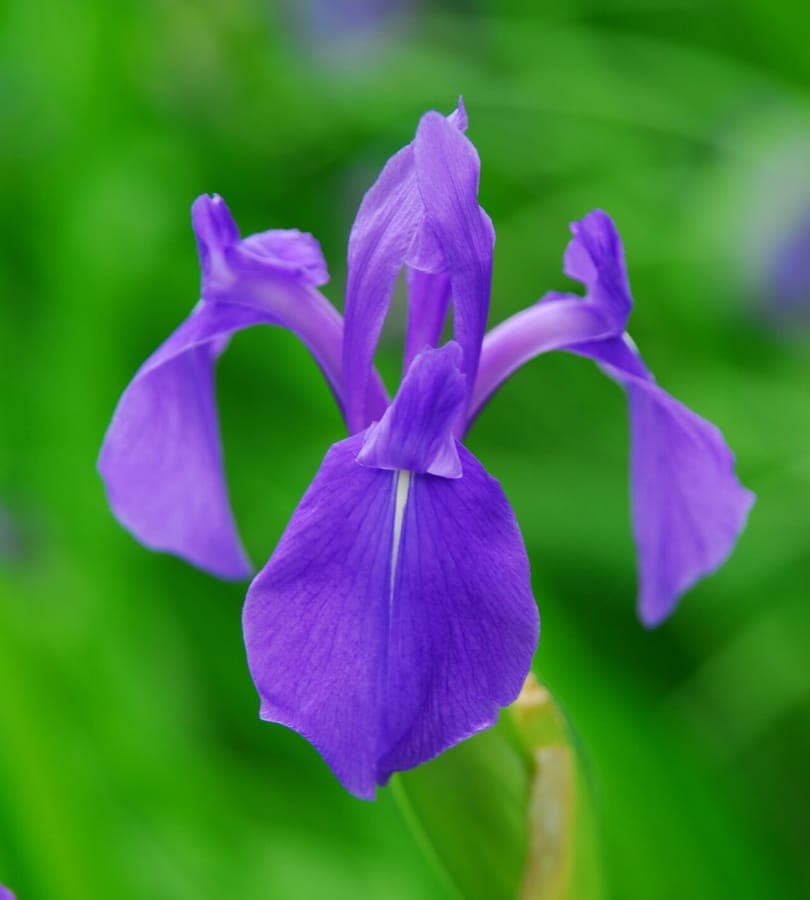
Dennis L. Lindwall / CC BY-SA 3.0, via Wikimedia Commons
Japanese Iris: complete guide
Iris laevigata
¿Quieres ver Japanese Iris: complete guide en tu jardín?
1 minuto, sin tarjeta de crédito
Overview
The Japanese iris, scientifically Iris laevigata, is an enchanting water-loving iris from East Asia that distinguishes itself through preference for permanently wet to moist conditions. This iris is taller and more stately than many iris types, with elegant blue to purple flowers delighting water gardeners and nature-minded designers. In Japan, this iris holds cultural significance, planted in water gardens and sacred artworks.
Japanese iris offers a method adding drama and color to water edges and wet garden areas without artificial structures.
Appearance & Bloom
Japanese iris grows as a stately plant, 60-90 centimeters tall, with elegantly upright leaves displaying clear ribbing. Leaves are sword-like, dark green, with distinct midvein, forming architectural fountain-like forms.
Flowers appear May-June with three to four blooms per stem. Each is striking blue to deep purple, sometimes white, with ruffled petals and characteristic drooping sepals. Flowers may reach 7-10 centimeters diameter. They are not fragrant, but visual impact is distinctive.
Unlike many iris species, Japanese iris grows attractively beyond bloom season through long, elegant foliage maintaining structure into autumn.
Ideal Location
Japanese iris thrives with at least 4-6 hours sunlight daily. However, importantly, the water component: plant must grow in permanently moist to wet soil, ideally at water margins, in shallow ponds (5-15 centimeter depth), or specially constructed wetland gardens.
This iris tolerates full sun well, but partial shade in hot summers helps keep water temperature stable.
Soil
Japanese iris demands rich, humus-filled, acidic soils permanently moist. Heavy clay soils are actually ideal. When planting in non-aquatic conditions, add abundant composted leaves ensuring permanent watering.
Aquatic substrates (pond silt, aquatic soils) are perfect. Avoid sandy, dry soils completely.
Diseño gratis
¿Quieres ver Japanese Iris: complete guide en tu jardín? Crea un diseño gratis ahora.
Watering
Japanese iris cannot get too much water. Plant it therefore directly at shallow water margins (5-20 centimeter depth), permanent wetland conditions, or special water-pockets in garden beds. Regular drinking water insufficient.
Intensive daily moistening in garden beds acceptable, but ideal is permanent submersion during growing season (April-October).
Pruning
Japanese iris requires minimal pruning. Remove spent flower stems after blooming. Dead foliage can be removed in early spring. Rhizomes grow above water normally exposed; this does not damage plants.
Maintenance Calendar
Spring (March-April): Check water level, ensure permanent moisture. Remove dead foliage from previous season.
Summer (May-July): Enjoy blooming period. Ensure water level remains constant. Add fertilizer via aquatic fertilizers if needed.
Autumn (August-October): Monitor water quality. Reduce feeding. Foliage turns yellow-brown but offers winter structure.
Winter (November-February): Minimal care. Foliage dies back. In very cold winters keep ponds ice-free through aeration.
Winter Hardiness
Japanese iris is very cold hardy, tolerating temperatures to -25 degrees Celsius. However, in shallow ponds ice may damage plants. Ensure shallow plantings sufficient water depth or protect from freezing.
Companion Plants
Japanese iris pairs well with: other water-loving plants, water lily species, papyrus, reeds, other water-iris varieties, and aquatic perennials. In aquatic ecosystems these support fish biotopes.
Closing
Japanese iris is indispensable for garden owners with water elements. Whether pursuing formal Japanese water design or simply making wet areas more dramatic, Japanese iris is direct solution. For more garden planning, visit gardenworld.app.
¿Quieres ver Japanese Iris: complete guide en tu jardín? Crea un diseño gratis ahora.
Sube una foto, elige un estilo y obtén un diseño fotorrealista con lista de plantas en menos de un minuto.
Más de 10.000 jardines diseñados
Sin tarjeta de crédito


Plantas similares
Iris tingitana: complete guide
Iris tingitana
Iris tingitana, the Morocco iris, is the bulb species behind the Dutch iris: early blue-violet blooms that need a sunny, well-drained position.
Iris hookeri: complete guide
Iris hookeri
Hooker's Iris is a compact North American native plant with blue flowers. Low-growing and moisture-loving water plant.
Siskiyou iris: complete guide
Iris bracteata
Complete guide to Iris bracteata, the Siskiyou iris: location, soil, bloom cycle, watering, pruning and companion plants for this rare Pacific Coast iris.