
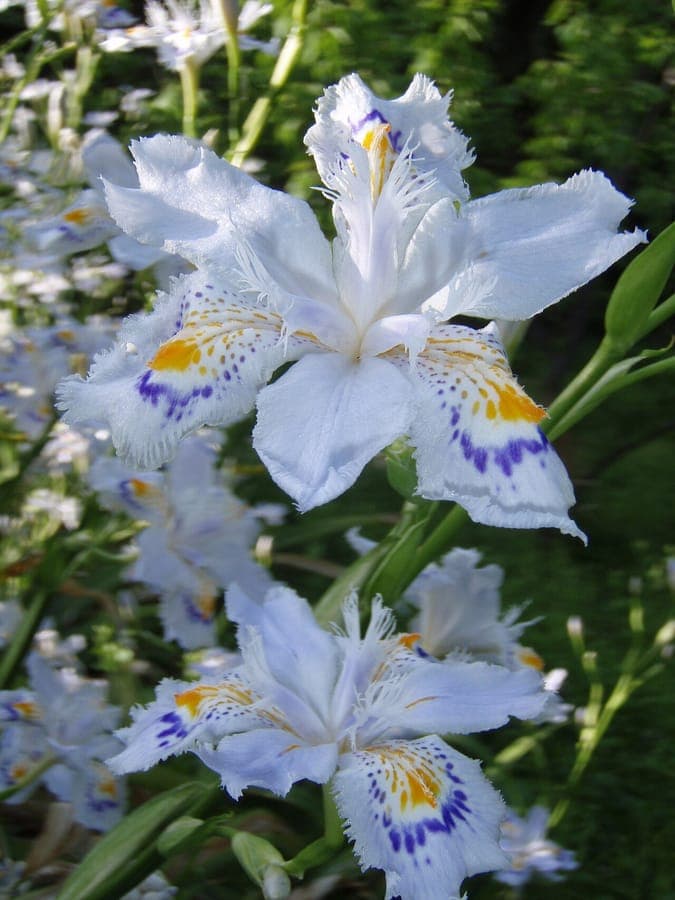
Apple2000 / CC BY 3.0, via Wikimedia Commons
Japanese iris: complete guide
Iris japonica
¿Quieres ver Japanese iris: complete guide en tu jardín?
1 minuto, sin tarjeta de crédito
Overview
The Japanese iris (Iris japonica), also called Butterfly-flower or Fringed iris, is an exceptional Asian iris with refined gray-green foliage and characteristic fringed flowers. This iris originates from Japan and China, but now grows worldwide in temperate gardens.
The Japanese iris is less well-known than German or bearded irises, but this plant deserves a place in any front garden. It blooms somewhat later than other iris species, typically in May to June, with elegant flowers in white, yellow, blue, or combinations thereof. Growing to approximately 60 centimeters tall, it makes a graceful addition to borders and rock gardens.
Appearance and bloom
The Japanese iris is particularly characterized by its unique foliage. The leaves are linear, gray-green, and semi-evergreen in milder climates, meaning the plant retains much of its foliage through winter. This gives the plant structure and interest even in winter months.
Flowers are small to medium-sized with fringed edges, distinguishing them from other iris species. Color variations include white, pale yellow, soft lavender, deep purple, and interesting combinations with heavy markings on the petals. The blooms have a delicate, almost light-footed appearance.
Bloom time is normally May to June, sometimes into July in cooler climates. The plant produces multiple flowers per spike.
Ideal location
The Japanese iris grows best in locations with partial shade in hot climates, though full sun also works in temperate zones. Aim for 4 to 6 hours of sunlight daily, with protection from the hottest afternoon sun.
Water availability is important for this iris. Ensure protected locations away from strong winds.
For positioning, this iris works well in:
- Shaded borders under trees
- Rock gardens with dappled shade
- Japanese gardens with water features
- Moister border sections
Soil
The Japanese iris prefers moist, organically rich soils. This distinguishes it from many other iris species that value drainage above all else. This iris thrives in well-feeding earth.
Ideal soil composition:
- Garden soil with high humus content (50%+)
- Compost or well-rotted material (30-40%)
- Some sand for textural contribution (10-20%)
The pH level can be slightly acidic to neutral (pH 5.5 to 7.5). This iris grows beautifully in rich soils and very humus-rich environments.
Water retention is important; better slightly wet than too dry.
Diseño gratis
¿Quieres ver Japanese iris: complete guide en tu jardín? Crea un diseño gratis ahora.
Watering
This is a much more moisture-loving plant than most iris species. During the growing season keep soil constantly moist, but not waterlogged. This is not a drought-tolerant iris.
Watering schedule:
- Spring-summer: keep constantly moist
- Autumn: gradually drier
- Winter: dry but not desiccated
- After planting: very regular watering for quick establishment
In naturally moist gardens, this iris can survive the growing period without supplemental water. In drier areas, regular watering is necessary.
Pruning
Pruning is minimal for this iris. You can gently remove spent flowers after they fade. Damaged leaves can be removed throughout the season.
After the growing season, in July or August, you can carefully remove dead or yellowing foliage. In milder climates where the plant remains semi-evergreen, leave more foliage intact.
Annually you can gently remove some outer, older leaves to create space for new growth.
Maintenance calendar
May-June: Enjoy blooms; gently remove spent flowers July-August: Blooming slows; gentle pruning September-October: Growth slowing; adjust moisture control November-April: Semi-dormant period; minimal water
Winter hardiness
The Japanese iris is moderately winter-hardy, certainly not as robust as German iris species. In the Netherlands, this iris thrives best in warmer regions or protected locations. In USDA zones 7 to 10, this iris grows without issue.
In colder regions, you can:
- Apply a mulch layer (5-10 cm) for protection
- Position the plant against warm south or west-facing walls
- Provide protection against the harshest freezes
In very cold areas, it may be better to grow this iris in containers you can move to sheltered locations.
Companion plants
The Japanese iris pairs nicely with:
- Hosta species: large leaves create nice contrast
- Ferns: both enjoy moist shade
- Astilbe species: flowers and structure combine beautifully
- Helleborus species: winter and spring bloom interplay
- Dwarf bamboo: Japanese garden aesthetic
Avoid drought-tolerant, sparse-growing plant partners.
Closing
The Japanese iris is a refined addition to semi-shaded gardens, especially for those with moister soil. You won't find this iris in every garden center; you may need to seek out specialized nurseries. But those who have established this iris in their gardens appreciate its elegance and lasting interest year after year.
Add this Asian beauty to your garden design at gardenworld.app and discover how it transforms your shaded border with its fringed blooms and interesting foliage.
Consult gardenworld.app for advice on how best to integrate this special iris into your garden.
¿Quieres ver Japanese iris: complete guide en tu jardín? Crea un diseño gratis ahora.
Sube una foto, elige un estilo y obtén un diseño fotorrealista con lista de plantas en menos de un minuto.
Más de 10.000 jardines diseñados
Sin tarjeta de crédito


Plantas similares
Algerian iris: complete guide
Iris unguicularis
Discover the Algerian iris, a winter bloomer with fragrant flowers. Care instructions, cultivation and maintenance tips for this unique iris species.
Variegated iris: complete guide
Iris variegata
Discover the variegated iris with its characteristic yellow and blue-purple flowers. Care, cultivation, and maintenance advice for this classic iris.