
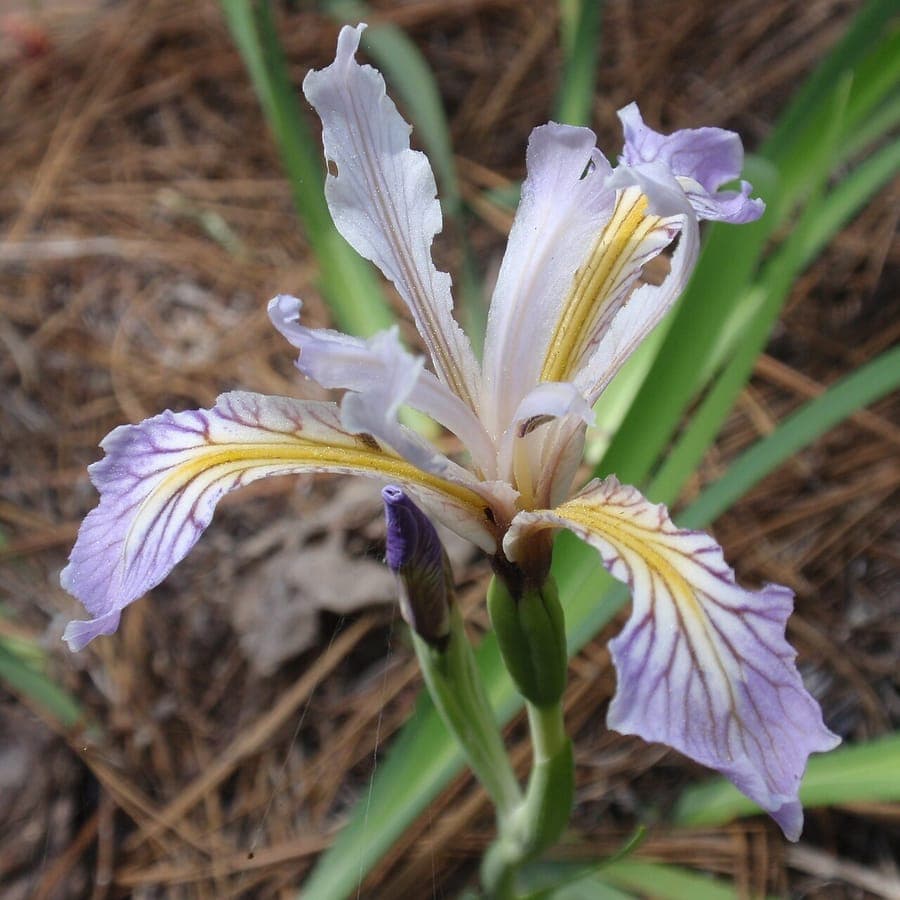
Tom Hilton / CC BY 2.0, via Wikimedia Commons
Iris hartwegii: complete guide
Iris hartwegii
¿Quieres ver Iris hartwegii: complete guide en tu jardín?
1 minuto, sin tarjeta de crédito
Overview
Iris hartwegii, named after the Sierra Nevada mountain range, is a rare and precious iris from California. This hardy perennial grows underground via rhizomes and reaches 30-60 cm tall. The plant is endemic to the Sierra Nevada region and is described as a "rainbow iris" because of its variable flower colors. Discovered in 1876, it is a true gem for gardeners seeking unusual alpine flora.
Appearance and bloom
Sierra iris grows as a low perennial herb with linear, blue-gray leaves reaching 30-60 cm tall. The flower consists of six perianth segments in shades from blue to deep purple with yellow or white marks on the hanging sepals. Bloom occurs from March to May depending on location. Each flower lasts only one day, but the plant produces multiple flowers sequentially over several weeks.
Ideal location
Hartwegii iris prefers full sun to light shade, at least 5 hours of direct sunlight. Plant on rock walls, alpine gardens, rock gardens or well-drained mountain areas. Ideal for Californian gardens with dry summers, but also grows well in other temperate climates if well-drained.
Soil
Mountain origin requires excellent drainage. Plant in slightly acidic soil (pH 6.0-7.0) mixed with sand, gravel and organic matter. A rocky, gritty soil mimics native mountain habitat. Add 2-3 cm coarse sand or small stones to planting hole. In wet areas, create raised beds 20-30 cm high.
Diseño gratis
¿Quieres ver Iris hartwegii: complete guide en tu jardín? Crea un diseño gratis ahora.
Watering
Once established, this iris has moderate water requirements. Water moderately during growing period (March-May), but keep dry during summer dormancy. In Mediterranean climates, natural rainfall is usually sufficient. In dry summers, sparse water may be needed. Ensure water drains well; standing water causes immediate root rot.
Pruning
Pruning remains minimal. After blooming, remove only wilted flower stalks below the flower head. Keep leaves intact until they yellow - this feeds the underground rhizomes. Wilted leaves can be carefully removed in June-July. Remove dead or damaged parts immediately.
Maintenance calendar
March-April: Full bloom; water lightly; enjoy flowers; remove spent flowers. May-June: Leaves yellow; stop watering; plant transitions to dormancy. August-October: Rest period; no water; keep dry. November-March: Deep dormancy; no water; plant overwinters; protect from extreme frost.
Winter hardiness
Sierra iris is hardy to USDA zone 5 (-29 to -20 degrees C). The plant can handle heavy snow well because it is a true mountain plant. Ensure good drainage during thaw periods; rapid water accumulation can be problematic.
Companion plants
Combine Sierra iris with other alpine plant communities: alpine phlox, silene, helva, sedum. For color contrast, soft yellow or white alpine flowers are ideal. In container gardens, this works well with other rare Californian endemics.
Closing
Iris hartwegii offers gardeners something special: a rare, mountainous flower of unequaled elegance. Its moderate maintenance requirements and winter hardiness make it a smart choice. Available from specialist nurseries. Find more garden inspiration on gardenworld.app!
¿Quieres ver Iris hartwegii: complete guide en tu jardín? Crea un diseño gratis ahora.
Sube una foto, elige un estilo y obtén un diseño fotorrealista con lista de plantas en menos de un minuto.
Más de 10.000 jardines diseñados
Sin tarjeta de crédito


Plantas similares
Iris tingitana: complete guide
Iris tingitana
Iris tingitana, the Morocco iris, is the bulb species behind the Dutch iris: early blue-violet blooms that need a sunny, well-drained position.
Iris hookeri: complete guide
Iris hookeri
Hooker's Iris is a compact North American native plant with blue flowers. Low-growing and moisture-loving water plant.
Siskiyou iris: complete guide
Iris bracteata
Complete guide to Iris bracteata, the Siskiyou iris: location, soil, bloom cycle, watering, pruning and companion plants for this rare Pacific Coast iris.