
Hectonichus / CC BY-SA 3.0, via Wikimedia Commons
Grass iris: complete guide
Iris graminea
¿Quieres ver Grass iris: complete guide en tu jardín?
1 minuto, sin tarjeta de crédito
Overview
Grass iris (Iris graminea) is a low-growing, fragrant iris native to Central and Southeast Europe. This compact iris grows from rhizomes and produces elegant, fragrant flowers in blue-purple and yellow tones. Thanks to its low growth habit and preference for dry soil, Grass iris is perfect for alpine borders, rock gardens, dry slopes and containers.
This iris is very frost-hardy and requires minimal maintenance once established. The fragrance is subtle but pleasant, especially noticeable in the evening.
Appearance and bloom
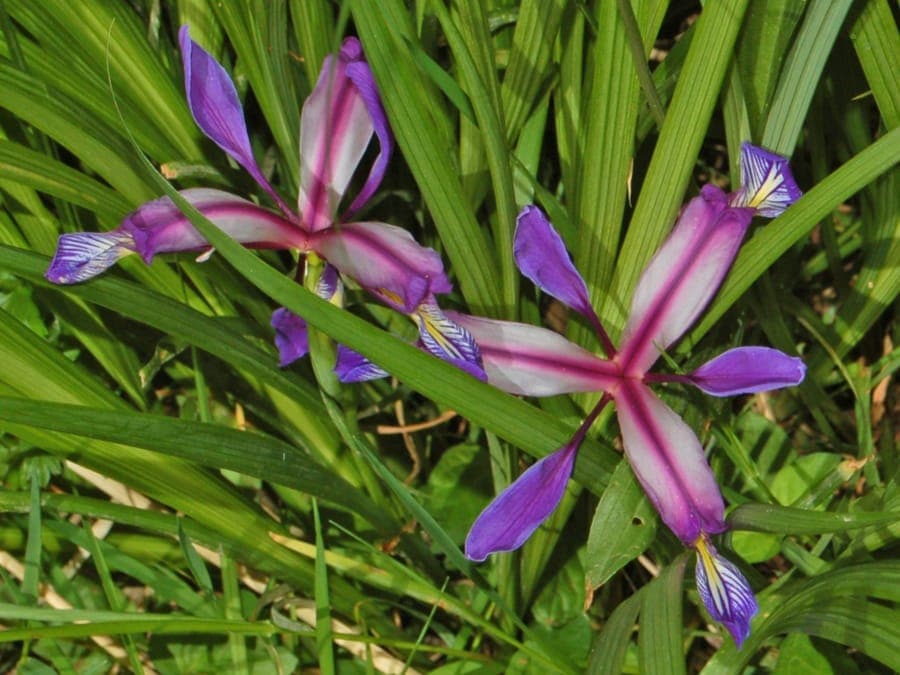
Grass iris reaches only 30 to 40 centimeters height and forms compact clusters. The leaves are very narrow, grass-like and upright-growing. The flowers are small to medium-sized, about 5 centimeters in diameter, with three upright petals in blue-purple or violet and three drooping petals in yellow or pale yellow.
The flowers appear in May to June and last 2 to 3 weeks. They have a subtle, pleasant fragrance. This iris produces seed when fertilized, allowing self-seeding to occur.
Ideal location
Grass iris thrives best in a sunny to partly shaded spot. At least five hours of direct sunlight per day is desired for rich blooming. In full shade the plant grows, but blooms minimally.
This iris is excellent for alpine borders, rock gardens, dry meadows and along walls. It also fits well in containers and groupings with other low-growing flowering perennials.
Soil
Grass iris requires well-draining, not too moist soil. Drought tolerance is a key feature. Acidic to neutral soil is preferred; the plant also grows in slightly alkaline soil.
Work coarse sand or gravel into heavy soil. This iris is perfect for poor, dry soil where other plants struggle. Excessive feeding can lead to weak growth and reduced flowering.
Diseño gratis
¿Quieres ver Grass iris: complete guide en tu jardín? Crea un diseño gratis ahora.
Watering
Grass iris is very drought-tolerant once established. During the growing and flowering period (March to June) water when soil feels dry. After flowering, gradually reduce watering.
In summer and winter almost no water is needed. The plant even prefers dry conditions. Excess water is much more harmful than drought for this iris.
Pruning and maintenance
Grass iris requires virtually no pruning. Wilted flower stems can be removed. Clean up dead foliage in spring. Seedlings can be removed if you don't want spontaneous propagation.
The plant can stay in the same spot for decades without replanting. Division is only needed when clumps become too dense.
Maintenance calendar
March: Clean up foliage; begin watering. April-May: Flowering period; minimal feeding. June: Flowering over; reduce watering. July-September: Tolerate drought; no feeding. October: Plant dormancy; no special care. November-February: Frost-hardy overwinter outdoors.
Winter hardiness
Grass iris is very hardy, frost-hardy to -20 degrees Celsius. This iris can overwinter outdoors without protection in Northern Europe. No maintenance or protection needed.
Companion plants
Grass iris combines beautifully with other alpine plants such as Edelweiss, Saxifrage and Silene. In rock gardens it grows well with Sedum, Sempervivum and low Conifers.
In dry borders it harmonizes with Lavender, Sage and Artemisia. Provide variation in height and flowering time.
Final thoughts
Grass iris is a reliable, frost-hardy fragrant iris for dry, sunny locations. With minimal care it thrives for years.
Grass iris is less common in cultivation but available from specialized iris nurseries. Gardenworld.app helps you find the ideal dry spot in your garden. With basic planting and no further care your Grass iris will bloom again each spring.
¿Quieres ver Grass iris: complete guide en tu jardín? Crea un diseño gratis ahora.
Sube una foto, elige un estilo y obtén un diseño fotorrealista con lista de plantas en menos de un minuto.
Más de 10.000 jardines diseñados
Sin tarjeta de crédito


Plantas similares
Iris tingitana: complete guide
Iris tingitana
Iris tingitana, the Morocco iris, is the bulb species behind the Dutch iris: early blue-violet blooms that need a sunny, well-drained position.
Iris hookeri: complete guide
Iris hookeri
Hooker's Iris is a compact North American native plant with blue flowers. Low-growing and moisture-loving water plant.
Siskiyou iris: complete guide
Iris bracteata
Complete guide to Iris bracteata, the Siskiyou iris: location, soil, bloom cycle, watering, pruning and companion plants for this rare Pacific Coast iris.